srekam eht teem
meet the makers
Discover the makers, designers and architects we supported in 2024–2025. In a series of video portraits, they share an intimate look into their creative practices.
Alina Paias
architecture
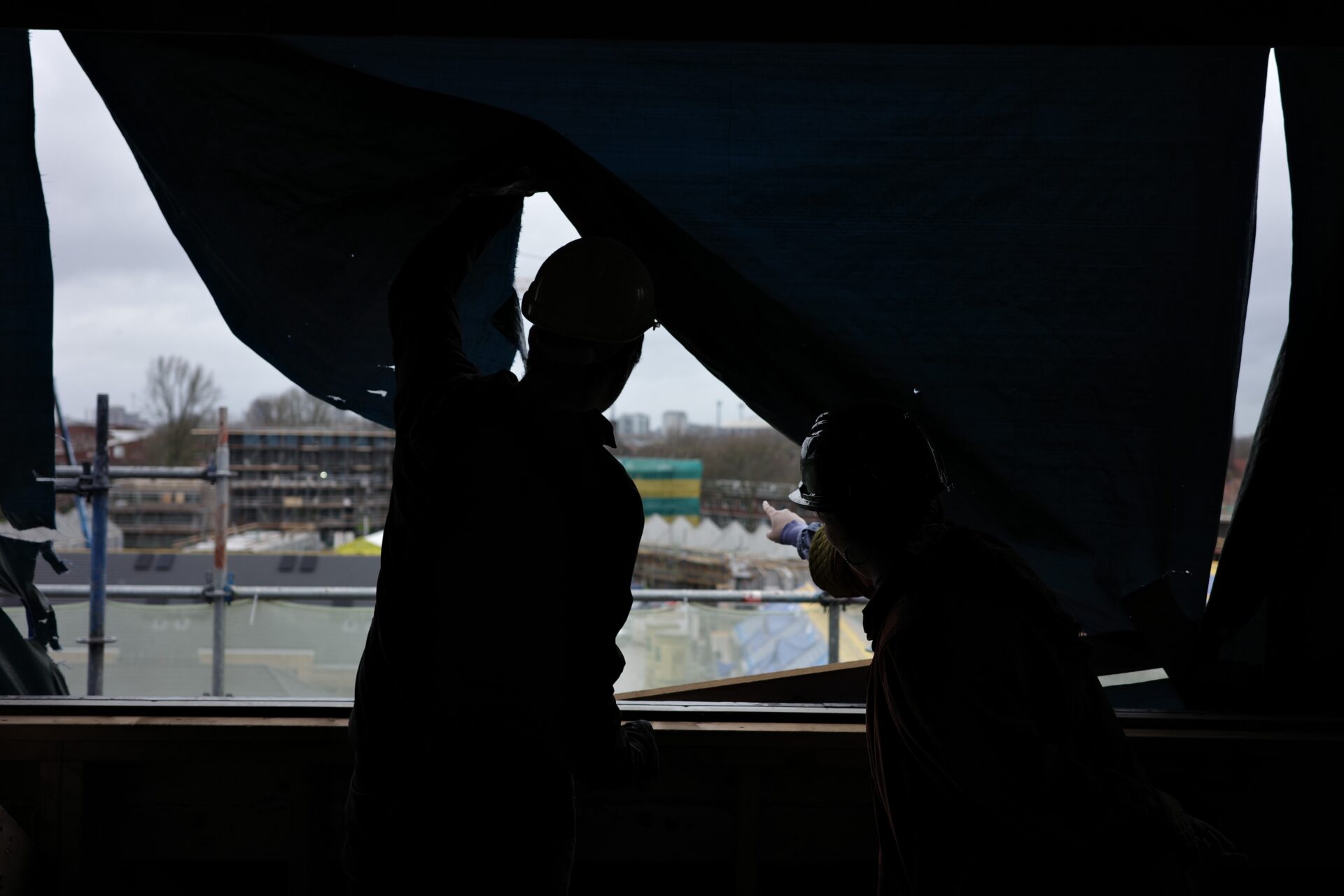
Alina Paias graduated from TU Delft in 2022 with an MSc in Architecture, Urbanism and Building Sciences. Paias positions herself within the field of architecture as a spatial designer, researcher, curator and writer. Since graduating in 2022, Paias has been working on a practice that focuses on contributing to structural debates within architecture.
Paias does this through, for example, exhibitions, published texts and presentations. She is interested in how designing and building architecture shapes the architect themself, and how this in turn influences new designs. During the development year, Paias will, among other things, research Dutch architectural firms, take courses in curating and Dutch, and write an essay on the relationship between design and construction in Dutch architectural practice.
Amy Lewis
design
Textile and product designer Amy Lewis (1-6m2) received her Bachelor’s degree in Design from the Design Academy Eindhoven in 2022. In her practice, Lewis explores how traditional crafts can be utilised for contemporary applications. For example, she explores the role traditional craftsmanship can play in solving current design issues.
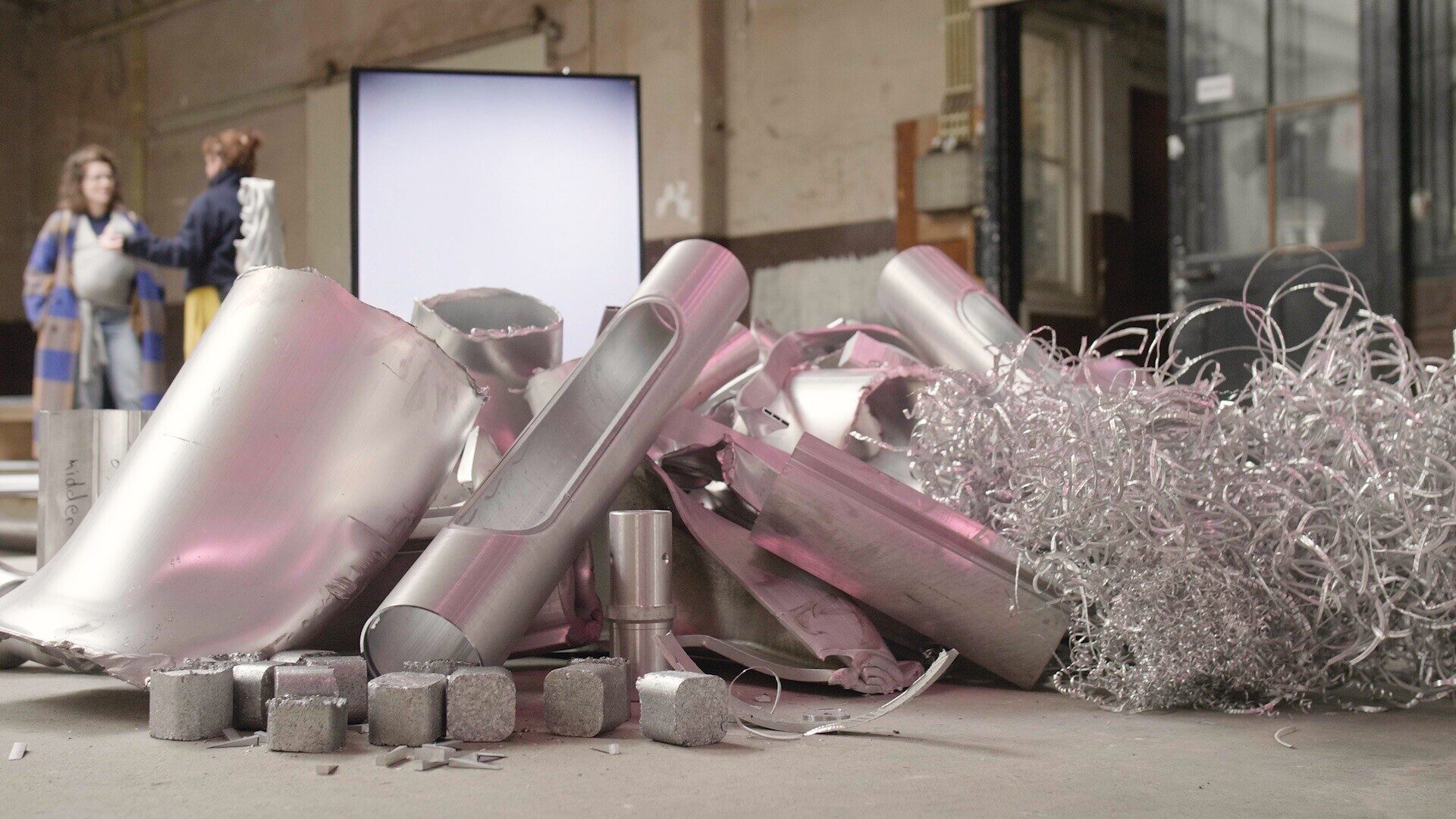
During the development year, Lewis is delving into the potential of industrial waste materials. She will study how this material can be given a new purpose through techniques such as basket weaving, weaving and passementerie (a form of decorative embroidery). Lewis is attending courses to gain technical expertise and is visiting trade fairs IMM Cologne and Heimtextil. For guidance, she collaborates with a mentor in art direction and information design to systematise the sampling process. Lewis will present the results in a database on her website and during Dutch Design Week at Piet Hein Eek.
Ana Robles Pérez
design
Ana Robles Pérez studied Social Design at the Design Academy Eindhoven (2021-2023). A graphic-documentary designer, she is concerned with escalating climate crises, forced displacement and the disappearance of local identities.
Robles Pérez uses heritage to explore memory, loss, and territorial connections. She combines visual techniques with a journalistic approach. DDuring the development year, Robles Pérez investigates new ways to reveal silent agents of memory and amplify experiences of displacement, resistance, and transformation. This includes field research in Madrid with the Paco Graco collective and a visit to the last inhabitants of abandoned villages in La Mancha. She will also study cartography and forensic methods with Dan Miller, following courses in the Utrecht Forum for Memory Studies. Additionally, she will be mentored by Paula Vilaplana (MoMA) on the concept of ‘spectral geographies’. The year will result in a method that uses imagination and speculation to generate new realities for environments affected by disaster.
Andrea Ortega Gutiérrez
design
Andrea Ortega Gutiérrez was selected through the Open Call Emerging Design Practices ABCSSS. A product designer from Venezuela, raised on Curaçao, she founded SOLDACHI: a sustainable toy company that combines education, community engagement and environmental awareness. Her toys are made from recycled wooden pallets and focus on Curaçao’s flora, fauna and cultural heritage.
Ortega Gutiérrez is developing a Native Line with collections about local birds, land animals and mangroves, where children learn about their ecosystem through play. She wants to deepen her technical skills to build SOLDACHI into an impactful brand.
During the development year, she will be taking online courses in CNC machining, machine design and marketing, and working with COIA’s Mangrove Adoption Program. The year will end with a launch event to present the new mangrove-education toys.
Bart Brinkman
digital culture
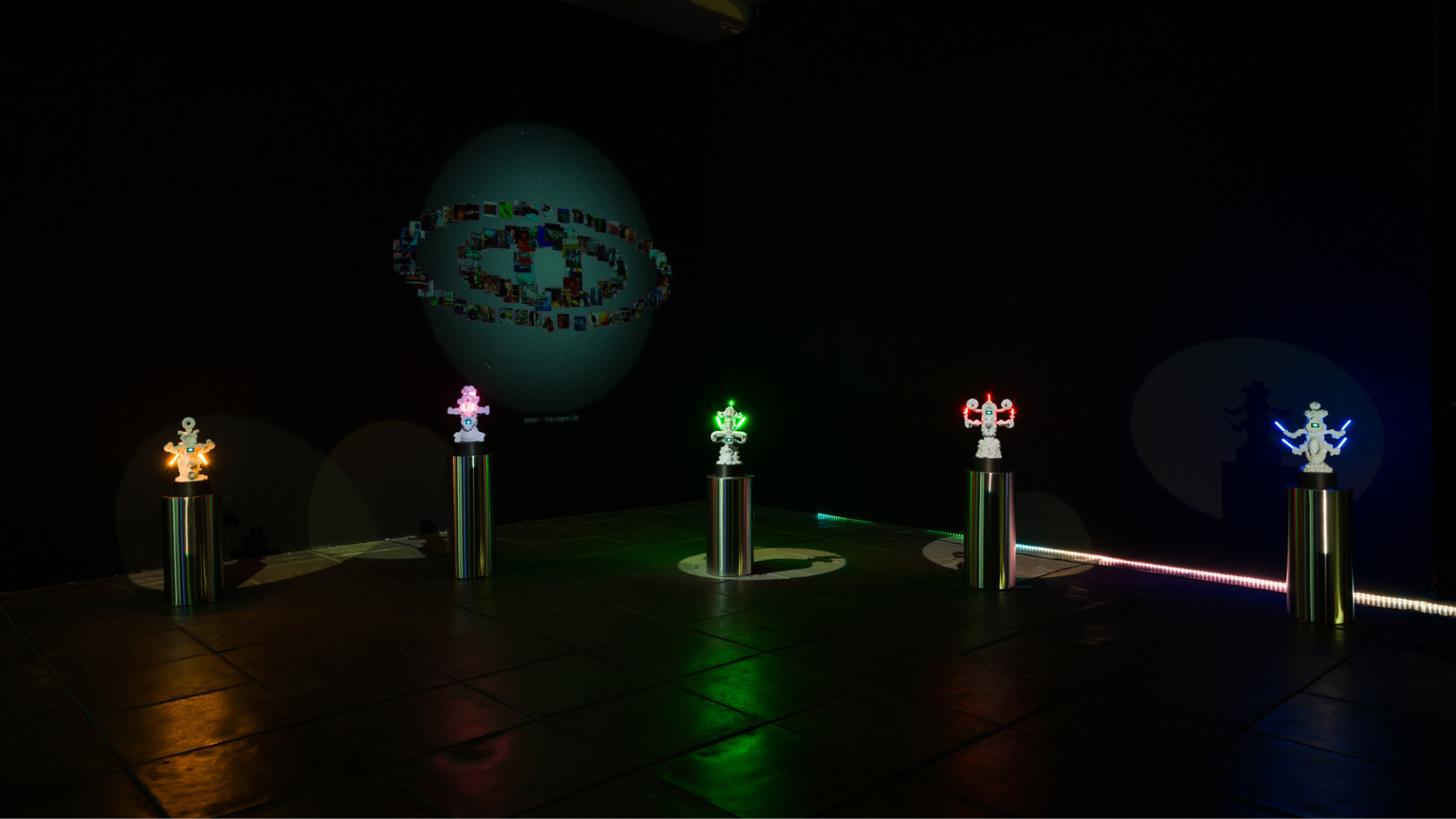
Bart Brinkman was selected through the Open Call Self-taught Designer. Brinkman works at the intersection of light art, technology and social reflection. From a background as a VJ and visual designer, he now develops autonomous generative installations with (laser) projection.
Brinkman explores how technology affects our senses and how light installations can redefine space. Central to his work is the relationship between humans and technology and the demand for free will in an automated world. He wants to invite the audience to experience wonder and reflect on their role as jointly responsible parties in the digital system.
During the development year, Brinkman is delving into interaction, AI tools such as TouchDesigner and context sensitivity of his installations. He explores in which context his work comes across at its most powerful: festivals, museums or public spaces. The aim is to develop sustainable working methods that bring together experimentation, interaction and reflection.
César Rogers
design
Graphic designer and letter researcher César Rogers graduated from the Gerrit Rietveld Academie in 2021 with a Bachelor’s degree in Art & Design. In his practice, Rogers explores how new media technologies affect the way we use language. In the coming year, he will focus on a critical analysis of Latin script. Through historical research, he aims to question the dominance of this writing system. For instance, he conducts archival research to reconstruct the invention of printing in China and makes connections to the beginning of printing in Europe. In addition, Rogers studies the development of printing during the Industrial Revolution, with a particular focus on the role of Chinese typography in a colonial context.
Throughout the development process, Rogers combines theoretical research with traditional craftsmanship. He is organising public presentations, workshops and exhibitions. To share the outcomes, he is building his own online platform.
Dominik Vrabič Dežman
design
Dominik Vrabič Dežman graduated from the Royal Academy of Art in 2021 in Graphic Design. In 2024, they gained a Research Master's degree in Media Studies from the University of Amsterdam. Vrabič Dežman combines design, digital culture and publishing.
Vrabič Dežman explores how digital interfaces and technology affect our daily lives. They create experimental publications, performances and coded installations that treat the screen as a place for reflection rather than a means for passive consumption. Central to their work is 'data scraping' (automatically collecting information from websites) and archival research.
During the development year, Vrabič Dežman will build an online gallery, start a podcast series on user interfaces, and design a new website as a central platform for their practice.
Farbod Nael
design
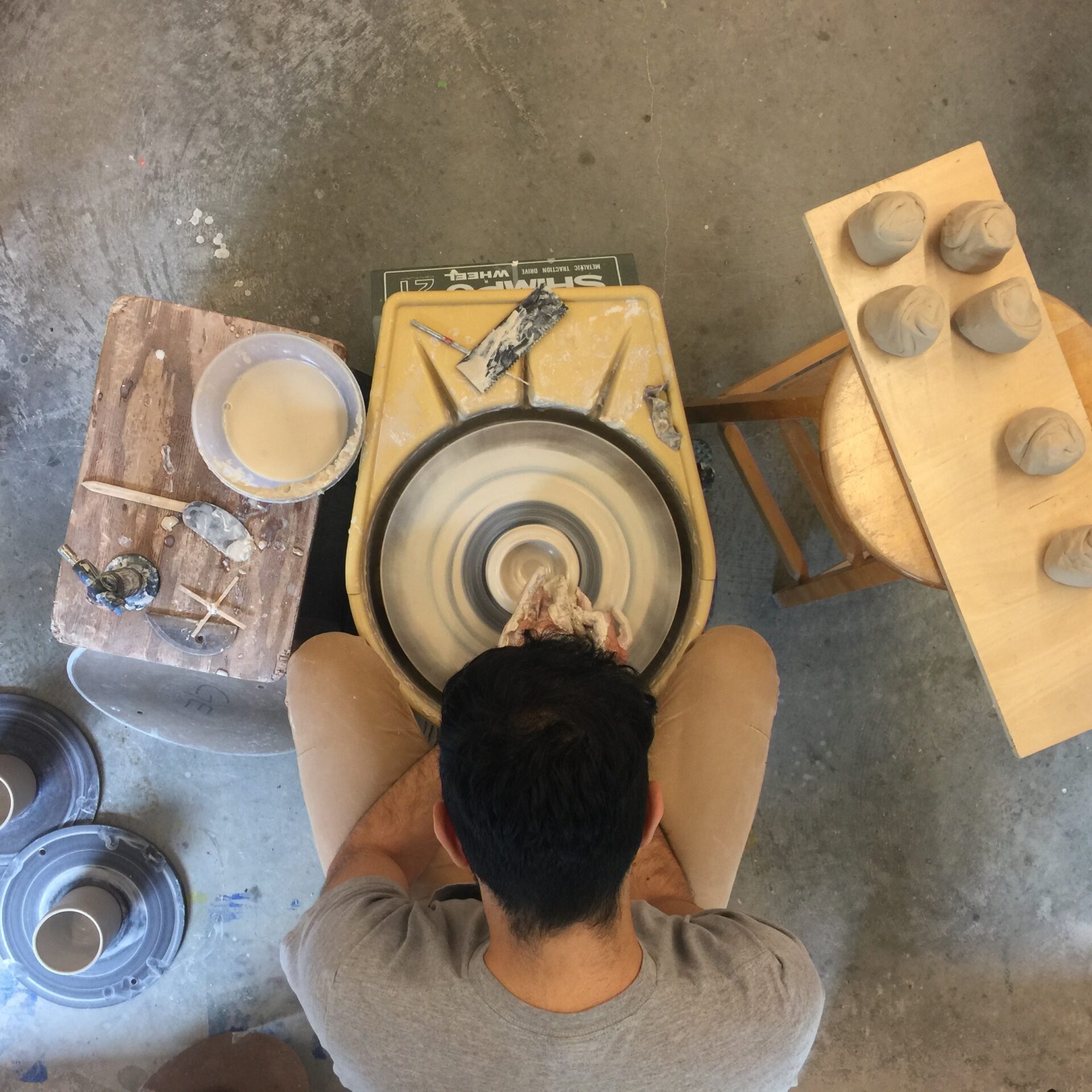
Farbod Nael was selected through the Open Call Self-taught Designer. A queer Iranian designer and self-taught ceramicist, he runs Farbod Ceramics from Maastricht, a ‘microbatch’ studio based on memory, community engagement and inclusive design. His practice combines ancestral knowledge with contemporary design, and focuses on cultural memory, material experimentation and decolonial criticism.
Nael discovered ceramics during a turning point in his life, as a neurodivergent person recently diagnosed with ADHD. Working with clay became a way for him to find peace and tell stories, drawing inspiration from Persian miniatures, calligraphy and traditional tiling techniques.
During the development year, Nael is delving into endangered ceramic practices such as Persian lustre-glazing techniques, under the guidance of professor Abbas Akbari. He is taking a masterclass at Tortus Studio in Denmark and making research visits to the Europees Keramisch Werkcentrum. In addition, he is working with coaches Ronja Terwindt and Dr Emilie Sitzia from Maastricht University. The year will result in a solo exhibition at Meldkamer Maastricht (autumn 2026) and an entry for the Limburg Biennale.
Federica Zatta
architecture
Federica Zatta holds a Master’s degree from The Berlage Center for Advanced Studies in Architecture and Urban Design at TU Delft. Zatta’s research-driven approach is interdisciplinary, and combines architecture, landscape, urban design and community engagement.
Central to her development year are ‘ecotones’, the transition between two adjacent ecological areas. This year, Zatta will further develop her autonomous practice in architecture and landscape design through networking, business development and substantive collaborations. For instance, she will engage with spatial experts such as Ruud Reutelingsperger, Francesco Careri and Maartje ter Veen, who work from participatory practices. In addition, Zatta is taking a botany course, creating a lexicon and sharing the results of the research into ecotones in an exhibition or workshop at BLASt.
Fleuri La Belle
design
Jewellery designer Fleuri La Belle graduated from ArtEZ University of the Arts in 2022 in Product Design. She is fascinated by the power of jewellery as carriers of stories and cultural identity. In the development year, La Belle is delving into her roots in Congo. She is making a research trip to the country to explore in depth stories about the African diaspora and African mythology. The insights and inspiration she gains will be applied in a collection of 10 wearable pieces.
During this year, she will also explore ways to make dance and movement part of her practice. With a dancer, La Belle will explore the connection between the moving body and jewellery. La Belle is also receiving substantive guidance from jewellery designer Rebekah Kosonen Bide, and taking goldsmithing classes at Goudsmederij van Slagmaat.
Gaia D'Arrigo
design
Designer Gaia D'Arrigo graduated from the Design Academy Eindhoven in 2022 with an MA in Social Design. D'Arrigo combines environmental research, material experiments and storytelling to explore polluted landscapes and environmental depletion. In doing so, they look at how these phenomena shape both the physical world and cultural narratives. By collecting, archiving and transforming materials such as locally sourced fabrics, home-made biomatter and discarded objects, D'Arrigo creates unconventional archives that expose hidden environmental stories.
During the development year, D'Arrigo will conduct field research into pollution in the port of Rotterdam. They will collect water and material samples and investigate how construction waste, local clay and glazes react to pollution. D'Arrigo is being mentored by Annemarie Piscaer, De Onkruidenier, Romany Dear and Grace Tartle. They are also following workshops in ceramic glazing by Benedetta Pompili and metal and glass working at MAKE Eindhoven. The aim is to present the results in multimedia installations that function as spatial compositions and living archives.
Hsin Min Chan
digital culture
Designer Hsin Min Chan graduated from the Design Academy Eindhoven in 2021 in Contextual Design (MA). She works on the boundary of performance, film and installation art. Central to her work is research into the deeper layers and social systems that influence our bodies and how we interact with each other.
In the development year, Min Chan is delving into the sensory experience of her work and interaction with the audience. She is focusing on research into narrative structures, storytelling techniques and performative strategies. She is also working on developing her technical skills, such as 3D modelling and professionalisation. Furthermore, Min Chan is working on her stage skills and the online documentation and communication of her work.
Min Chan is seeking mentorship from Tom K. Kemp and Dries Verhoeven. She will present the outcomes in an interactive performance that builds on her previous work Narrative Native Dining, where participants are invited to reconsider what is perceived as ‘food waste’ in Dutch culture.
Hung Lu Chan
digital culture
Hung Lu Chan is a designer and graduated from the Design Academy Eindhoven in 2023 in Social Design (MA). His work explores the intersection of imagination and perception, particularly in relation to the theme of ‘aliens’ or ‘otherness’. Through his work, Chan aims to promote empathy towards the unknown in and around us.
Chan is dividing the development year into three phases: media research, guided meditation and role play. He is holding expert interviews, attending a workshop in guided meditation and participating in a TouchDesigner course. During the year, Chan is being mentored by the interdisciplinary collectives Lancel/Maat and Polymorf.
Chan communicates his practice through workshops, a project website and Instagram. He is entering into partnerships with MU Hybrid Art House, the Bio Art & Design Award, Queer Currents and Pan Asian Collective.
Jan Zuiderveld
digital culture
Jan Zuiderveld (MSc Artificial Intelligence, UvA, 2021 & MMus Royal Conservatoire, ArtScience, 2023) creates installations in which AI systems are embodied in everyday objects. By transforming familiar objects into tangible forms that show algorithmic decisions, Zuiderveld makes complex technological concepts accessible to a wide audience.
During his development year, Zuiderveld works on sharpening the critical intention of his practice. He experiments with artistic strategies to expose ethical issues and power dynamics in human-machine relations. Zuiderveld collaborates with artists such as Sasha Stiles, Dries Depoorter, Feileacan McCormick, Kyle McDonald and Patrick Tresset. The end result will be an experimental installation in which the results of Zuiderveld's research are applied.
Jan-Pieter Karper
design
Jan-Pieter Karper studied Graphic Design (MA), Werkplaats Typografie, at ArtEZ University of the Arts (2020-2022). Karper is a graphic designer and conducts research through prints, installations and workshops. His focus is on ‘the original’ in relation to reproduction within graphic design. He experiments with photo grids, creates installations by optically mixing colours and explores the physical properties of digital images.
During the development year, Karper aims to transform his research practice into one in which he can self-initiate. To do this, he is delving further into the topic of reproduction, developing new skills and exploring ways of engaging with other artists and designers. His aim is to launch this development year with an online platform where he highlights, discusses and explores the role of reproduction on the basis of various art and design practices.
Jean Oneli Blaise
digital culture
Jean Oneli Blaise, known as Nelly Blaise, was selected through the Open Call Emerging Design Practices ABCSSS. A Caribbean-born designer, teacher and storyteller, he has been leading grassroots media projects since 2015 in which young people tackle social issues such as climate change and postcolonial identity through storytelling.
Blaise is expanding his practice into immersive technology and is developing his first VR detective game. In the game, players are introduced to local Caribbean heroes and historical figures. Stories about heritage are coupled with interactive learning to promote critical thinking and cultural awareness.
During the development year, Blaise will go through a phased process, from research to VR prototyping and user testing. He is working together with local historians, artists and older people, and involving young people as testers and mentees. The year ends with launch events on Sint Maarten and in the Netherlands.
Jennifer Holder
design
Jennifer Holder was selected through the Open Call Self-learning Designer and works as a maker under the name AWS. After studying law, she discovered ceramics as a medium to give meaning to processes of change and growth. She is now exploring how ceramics function within spatial contexts and installations.
Holder wants to expand her practice to a larger scale and combine ceramics with other disciplines such as film, sound and floral design. She is focusing on Japanese design philosophies such as ma and wabi-sabi. So during the development year, Jennifer Holder will travel to Japan to carry out research with makers such as Kazunori Hamana, and visit the Setouchi Triennale. She will take a masterclass in South Korea with ceramist Kwak Kyung Tae to learn new ‘coil-building’ techniques. Once back in the Netherlands, she will work on a campaign with Tim Wes (creative director Kunstfabriek) and floral designer Yoko Negi. The year will culminate in a video campaign and exhibition at the Kunstfabriek Rotterdam.
Jobi Jara Kroese
digital culture
Jo Kroese was selected through the Open Call Self-taught Designer. Kroese has a background as a mathematician and co-founded Radical Data, a collective that explores the politics of digital technology.
Kroese wants to develop their own design language in which their neurodivergent thinking, love of systems and fascination with simulations and diagrams are the starting point. Their work invites reflection on complex topics such as AI and internet politics, and shows that there is room for different ways of thinking in the creative sector.
During the development year, Kroese will use working periods of 6-8 weeks in which they will experiment, develop prototypes and test them in practice. The process will be publicly documented and guided by mentors such as Vladan Joler and Núria Güell. The year will produce a recognisable design language that translates a rigid way of thinking into visual and pedagogical resources with a political slant.
Johannes Equizi
architecture
Johannes Equizi graduated from the Royal Academy of Art in The Hague in 2021, majoring in Interior Architecture. Equizi has a hybrid practice that focuses on architectural themes through an interdisciplinary approach. He combines spatial design, speculative design and game design.
Equizi's work is situated at the intersection of architecture and social design and can be described as world-building, partly due to its focus on stimulating the collective imagination. Many of Equizi’s projects involve co-creation with participants and collaborations with other artists and designers.
During the development year, Equizi will be improving his metalwork skills at MAKE Eindhoven. He is receiving coaching from Studio Ossidiana for spatial design and from Selçuk Balamir for socially engaged projects. In the long term, Equizi wants to develop projects that inspire new housing behaviour and help build movements in which self-organisation, decentralisation and mutual help play a central role.
Julia Kannegieter
architecture
Julia Kannegieter was selected through the Open Call Self-taught Designer. Kannegieter is a landscape designer and focuses on the disturbed relationship between humans and nature in contemporary society. She explores how people have distanced themselves from natural rhythms and retreated into rigid concrete structures.
In previous projects, Kannegieter explored organic structures in urban design and the historical development of the human-nature relationship. She recently started her own company combining art, poetry and landscape architecture, and focusing on nature and human experience.
During the development year, Kannegieter will follow the seasons as a guide: in autumn she gathers knowledge through literature and conversations with experts, in winter she reflects, in spring she experiments with bushcraft and travels to Japan, and in summer she creates land-art and collaborations. The year will result in a publication and presentations that inspire others to reflect on our relationship with nature.
Justyna Chmielewska
architecture
In 2021, Justyna Chmielewska graduated from the Academy of Architecture, Amsterdam with a Master’s degree in Landscape Architecture. Chmielewska’s work explores landscapes of change and temporality. Her practice focuses on rivers and water, and explores cycles of drought and flood, erosion and deposition.
Chmielewska challenges traditional notions of control and ownership of water. She advocates for an adaptive, inclusive approach to rivers. Instead of imposing fixed designs, Chmielewska works with an embodied landscape practice. This means she observes, walks, draws, models and engages in dialogue with natural processes.
During the development year, Chmielewska aims to further develop her artistic identity and practice. She wants to represent rivers that operate outside human control in an artistic way. In this way, she hopes to promote dialogue and develop new ways of showing river landscapes.
Juyun Lee
design
Juyun Lee studied Contextual Design (MA) at the Design Academy Eindhoven (2021-2023). Her practice is situated at the intersection of design, identity and social structures. She explores the invisible forces that shape personal and collective identities. Through design, she aims to reveal these forces to stimulate critical reflection and dialogue.
In her development year, Lee is conducting design research into identity formation in Korea and the Netherlands. She is carrying out field research at the FENIX Museum of Migration and studying Dutch immigration laws with the help of immigration lawyer Susanne Mooij. Lee is further being mentored by art historian Maia Kenney and architect Afaina de Jong. Lee is also setting up a study group with international designers and artists in the Netherlands to discuss their experiences as immigrants. In addition, she is working on her skills in metal-casting techniques and mould-making, to achieve a work that could be presented at an exhibition with Collective Doh in 2026.
Kaixin Chen
design
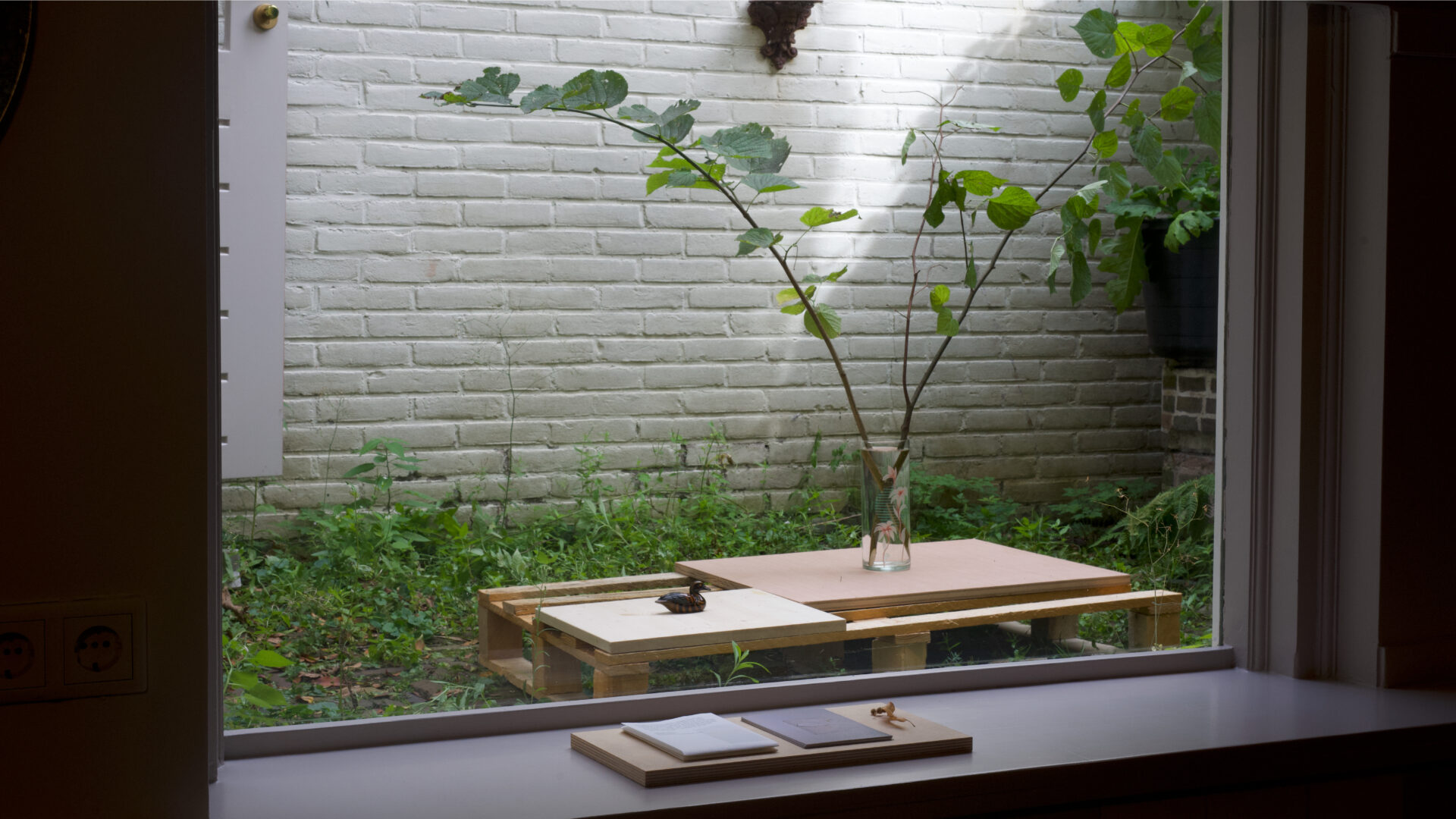
In 2022, Kaixin Chen gained the Master in Fine Art & Design: Workshop of Typography at ArtEZ University of the Arts. Chen is a designer and publisher focusing on experimental publishing. She does this not through books, but by organising brief encounters around the dinner table.
Chen draws on Chinese poetry and East Asian philosophies and combines food design, audiovisual interventions and graphic design. In this way, she explores emotions within diasporic experiences. Chen transforms reading into a multisensory experience where the content flows through spaces, forms and people. Instead of a book, a room is read.
During the development year, Chen will visit a Zen monastery in South Korea for cookery classes, explore edible wild plants in the Netherlands and work on audiovisual content.
Kaj Boonstra
digital culture
Kaj Boonstra (MSc Architecture, TU Delft, 2021) is, together with Emma Little, co-founder of Studio Metaform, a studio that develops multimedia installations to draw attention to social, political and environmental issues. By translating scientific research into experiences that go beyond words and diagrams, Boonstra aims to make insights into pressing issues more accessible.
Until now, Boonstra has mainly worked digitally, but during the development year, he is focusing on making physical installations. Boonstra is receiving guidance from Micha Hamel, Boris Debackere and Nick Verstand, among others. He is working on his technical skills through courses in sensor integration, scent design and ‘deep democracy’. The development year will result in the presentation of a spatial multimedia installation at EnergieKas, Buurthuis de Bol and Operator Radio.
Kerr de Lanooi
design
Kerr de Lanooi (Sè) was selected through the Open Call Emerging Design Practices ABCSSS. As an artist and founder of Stichting PUSH, he is developing a fashion brand that combines art, fashion and community engagement. His work focuses on telling Afro-Caribbean stories, translating local narratives into wearable art.
De Lanooi aims to professionalise his practice by deepening his knowledge of textile and fashion design through specialised courses in silk-screen printing, sewing and fabric manipulation. He plans a research trip to Medellín in Colombia, to build partnerships for sustainable production with local manufacturers and fabric suppliers.
During the development year, De Lanooi is working with High on Visuals Productions for branding and visual identity, and with local storytellers such as JC Goilo and Ralph de Windt to incorporate authentic cultural narratives into his collections. The development year will result in a public presentation that makes Caribbean culture accessible to an international audience.
Kyrsten Rasmijn
design
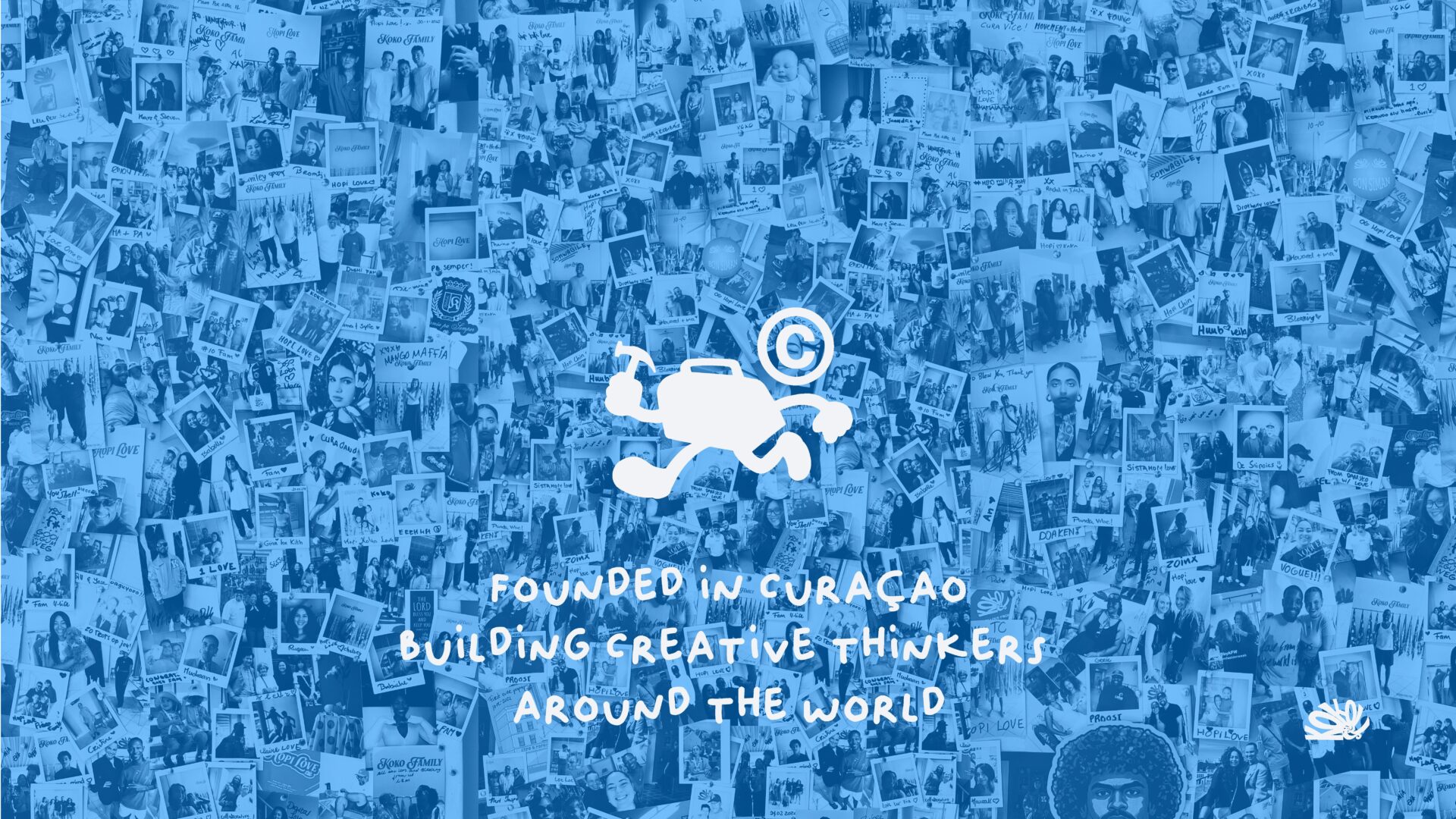
Kyrsten Rasmijn was selected through the Open Call Emerging Design Practices ABCSSS. As founder of Kokolishi, she has been developing scarves and other products inspired by Curaçao and its inhabitants for six years. Together with her husband, she runs a shop and has built a strong creative community under the name Hopi Love Club.
Rasmijn wants to expand the Hopi Love Club into an educational programme where young people aged 15 to 18 can explore their creativity. The programme guides participants through the entire creative process: from finding their vision to producing, branding and presenting their own scarf design.
During the development year, Rasmijn will work with Recent Co. for branding and receive guidance from Tessa of Store Projects. In addition, she is taking courses in 3D fashion design and shoe design herself. The aim of the development year is to establish a separate educational foundation for sustainable growth of creative programmes on Curaçao.
Lloyd Kuijs
digital culture
Lloyd Kuijs was selected through the Open Call Self-taught Designer. Kuijs is a software developer with seven years’ experience, but recently quit to focus fully on teaching game design to young people with disabilities. Besides extending his technical skills, he wants to develop himself in designing and drawing.
Kuijs specialises in pixel art and is developing an interactive online learning platform where students with autism or ADHD, for example, learn game development in a step-by-step manner. His background in special education helps him communicate on an equal footing with this target group.
During the development year, Kuijs will work on his drawing and design skills through mentorships with Scott Flanders and Anthony Jones, and the ArtWod learning platform. He will work on illustrative content for his platform, attend trade shows for broadening his network and develop marketing materials to promote his work.
Maaike Rabbinge
architecture
Maaike Rabbinge was selected through the Open Call Self-taught Designer. Under the name Eenvoud Interieur, she has built a practice that focuses on simplicity, tranquillity and material awareness.
Her work lies at the intersection of interior design, product design and artistic experimentation, where she utilises material-based design and works from existing materials and residual flows. Rabbinge wants to show that ‘waste’ can be the start of something new. Her goal is to create designs that are not only aesthetically pleasing, but also sustainable and functional.
During the development year, Rabbinge is following the pre-master’s in Interior Architecture at the HKU. She is combining the pre-master with several practical and substantive courses, for instance relating to woodworking and presentation skills. She will additionally work on practical projects such as the Container House, a circular school library where children are actively involved in the design process. She will present her work at venues such as GLUE Utrecht and during the Week of the Circular Economy, aiming to inspire a wide audience to be more conscious about how we use materials.
Mathild Clerc-Verhoeven
design
Mathild Clerc-Verhoeven is a textile designer who graduated from the Sandberg Institute (MA F for Fact) in 2023. Clerc-Verhoeven’s work is characterised by playful experiments at the intersection of printing and clothes-making. During the development year, she will expand her technical skills with 3D weaving on a manual loom.
Clerc-Verhoeven is combining individual experimental phases with various collaborations in the development year. First, she will be working with the Textile Museum in Tilburg, which provides support through a programme for designers who are hacking old manual looms. She will also spend six weeks at textile residency Lottozero for research into three-dimensional weaving. Finally, Clerc-Verhoeven is collaborating with Dasha Golova for a presentation of work, and with graphic designer Theodora Jacobs to translate the research process into a publication.
Miao Li
design
Designer Miao Li (Studio Miao Li) graduated from ArtEZ University of the Arts in Product Design. Working at the intersection of craft, ecology and psyche, Li designs ritual objects and scenarios for reflection, contemplation and introspection. For his intuitive practice, he uses plant fibres in different stages of their life cycle, such as Dutch seagrass, Filipino pandan and Japanese wara.
During the development year, Li is working on a design method with which he aims to bridge the gap between making processes and rituals. He is following two residency periods at zen temples in Japan (Eiheiji) and the Netherlands (Uithuizen). He is also organising four ceremonial workshops where participants experience, record and further develop ritual-making processes together.
In his development year, Li is being advised by designer Marcel van Kan and abbot Anton Tenkei Coppens Roshi of the Zen River Temple. Tjeerd Veenhoven is serving as mentor and expert on local material use. To share the results of his development year with a wider audience, Li is exploring options for a digital archive on his website and a physical exhibition.
Nami Kim
digital culture
Nami Kim graduated from the Piet Zwart Institute in 2022 in Fine Art and Design: Experimental Publishing. Kim's practice is situated at the intersection of design and digital culture. Kim is working on alternatives to standardised web design and misleading interfaces. To extend her research into practice, Kim runs the HTML Zine Club. This is a community server where people learn the basics of web coding (HTML and CSS) and host their own personalised web pages. With this server, she wants to create independent online spaces where users have more control over their own digital experience. She examines how large, dominant social-media platforms are increasingly limiting the way people express themselves online.
During the development year, Kim will interview eight artists and collectives about their independent web practices for a podcast series. She is also taking a course in cyber security, providing extensive HTML Zine workshops, and organising an exhibition.
Noémie Tshisumpa
design
Designer Noémie Tshisumpa graduated from the Sandberg Institute in 2022 in Fine Art & Design. Tshisumpa’s practice is situated at the intersection of design, sculpture and sound, and challenges traditional material approaches.
Tshisumpa Integrates decolonial perspectives and uses design both as a tool for critical enquiry and a vehicle for storytelling. Her work redefines form, function and experience through experimental material processes, sonic interventions and participatory spaces.
During the development year, Tshisumpa is immersing herself in material culture and working on her skills in making installations. She will develop a series of sculptures with healing materials such as metal and salt, and experiment with sand casting and patination at MAKE Eindhoven. She is also working on a sound production based on Black oral traditions, collaborating with artists such as Shenece Oretha, Nagare Willemsen and Nkisi. Tshisumpa receives mentorship from Tabita Rezaire on spatial security and decolonial healing. The year results in a multisensory installation that puts marginalised voices at the centre.
Rita Pieternella
design
Rita Pieternella (By Ritz Productions) was selected through the Open Call Self-taught Designer. As a costume designer and founder of Caribbean Love, a Caribbean carnival group, she designs colourful, expressive costumes that merge traditions, self-expression and female power.
Her work is rooted in celebrating identity, Caribbean heritage and femininity. She aims to achieve a bridge between cultural traditions and contemporary expression, with her costumes inviting women to occupy their space, celebrate their sensuality and feel powerful.
In the development year, Pieternella wants to deepen her practice professionally and artistically to become stronger, more independent and visible as a maker. She is being coached in artistic direction and content by Dyonna Bennet and mentored in business via Cultuur+Ondernemen. She is also doing an internship with London designer Melissa Simon-Hartman, taking technical courses with Miriam Bode and INGEnaaimachines, and immersing herself in Caribbean history through collaborations with Know Your Caribbean and The Black Archives. She will present her work during the Rotterdam Zomercarnaval, Notting Hill Carnival and Carnaval on Aruba.
Robin van Namen
design
Robin van Namen was selected through the Open Call Self-taught Designer. She has been making jewellery for friends, family and clients since graduating as a goldsmith from Vakschool Schoonhoven (2023). In late 2024, she launched a self-designed jewellery line.
Van Namen aims to keep the age-old craft of goldsmithing alive in a time when much jewellery is designed digitally. She draws inspiration from rituals surrounding death, craftsmanship and architecture. By sharing stories of life and death with her jewellery, she aims to break the stigma surrounding mourning.
During the development year, Van Namen is immersing herself in stone setting and engraving through courses with Cécile Oorthuis and Gary Roe. She is collaborating with ceramicist Moïra Ramone and jewellery designer Rosa de Weerd. The aim is to eventually present a collection and exhibition that also provides a platform for conversations about mental health.
Ruben Jurriën
design
Ruben Jurriën graduated from the Amsterdam Fashion Institute (AMFI) in 2022 with a Bachelor’s degree in Fashion & Design. He describes his practice as a cross-pollination between fashion, comic-book art and social engagement. Central themes are gender, body and representation.
In the coming year, Jurriën will deepen his research into size-inclusive techniques inspired by Dutch traditional costume. He is also exploring the cross-pollination between fashion and comic-book art. He is developing his skills in visual storytelling and illustration through masterclasses with cartoonist TRIK and illustrator Abe Borst.
Jurriën is being guided by mentors Bas Kosters and Chet Bugter. He will present the results in a fashion collection that brings together both lines of research. For the presentation, he is collaborating with the State of Fashion platform, Amsterdam Fashion Week, photographer Jesse Nijmegen and FASHIONCLASH.
Sangmin Oh
design
Textile and product designer Sangmin Oh (Osangmin Studio) received his Bachelor’s degree in Studio Public Private from the Design Academy Eindhoven in 2022. During his development year, Oh is building on his graduation project Knitted Light: a series of objects that combine 3D knitting techniques with LED lighting. The objects tell the story of climate change and its impact on coral.
Oh’s ambition is to create large-scale interactive installations from textile materials. He wants to delve into their narrative power and actively engage audiences in an immersive way on social issues such as climate change. Oh is focusing on a number of core activities during the development year: creating interactive experiences, developing technological skills, further deepening knitting techniques, and experimental material research in relation to nature and sustainability.
Oh is seeking guidance and expertise from Studio Wieki Somers and the Textile Museum in Tilburg, among others. He is exploring opportunities to present his work in a museum or at international fairs such as Dutch Design Week.
Sankrit Kulmanochawong
design
In 2022, Sankrit Kulmanochawong graduated from the Gerrit Rietveld Academie in Graphic Design. Kulmanochawong positions himself as a food designer, designing public installations with interactive, edible experiences. He is fascinated by food as a carrier of stories about people, cultures and the exchange of ideas and tastes.
In his work, Kulmanochawong explores local ingredients, cultural differences and the way food is packaged in Dutch supermarkets. He looks at both the food itself and the often hidden stories behind it.
During the development year, Kulmanochawong will be working on the ‘Palate Cleanser’ project, in which he is researching local ingredients from the Netherlands and Thailand. He explores the ingredients through the lens of taste, history and social context. The project culminates in a public workshop in Amsterdam, a publication about the social impact of food, and an interactive food-design experience at the launch.
Shin Hua Yang
design
Shin Hua Yang (Atelier Shin) is an interdisciplinary designer who graduated from the Design Academy Eindhoven (MA Social Design) in 2023. Yang explores how colonial histories and cultural representation shape contemporary consumer aesthetics, particularly in migrant products and their packaging.
Yang uses methods from autoethnography, field research and speculative fiction to create layered visual and material experiences. These invite the audience to question concepts such as ‘authentic’ or ‘traditional’. During the development year, Yang is working with the International Institute of Social History (IISG) to research archival material. For the conversion to physical work, a collaboration with the Textile Museum has been established, as well as a mentoring track with curator and artist Huirong Ye. The final presentation will take the form of a large-scale textile installation.
Sondi
digital culture
Sondi graduated from the Sandberg Institute in 2023 (MA Blacker Blackness). Her practice operates at the intersection of design and digital culture. With game design and interactive media, Sondi explores how technology can be reshaped through alternative mechanisms and ecological approaches. She is involved with digital spaces, diasporic identities and radical imagination to challenge dominant narratives.
During her development year, Sondi is exploring the integration of ecological principles into her practice. She is also organising discussions on alternative gaming practices, to build an online and offline community around her work. The development year will result in prototypes that will be published online, and a physical manual on alternative game design. In this way, through video games, performances, installations, participatory experiences and digital experiments, Sondi is pursuing new inclusive and radical ways of interaction.
Teresa Fernández-Pello
digital culture
Teresa Fernández-Pello graduated from the Design Academy Eindhoven in 2022 in Contextual Design (MA). Fernández Pello connects high-tech with the mystical, using computer technologies and microchips to do so. She explores whether new forms of mysticism can contribute to slower, more balanced perspectives in the digital world.
In her development year, Fernández-Pello is looking at microchips as design objects, and exploring the patterns and layers of materials. To do this, she is collaborating with Stephan Wesveen of TU Eindhoven’s Design Research Group. Fernández-Pello is also researching craft traditions, such as etching and engraving, at Make Eindhoven and Crafts Council. In this way, she aims to reinterpret the aesthetics of microchips and develop new applications for contemporary chip manufacturing.
At the end of the development year, Fernández-Pello will create installations and collectibles in which her experiments take tangible form. She will present these at, for example, Collectible Design Fair, ADORNO and APOC Store.
Tim Christiani
design
Tim Christiani was selected through the Open Call Self-taught Designer. Christiani studied Fashion Design and has worked at brands such as Ninamounah and Bonne Suits. In early 2024, he launched his own design practice and presented a gender-neutral capsule collection at Galerie de Schans.
Christiani’s work explores vulnerability, gender identity and mortality, using raw materials such as human hair and animal feathers. A personal experience of supporting his friend to euthanasia fundamentally changed his practice and prompted more honest, bold designs.
During the development year, Christiani is working on the ‘Memento Mori'’collection, under the mentorship of couturier Ronald Kolk. He also wants to work with craftspeople such as wigmaker Sophie van den Berg and starting shoemaker Bibi Boissevan. His aim is to develop a visual language that focuses on physicality and impermanence. He plans to present the results in a performance in September 2026.
Vennica Sidibanga-Kaseye
design
Vennica Sidibanga-Kaseye studied Fine Art & Design, Typography, Werkplaats Typografie at ArtEZ University of the Arts (2020-2022). Sidibanga-Kaseye is a graphic designer who navigates between print, field recordings and sound. She explores how personal, colonial and architectural histories are made visible (or invisible) in public spheres. The focus of her practice is on heritage in the African, and specifically Congolese diaspora.
In the development year, Sidibanga-Kaseye is examining the role of self-publishing, visual archives and sound archives in relation to coloniality, identity and race. She wants to link design and audio more closely. During the year, she will make an audio publication and follow the Typography & Book programme at the Plantin Institute of Typography. She is also building a central website that brings her work together and developing publications on the role of music in migration, culture and resistance.
Yufei Gao
digital culture
Yufei Gao is a design researcher and storyteller, who graduated from the Design Academy Eindhoven (BA Design Research) in 2023. She uses data and digital tools to create stories about our relationship with technology and environmental awareness. She does this through poetic storytelling, parametric design, 3D printing and ceramics.
In the development year, Gao is conducting materials research with non-extractive biomaterials in collaboration with Omlab, and refining her storytelling strategies with Lab AIR. A study trip to Jingdezhen in China is also planned, where she will expand her ceramics expertise. In the long term, Gao wants to research teaching environments and develop workshops on sustainable digital craft practices.
Yousra Razine Mahrah
design
Yousra Mahrah is a Moroccan-Dutch fashion designer who studied Fashion Design (BA) at ArtEZ University of the Arts (2019-2023). She uses fashion to break social taboos. During the development year, Mahrah explores the complexity, beauty, and multifaceted nature of religious women's identities. She specifically focuses on the choice to let go of a personal identity for a higher religious purpose. Mahrah aims to break down prejudices surrounding this process and create space for inclusivity, acceptance, and nuance.
Moroccan craft techniques such as traditional embroidery patterns and woven reeds are important elements in her work. They connect Mahrah’s designs to her cultural background and keep age-old crafts alive. Mahrah is mentored by Zineb Seghrouchni of DAR Cultural Agency and Mariette Hoitink of HTNK. The year culminates in the presentation of a new collection.
Talent Development
Makers need room to grow. Given the freedom to experiment and take risks, they uncover new possibilities – not only for the future of their own practice, but also for the development of their field, or even society.
Yet that space rarely appears by itself. The Fund therefore helps designers and makers in the field of design, architecture and digital culture to develop both artistically and professionally. We do so through grant schemes and open calls tailored to the different stages of a creative career. Whether you are just starting out after graduating from an arts programme, have built op your own practice as a self-taught maker, or are already well established in the field, the Talent Development programme puts you and your development centre stage.
Grant Schemes and Open Calls
The Talent Development Grant Scheme is intended for makers who have completed a relevant higher education programme in the arts or design. If you have developed your practice independently or completed a senior secondary vocational design programme (MBO), you can apply through a different route, starting with the Open Call Self-Taught Designer. If you are based in Aruba, Bonaire, Curaçao, Saba, Sint Eustatius or Sint Maarten, the Open Call Emerging Design Practices ABCSSS is your starting point.
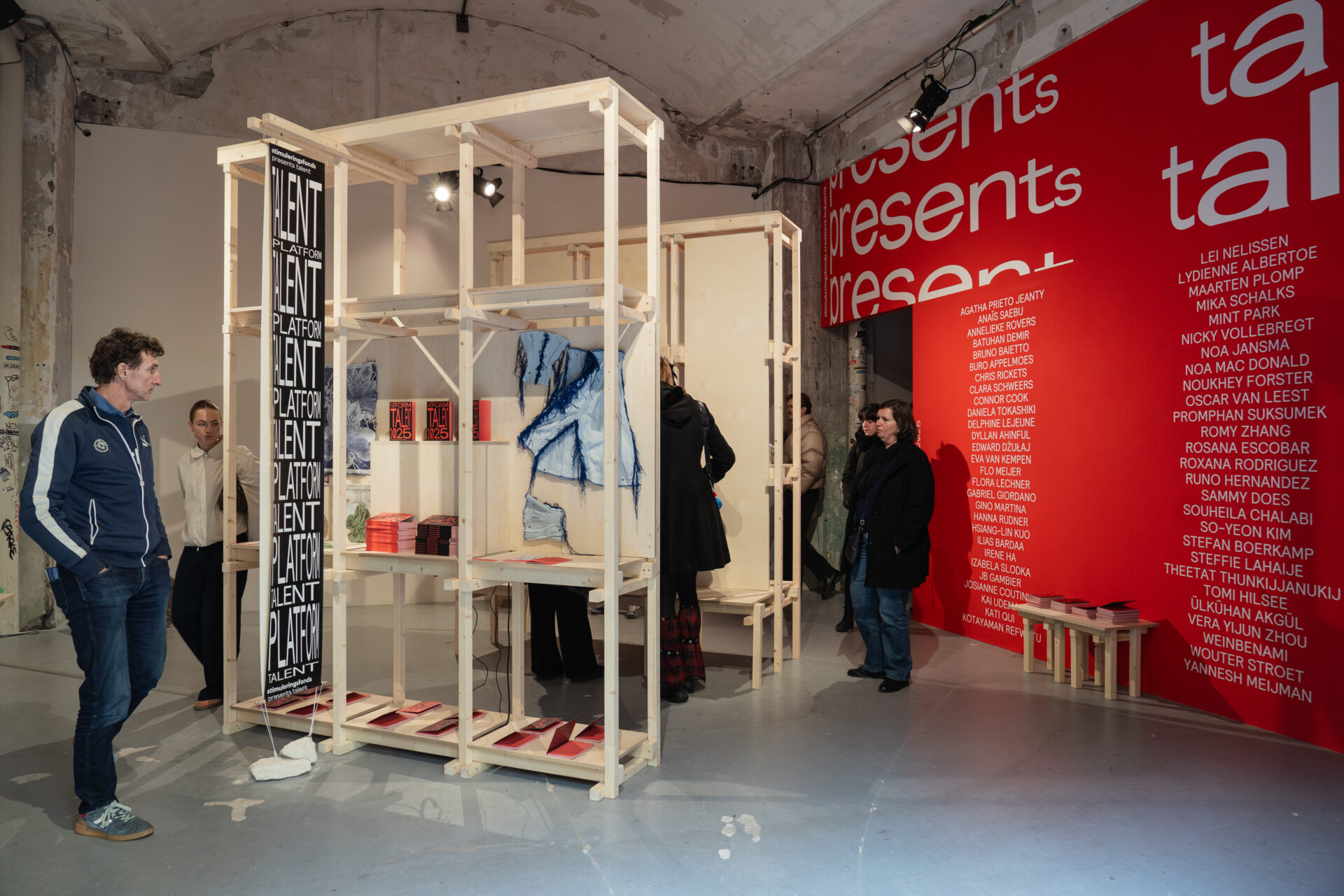
Those selected for the Talent Development Grant Scheme receive more than a grant: they also benefit from dedicated guidance. Through themed days focused on personal growth and network-building, and a collective public presentation at the end of the development year, we aim to ensure that the grant becomes a genuine step towards a stronger practice, new collaborations, follow-up projects and fresh commissions. We see our support not as an end point, but as the beginning of something bigger.

Research on ten years of Talent Development
To gain a better understanding of the impact of our support, the Creative Industries Fund NL commissioned a study into the Talent Development Grant Scheme. What contribution does the scheme make to creative practices and to the fields of design, architecture and digital culture? The impact study highlights both short-term and long-term effects.
Wat gebeurt er nadat makers ruimte hebben gekregen om te experimenteren en zich te ontwikkelen? Veel deelnemers van het talentontwikkelingsprogramma bouwen na hun ontwikkeljaar verder aan hun praktijk, met bijvoorbeeld internationale residenties, tentoonstellingen en presentaties op toonaangevende podia.

Discover more