Research into 10 years of Talent Development
The Creative Industries Fund NL’s Talent Development Grant Scheme aims to strengthen the artistic and professional development of up-and-coming designers and makers in the cultural and creative sector. Whether a grant is awarded or rejected influences the further development of applicants’ design practice. What are the observed effects in the short and long term? And what role does the grant play in the development of the fields of design, architecture and digital culture?
3 June 2026
The Talent Development Grant Scheme (2013 – present) offers designers and makers in the fields of design, architecture or digital culture the opportunity to invest in their artistic and professional development for a year. To determine the effects of the talent development grant, the Fund commissioned HTH research and Myriam Vandenbroucke to carry out an impact study. Through desk research, group discussions with experts, case studies, questionnaire surveys and analysis of the Fund's registration data, both quantitative and qualitative research was carried out into designers and makers who applied for a development grant between 2013 and 2022. We have organised the findings using our Theory of Change. You can read more about this in the final paragraph of this article.
In this article, we also outline the background and key findings of the study. The quotes are taken from the case studies, which describe the career progression of six supported designers. Curious about the full study?
about the Talent Development Grant Scheme
We receive an average of over 200 applications per year for the Talent Development Grant Scheme. Well over one in six applications is successful. Applications are mainly submitted in the field of design and, to a lesser extent, in the fields of architecture and digital culture. Success rates for the various disciplines vary very little.
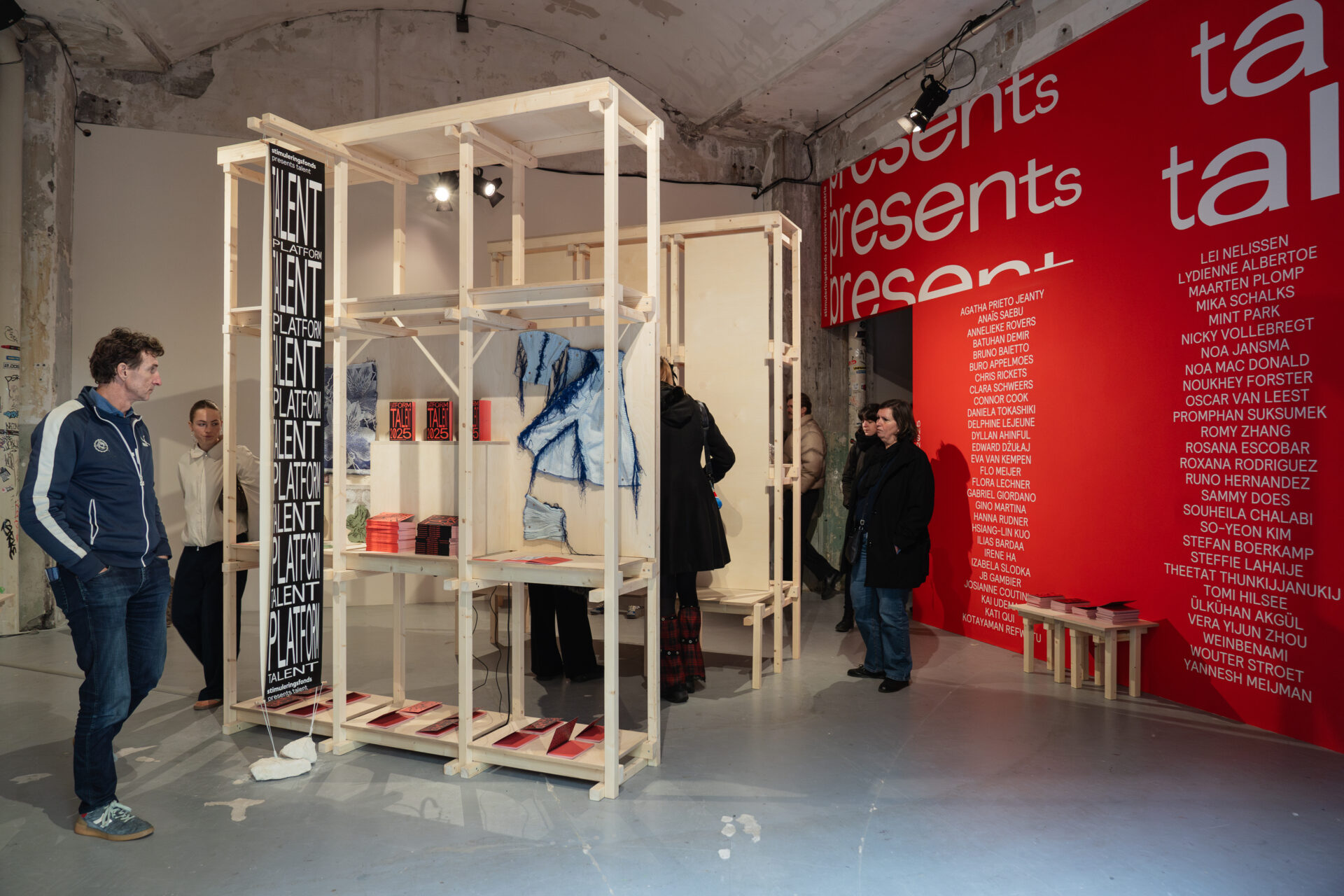
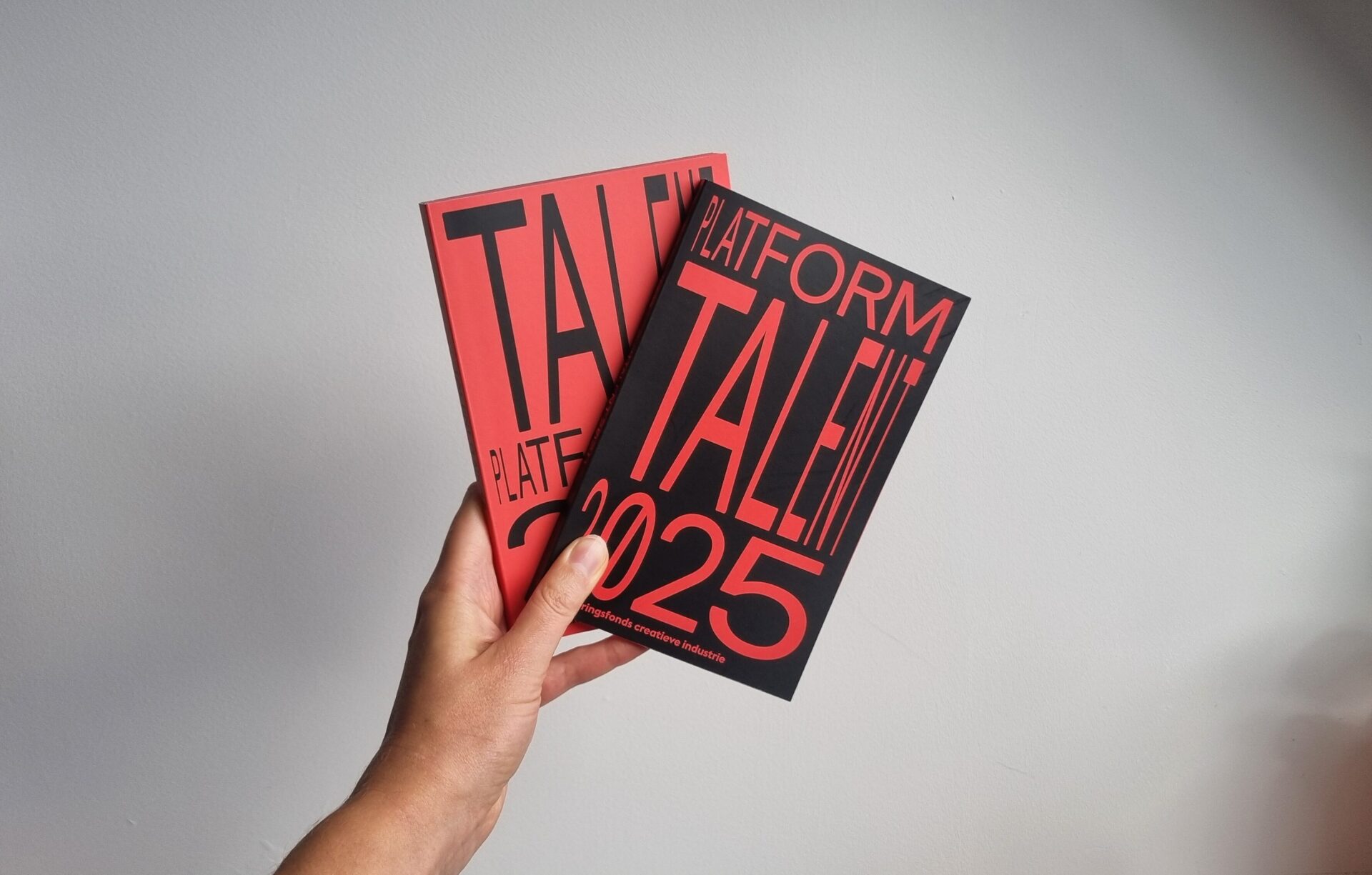
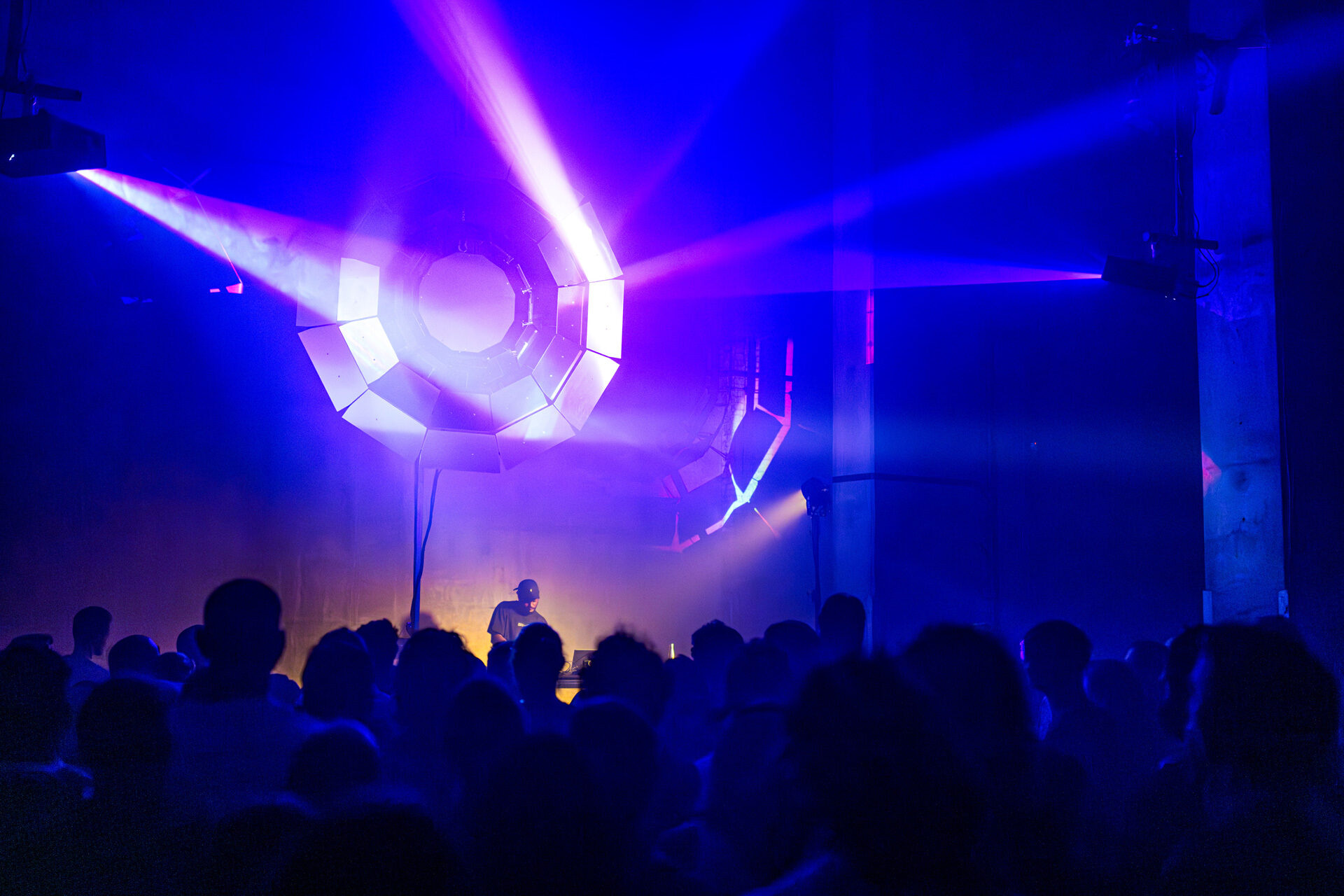
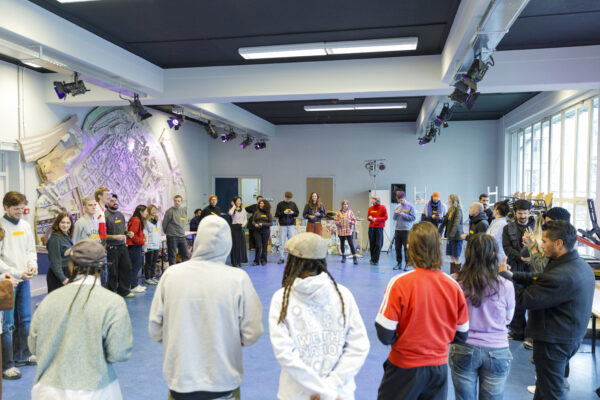
Participants in the Talent Development Grant Scheme receive not only a grant but also guidance. We organise activities for the designers and makers who receive the grant, such as introductory and themed days focused on personal growth and networking. Furthermore, the development year concluded with a joint presentation during Dutch Design Week in Eindhoven: Stimuleringsfonds presents Talent.
The grant feels like a certificate that opens the door to prestigious commissions and projects.
Effects on design practice
The impact study reveals effects that apply to designers and makers who received a talent development grant (outcomes). We have broken down the findings into short-term and long-term effects.
Short-term effects
The visibility generated by the grant has a knock-on effect within the network of designers and makers. Grant recipients do not necessarily make new contacts. What the grant does contribute to, however, is recipients entering into new collaborations with existing contacts.
Recipients develop more strongly than unsuccessful applicants in the first two years after being awarded a grant, particularly in terms of personal growth. They dare to experiment more, take more risks and, as a result, develop greater confidence in their own abilities.
In the years following the awarding of the grant, recipients feel the pressure to create and exhibit new work. Some feel that they have delved deeper during the development year into the autonomous art and design world: a world with high expectations where constantly creating and exhibiting new work is the norm.
The research shows that grant recipients gain new perspectives, working methods and skills during the development year. They apply this knowledge directly in their practice.
The grant helped me to see opportunities to earn a living as a designer and artist.
Long-term effects
Almost all respondents are active as designers or makers, both those who received a grant and those who were rejected. Most of them work in the field of design, which is also where most applications originate. Successful applicants are more likely to be self-employed. Those who were rejected are more likely to be in paid employment. Three-quarters of all respondents work as self-employed individuals.
The research shows that successful applicants continue to apply the knowledge they acquired during the grant period. This involves a combination of new perspectives, working methods and skills.
The case studies show that the grant initiates a shift in how designers and makers position themselves. Some explore the boundaries of their discipline, which translates into new commissions and collaborations, sometimes even outside their original field. Others seek new ways to present their work to an audience.
Designers and makers are increasingly collaborating and connecting with broader networks. This shift is one of the most striking developments of the past decade. The grant offers designers and makers opportunities to further interconnect their existing networks.
The research shows that both formal and informal networks play a role in this. Alumni networks, colleagues, presentation spaces, creative hubs and branch organisations are important places for designers to develop and connect.
The case studies show that all participants generated more work after the grant than before. The grant acts as a catalyst. Designers and makers attract new clients, are invited to exhibitions or performances, and enter into new collaborations.
The research shows that grant recipients are more likely to take further steps to secure funding after completing the talent development programme. They are more likely to secure follow-up funding, both from the Fund and from other funds. More than three-quarters of them subsequently submitted another application to the Fund. Among those whose applications were rejected, that percentage was lower: 57%.
Grant recipients are more frequently invited to act as experts and sit on juries or advisory committees. They also receive more positive reviews or other forms of media attention than unsuccessful applicants.
Recipients are more frequently asked to teach on design courses, which allows them to pass on their new knowledge and skills.
Thanks to the grant, I was given the space to delve deeper and expand my network.
Effects across disciplines
Through the Talent Development Grant Scheme, we support individual designers and makers in their artistic and professional development, but we also aim for a broader impact. Designers and makers develop new perspectives and working methods that are adopted by peers within and related to their field. Ultimately, the fields of design, architecture and digital culture evolve because of the collective achievements of makers, institutions, educational programmes and other players in the field. Our support is only part of that story.
The impact study helps us gain a better understanding of the role that the Talent Development Grant Scheme plays and can play in this. Among other things, the study examined the extent of the impact that grant recipients themselves experience. The figure below shows the degree to which they notice an impact on their activities, position and network within their field.
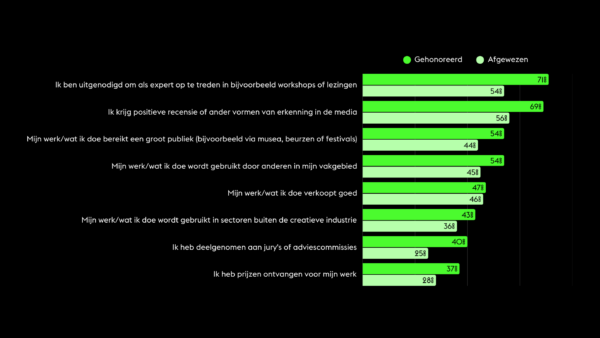
The impact study highlights two short-term effects of the talent development grant on the professional fields. For instance, the grant enables makers and designers to establish a stronger position within their field. For some, the grant provides the scope to conduct their own research alongside commissioned work. For others, particularly self-taught people, the grant helps them to position themselves within the autonomous art and design world. In general, grant recipients develop a clearer artistic direction and a stronger position as experts within their field. A second effect concerns a shift in working methods. It is striking that, at the time of their application, grant recipients are more likely to work autonomously than unsuccessful applicants, who tend to work in a more applied manner. In the years following the awarding of the grant, this picture shifts: in their current work, recipients have started to work in a more applied way.
Furthermore, the research shows that the new perspectives and working methods that successful applicants make their own during their development year have a long-term impact on the field. Peers and organisations build on them or draw inspiration from them.
You are strengthened as an individual designer and expert, but I notice that societal challenges actually call for a designer who is part of a larger whole.
theory of change
The impact study into 10 years of Talent Development forms part of a broader impact strategy, in which we continually assess the outcomes of our support so that we can better understand what works and what does not. We do this not only to learn from our own experience, but also to demonstrate how we utilise public funds, for whom, and to what end. By not only measuring what changes, but also uncovering the mechanisms through which this happens, we gain a more nuanced picture than numbers alone can provide.
Header: Django van Ardenne
Discover more