search

Dynamics in Architecture: A New Generation of Public Programmes

Although we move through and within architecture every day, conversation about it tends to remain confined to fellow professionals and those directly involved. The dialogue between the architecture world and the wider public does not always come about naturally. The Architecture Grant Scheme supports projects that engage (professional and general) audiences in new ways. This article highlights three diverse public programmes in which architecture is publicly celebrated, critiqued, and illuminated.

This is a descriptive translation of the original Dutch essay by Daphne Bakker.

The Architecture Grant Scheme supports projects that contribute to the quality, development, or deepening of the field of architecture in the broadest sense. In recent years, the Creative Industries Fund NL has supported various projects through the scheme that stimulate dialogue about the profession. These are projects by architects who may or may not collaborate with makers from other disciplines, with researchers, or with critics. In this article, Daphne Bakker showcases the diversity of these projects in terms of their nature, dynamic, and reach.

Static Dynamics

'Architecture is frozen music': this quote from Goethe has been cited by architects so often that it has since been reduced to a cliché. The static quality of architecture has, in the process, become an almost unquestioned assumption. That dynamics are inherent to architecture — in both a negative and a positive sense — receives far less attention. Architecture is sustained by a continuous flow of capital, material, energy, and labour, but dynamics can also be found in use, adaptation, and renovation. It is precisely these dynamics that offer opportunities for building meaningful relationships with a public. The three projects highlighted in this essay represent a new wave of public programmes that move with the challenges of the field, and in doing so engage audiences in new ways.

Interval

Architecture and dance are brought together with some regularity, but the manner in which this happens often adds little value to either discipline. In recent years, dancers have increasingly been deployed to promote architecture. For recently completed projects such as Westbeat in Amsterdam and KMSKA in Antwerp, short films of a few minutes have been produced showing one or more dancers moving through the space. Editing techniques are used to accentuate the choreography, and quasi-philosophical ideas are invoked in search of depth. But despite all the high ideals, these films remain essentially promotional material. From the dance world, there is often a more ambitious attempt to connect dance and architecture. Conny Janssen Danst, for instance, regularly makes use of unique locations to realise productions, resulting in beautiful performances that open up spaces, such as tram depots and old shipyards, to the public. Architecture here primarily functions as an interesting backdrop, however: all attention goes to the dance, leaving the dynamic interplay with architecture largely underexplored.

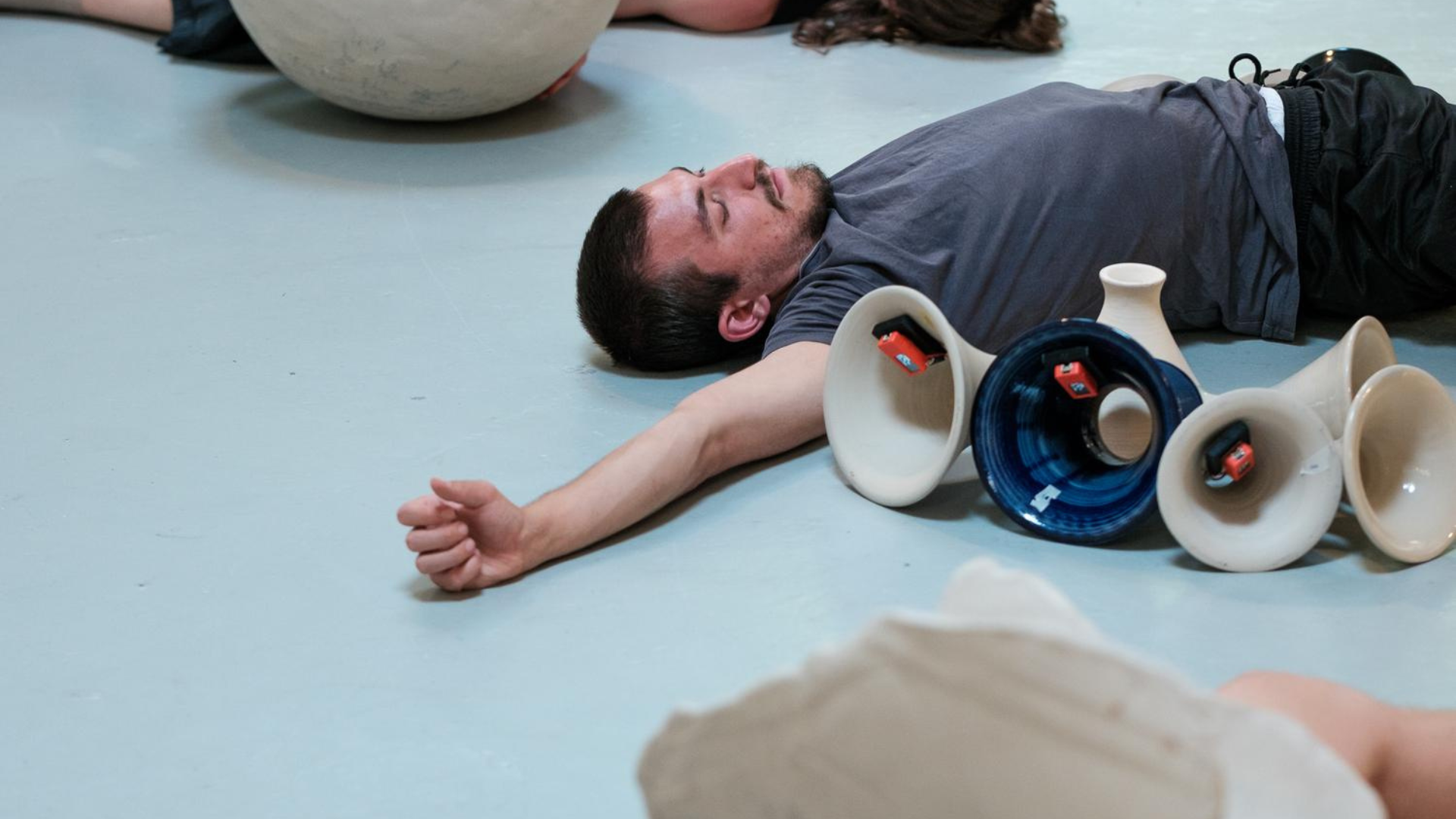
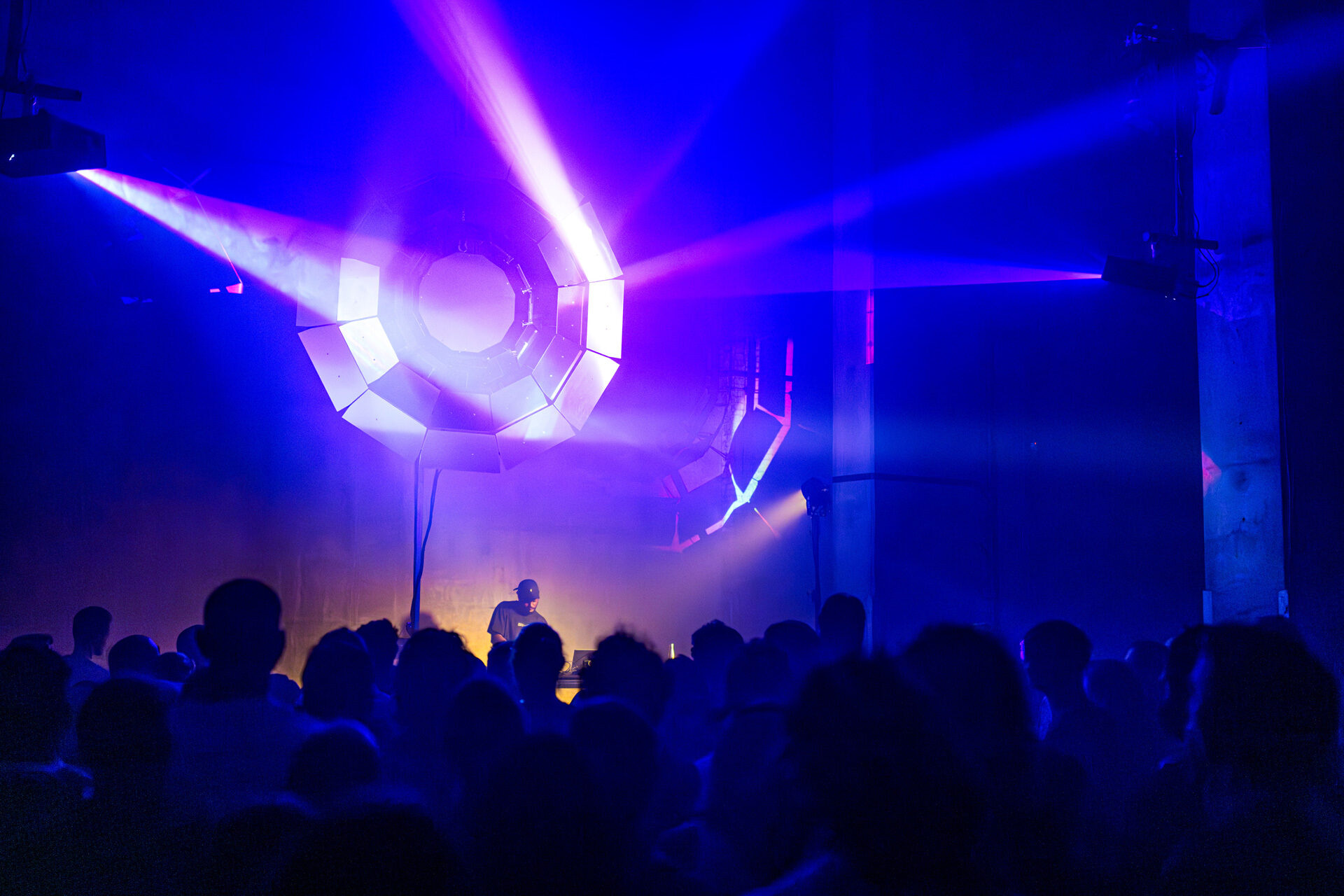
Interval at Muziekgebouw

To genuinely interrogate the relationship between dance and space, a different approach is required. Choreographer Amos Ben-Tal and architect and artist Gosse de Kort found it in abstraction. Ben-Tal and De Kort were brought together by the WhyNot Festival, an annual interdisciplinary festival focused on bringing different art forms together to explore the interaction between dance and audience. The result was Interval, a dance performance that makes the interaction between dance and space explicit (see this video). In Interval, dancers move through a continuously shifting architectural landscape. The installation consists of twelve rotating 'mills' that form a dynamic and challenging space through which the dancers must navigate.

The ambition of Interval was to engage and inspire both a dance and an architecture audience, opening up new possibilities for both disciplines. To offer the public a glimpse into the creative process, lectures and conversations were regularly organised. Researcher Katía Truijen introduced audiences to the theoretical frameworks underpinning the work, while the makers entered into dialogue with each other and with the public. Within the landscape of architectural public programmes, Interval is unique: it foregrounds what cannot be expressed in words, through sensation and movement.
Persistence of Questioning

That the field of architecture has been in an existential crisis for years is not a new observation. But the problems it faces are becoming increasingly urgent and require analysis. The editorial team of ArchiNed, the first Dutch online platform for critical reflection on architecture and urban design, observed that the same themes kept recurring in their archive. These themes could be distilled into four questions: What does it mean to be an architect? Can you design in an ethically responsible way? What is architecture? And what is the purpose of architecture culture? By returning to these themes, naming them explicitly, and subjecting them to scrutiny, ArchiNed seized the opportunity to free these subjects from repetition, to rise above the immediate and cast a look at the limitations of the present and the possibilities of the future. The result was The Persistence of Questioning (PoQ): a series of in-depth essays written by committed designers and academics from across the breadth of the field, accompanied by several podcasts and public events aimed at stimulating reflection within the profession.

Event 'The Hearing: Architecture & Ethics'

The foundation of PoQ was formed primarily by various forms of writing, ranging from academic argument to personal reflection, with the visual essay as the sole exception. The texts for each theme were compiled into booklets, made freely available in different formats. Four podcasts, each devoted to one of the four questions above, gave a professional podcast maker free rein to engage as creatively as possible with the conventions of the format.

Due to restrictions imposed by the pandemic, most public gatherings were cancelled. PoQ was, however, able to conclude with the public event The Hearing: Architecture & Ethics, held as part of Rotterdam Architecture Month. During 'The Hearing', the ethical responsibility of architects in relation to society and climate took centre stage. An administrative checklist, developed by the fictional Ministry of Ethics, formed the basis for a debate on the social and ecological impact of design decisions. Five experts, including a theatre maker, two architects, a landscape architect, and a social geographer, each shared their own perspective on ethics within architecture. In an open, theatrical setting on the roof of Het Nieuwe Instituut, moderator Jaap Jan Berg invited the audience into critical reflection and debate.

Subjectieve Atlas van Amsterdam

The concept of participation is increasingly a subject of debate. Citizens have the impression that it sometimes amounts to token gestures of inclusion in matters of urban policy. At the same time, much ink has been spilled on the enormous gap between those who shape policy and the rest of society, particularly regarding the needs and wishes of people outside the highly educated urban bubble. Driven by the desire to confront the blind spots in creating an inclusive living environment, Architectuur Centrum Amsterdam (Arcam) took the initiative to invite publisher Subjective Editions to dedicate an edition to the Dutch capital.

Workshop 'Subjectieve Atlas Amsterdam' at Arcam. Photo: Sanne Couprie

The Subjectieve Atlas presents itself in a conventional format: a publication, an exhibition, and a number of public events. Yet the purpose of the project, which emerged from workshops with students and local initiatives, is in essence subversive. Where conventional atlases are produced by experts laying claim to objectivity, the Subjectieve Atlas — conceived by Annelys de Vet and Kurt Vanbelleghem — offers an alternative. These are cartographic publications in which a country, region, or city is mapped by its own inhabitants. How those inhabitants, often people living at the margins of society, experience and visualise their surroundings forms the content of the atlases. It is a form of counter-mapping: a methodology for destabilising the dominant narrative.

In recent years, Arcam has been actively working to democratise architecture within Amsterdam. With the fourteenth edition of the Subjectieve Atlas, Arcam connects with existing but often overlooked networks and communities within the city. With the help of seven partners, including IHLIA and Verdedig Noord, residents who are typically excluded from design and policy processes were brought in to form the editorial team of the atlas. A tried-and-tested mode of working — workshops led by people and teams with close ties to various communities — yields experiments and revelations. In this way, the Subjectieve Atlas broadens our definition of cartography, presenting a rich diversity of representations of lived reality. Sketches, photocollages, diagrams, and alternative maps give voice to the concerns, dreams, and knowledge of Amsterdammers who fall outside the group of affluent, highly educated urban residents.

Spread from 'Subjectieve Atlas van Amsterdam'

Ripples

All three projects had to navigate the COVID-19 pandemic. This brought with it very familiar frustrations — from exhausting video calls to cancelled performances and gatherings. Ultimately, it does not appear to have had a significant impact on the quality of the output. On the contrary, the pandemic lent a sense of urgency: the importance of the design and accessibility of public space had not been discussed and experienced on such a vast scale in recent history. Now that society has recovered, there is a sense that people are eager to forget this disruptive experience and return to the status quo. The question is whether these programmes can hold on to that urgency and renewed awareness.

The impact and significance of these audience-oriented projects are difficult to measure through clicks, social media impressions, and tickets sold. An important measure is what the makers learn and how this knowledge spreads as ripples through the field, leading to the deepening of skills, new insights, and the initiation of new projects. This is most clearly visible in the case of Interval, whose reach can be precisely traced: from 26 performances to more than 3,000 visitors, with performances in various theatres across the Netherlands, from Amsterdam to Hengelo. Yet the makers attach great value to the individual responses of audience members, which frequently show that their intentions genuinely landed. De Kort and Ben-Tal view the horizontal, interdisciplinary mode of collaboration they developed as an asset to their respective practices and hope to continue working together in the future.

Open atelier at Architectuur Centrum Amsterdam (Acram). Photo: Patrice Winfield

In a reflection on the process and purpose of the Subjectieve Atlas, Anne Vera Veen and Annelys de Vet entered into conversation with economist Najah Aouaki, who closely followed the process. When asked whether the Atlas's aim of inviting designers and policymakers to adapt their practice was ambitious enough, Aouaki responded that while we organise our economy according to inclusive and progressive frameworks, it is not fair to place that responsibility solely with designers. Nevertheless, Aouaki sees genuine opportunity in projects like the Subjectieve Atlas, because it attempts to shift those frameworks: 'If we do this well, a generation grows up that feels it has worth, that it matters that they are here, that they are valued.' This is precisely what Arcam is working towards, by making underrepresented histories and experiences visible, particularly through its annual programme 'Hervertellingen' ('Retellings'). This programme focuses on contemporary housing protests and housing policy, and explores how residents can participate as equal partners in shaping their own living environment.

The public programmes discussed here demonstrate how valuable relationships between architecture and the public can come about. They show that architecture is not merely static, but a dynamic field full of interaction and adaptation. They create new platforms where dialogue about the profession can be deepened and broadened — both within the discipline and with a wider public. In doing so, they give rise to new ways of experiencing, discussing, and understanding architecture.

Daphne Bakker is a writer, researcher, and adviser within the Talent Development Grant Scheme of the Creative Industries Fund NL.