
search

Atlas of Queer Anatomy: reimagining anatomy education

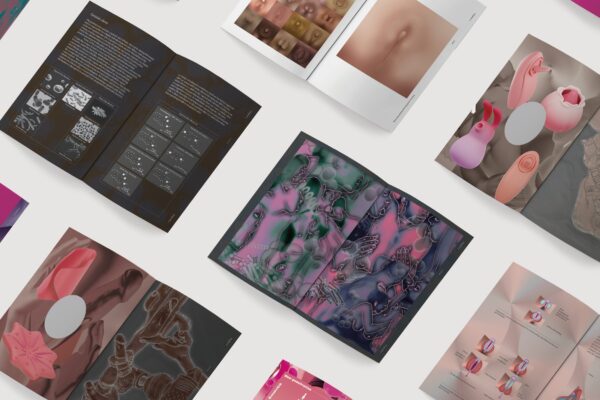
Intertwined queer bodies, intersex genitalia and gender-affirming surgeries finally finding their place in the field of anatomy: this is the Atlas of Queer Anatomy by Kuang-Yi Ku (Studio Ku). The project challenges the medical patriarchy and heteronormativity of traditional anatomy education through a book, exhibitions and soon theatre.

image of inclusive medical education

The Atlas of Queer Anatomy is an ironic reflection on the Atlas of Human Anatomy, the classic standard work drawn by American medical illustrator Frank H. Netter in 1957, which is still used worldwide in medical education. For designer and artist Kuang-Yi Ku, that book is more than just an outdated reference work. It symbolises a way of looking at things that has for decades determined what constitutes a normal body, and what does not. ‘Anatomy textbooks have always been built around the white, heterosexual, male body,’ says Ku. ‘And that image is still being passed on worldwide in medical education.’

Anatomy textbooks have always been built around the white, heterosexual, male body. And that image is still being passed on worldwide in medical education.

That is precisely why Ku did not want merely to offer criticism, but to create something new. ‘We wanted to actively build an alternative anatomical language through art and design,’ he says. In that respect, the atlas is a concrete proposal: a visualisation of diversity and of the relationships between human and non-human bodies, which shows what a more inclusive medical education might look like.

two disciplines, one language

Ku developed the project together with Professor Henry de Vries, who specialises in sexually transmitted infections (STIs). It sounds like an unlikely combination, but the two have more in common than you might think at first. As well as being a designer, Ku is also a trained dentist, and both are part of the queer community. Drawing on that shared background, in both professional and personal terms, they know better than anyone where the medical system falls short.

We wanted to actively build an alternative anatomical language through art and design.

How does that play out in their collaboration? De Vries contributes the medical knowledge: about sexually transmitted infections and the micro-organisms that coexist with our bodies and are an inseparable part of them. Queer people are more frequently affected by STIs, and according to Ku and De Vries, this fact deserves not to be obscured but instead to be normalised. By questioning what we consider healthy and what we consider disease, and how vague that boundary is at a microscopic level, where viruses and hosts are constantly interacting with one another. Ku looks for ways to make precisely that visible, in a visual language that is both factual and disruptive. ‘Thanks to this collaboration, the work can simultaneously contain medical precision and artistic critique,’ says Ku.

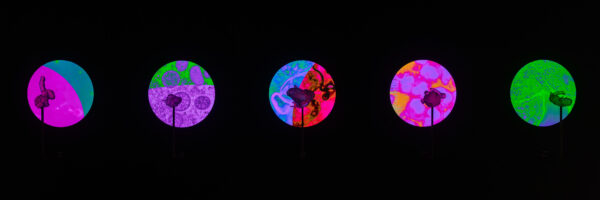
Video by Wouter Sessink, commissioned by MU Hybrid Art House & BAD Award

collective knowledge

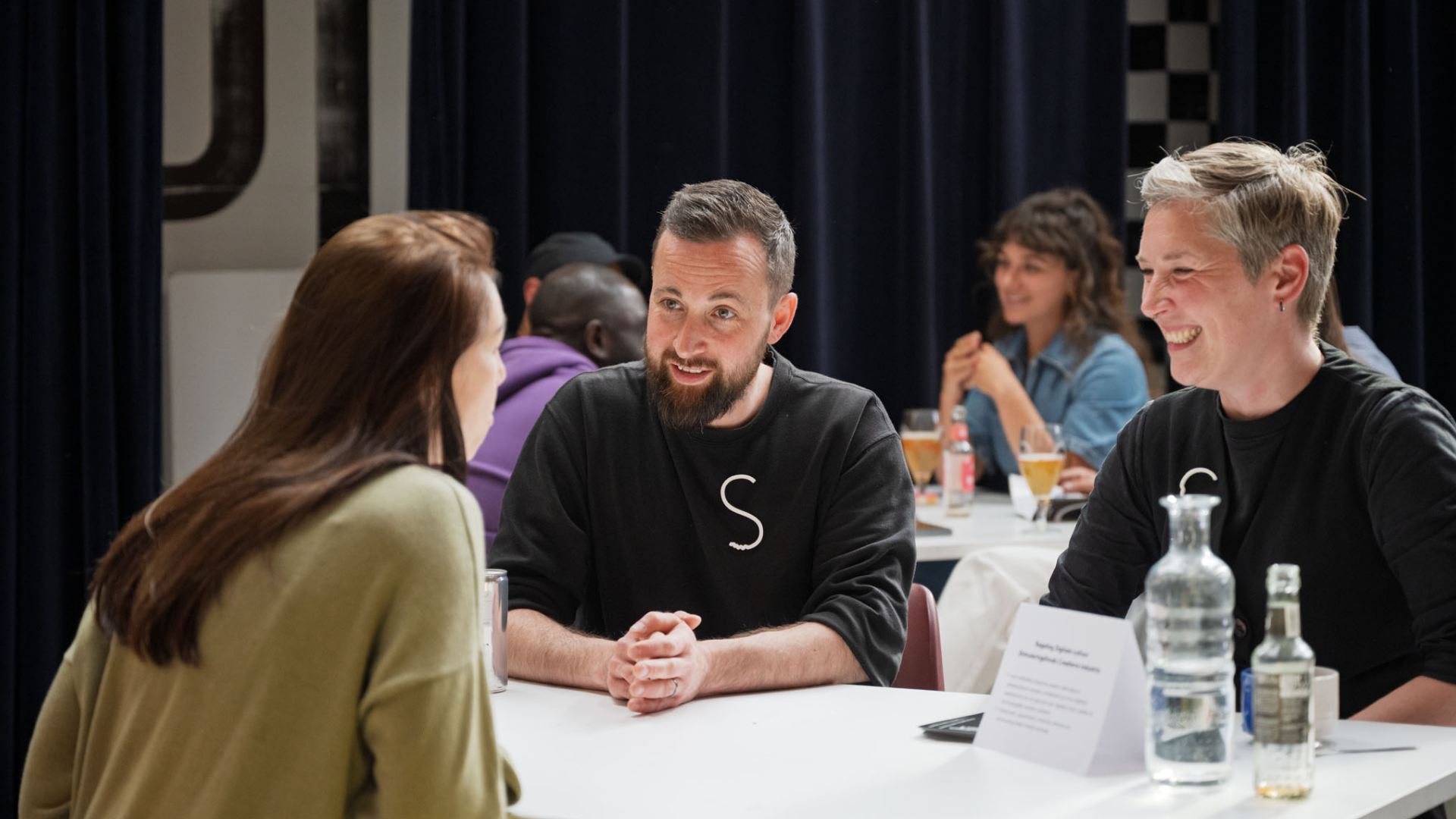
An essential part of the project is the so-called Queer Anatomy Lessons: participatory workshops in which young doctors, creative professionals and a wider public are invited to create their own queer anatomical collages. These are then included in the atlas and on the website, making the book not just a work by Ku and De Vries, but by a growing collective.

What Ku observes in these sessions is striking. Medical professionals respond in an overwhelmingly positive way to the themes of diversity and inclusion, but also offer very tangible criticism. Some participants pointed out that the anatomical images in the atlas still follow the conventional approach of depicting the body as separate organs. This feedback led to participants being actively encouraged to disrupt the images: to deconstruct and reassemble them. ‘This kind of response is hugely important to us, because it takes the project beyond our own perspectives,’ says Ku.

from art space to medical lecture theatre

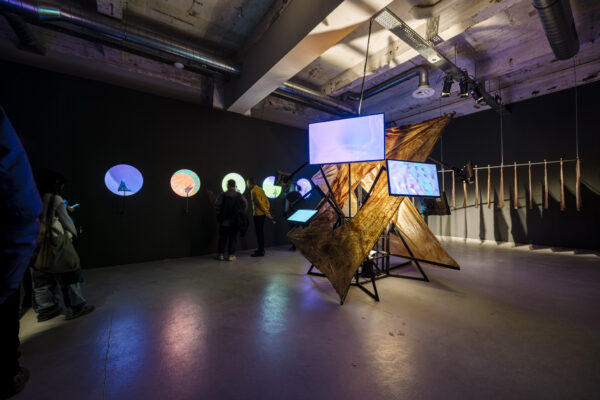
The atlas was exhibited both in artistic contexts, such as the MU Hybrid Art House in Eindhoven and the Taipei Fine Arts Museum in Taipei, and in medical settings such as the Amsterdam UMC. These two contexts open up the work in different ways. In artistic environments, it is approached as a critical or speculative project. In medical contexts, the reactions are more direct and practical. Some doctors who took part in the workshops incorporated the methods into their own medical lessons. ‘For us, this is a very important step,’ says Ku. ‘It shows that design can actually have a tangible impact on society.’

Exhibition Taipei Fine Arts Museum in Taipei. Photo: Wei-Tsan Liu

anatomy theatre

Ku now wants to further deepen that impact with a new project: Queer Anatomy Theater. Whereas the atlas is a book, this will be a series of fictional anatomy lessons for medical professionals, presented in the format of a reality show for social media. That format deliberately borrows elements from popular culture, while social media provides much broader access to medical knowledge than a traditional textbook could ever offer.

The inspiration stems in part from the workshops, where Ku noticed that participants with a medical background often shared deeply personal experiences and exposed issues that normally remain hidden within medical education. Taking the anatomy theatre as its starting point, the new project responds to the historically authoritarian tradition of anatomical theatres in Western medicine, whilst simultaneously challenging that tradition.

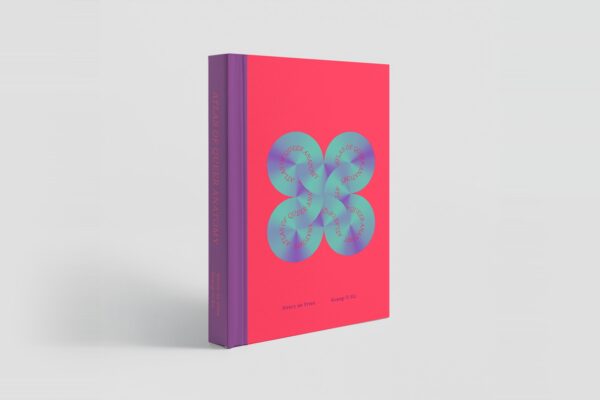
Mock-up Atlas of a Queer Anatomy

Atlas of Queer Anatomy received € 30,000 in 2023 from the Design Grant Scheme. The book is published by and available from Limestone Books. In addition, € 50,000 has recently been awarded to the follow-up project, Queer Anatomy Theatre, through the same grant scheme.