search

Shortlist Prix de Rome Architecture 2026 announced

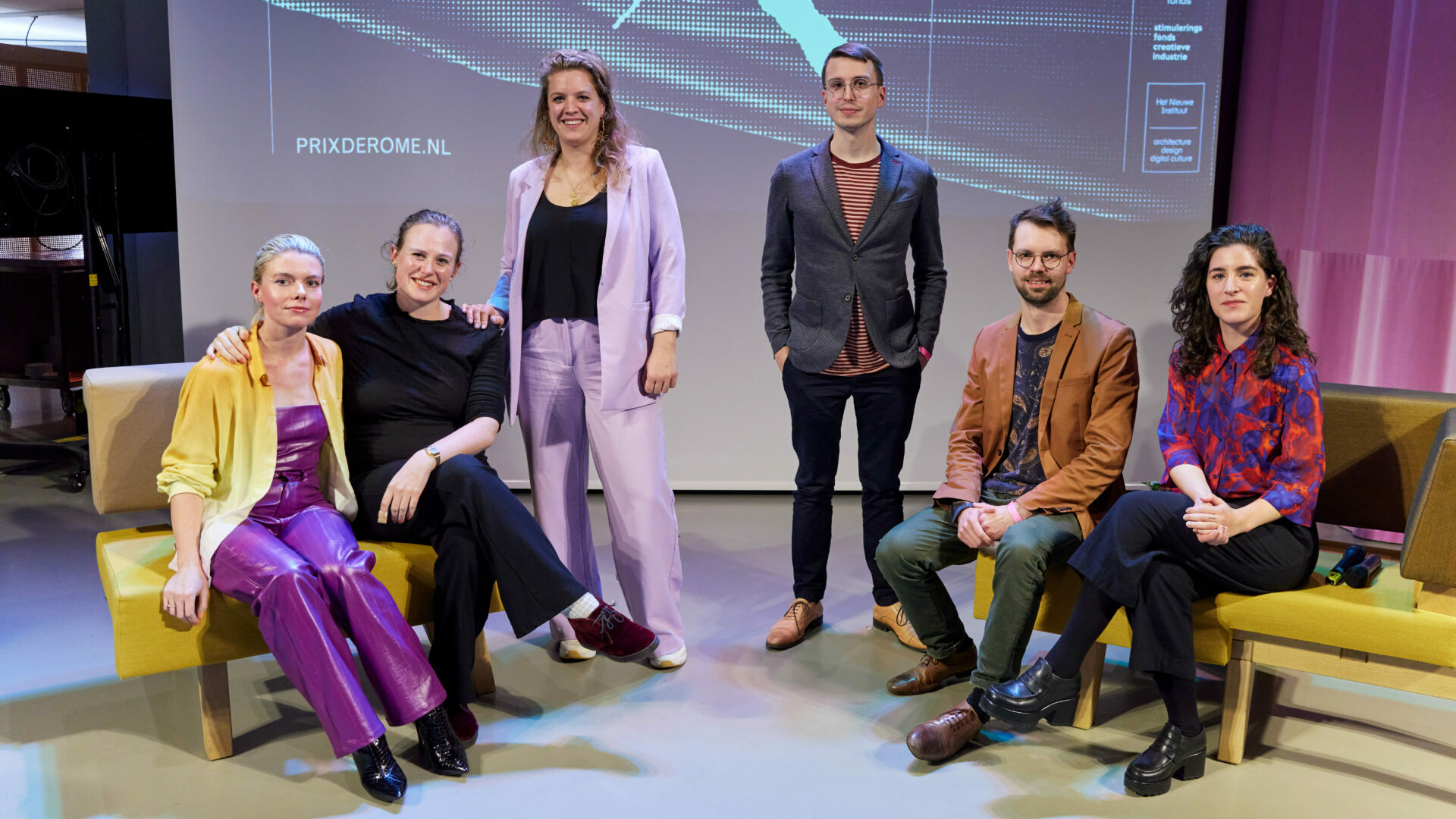
The international Prix de Rome jury has selected four entries for the shortlist of the Prix de Rome Architecture. The nominees are: Dérive (Hedwig van der Linden and Kevin Westerveld), Maarten Plomp and Iris van der Wal, Namelok (Wiegert Ambagts and Kaj van Boheemen) and Słodka x Zatta (Izabela Słodka and Federica Zatta).

15 April 2026

The nominees receive a budget to work on a follow-up assignment over a period of four months. In this next phase, the designers will be asked to further develop their problem definition and positioning in relation to the theme Terminal Velocity. They will work towards a spatial intervention for a site of their own choosing, as a response to an ‘acceleration’ that is changing our world faster than we can adapt. Based on the outcomes of the working period, the jury will select a winner on 17 December 2026. The winner will receive a sum of € 60,000 and support for an international residency programme of their choice. The results will be on display from December at the Nieuwe Instituut in Rotterdam.

In addition to the nominees, the jury has also recommended four entries for an honourable mention: David Habets – The Forgetting of Air, Radical Architectural Pedagogies; Hannah Liem – Future Pillars of the Past; Rik Lambers – The Spreadsheets of Risk; and Studio Method (Pedro Pantaleone and Riel Bessai) – Maasvlakte 3: Space for Civic Pleasure.

judging

The jury made its selection from 60 anonymous entries by architects, urban designers, interior architects, landscape architects and other spatial designers who responded to the Open Call: Terminal Velocity. Each of the shortlisted candidates presented a topical, relevant and strongly coherent spatial statement, which made the jury keen to see the further development of their proposals. In addition, the jury recommended four entries for an honourable mention, because they serve as examples for other designers seeking to establish their own position in relation to the major challenges facing the field of spatial design.

The full jury report can be found here.

The jury members for the Prix de Rome Architecture 2026 are:

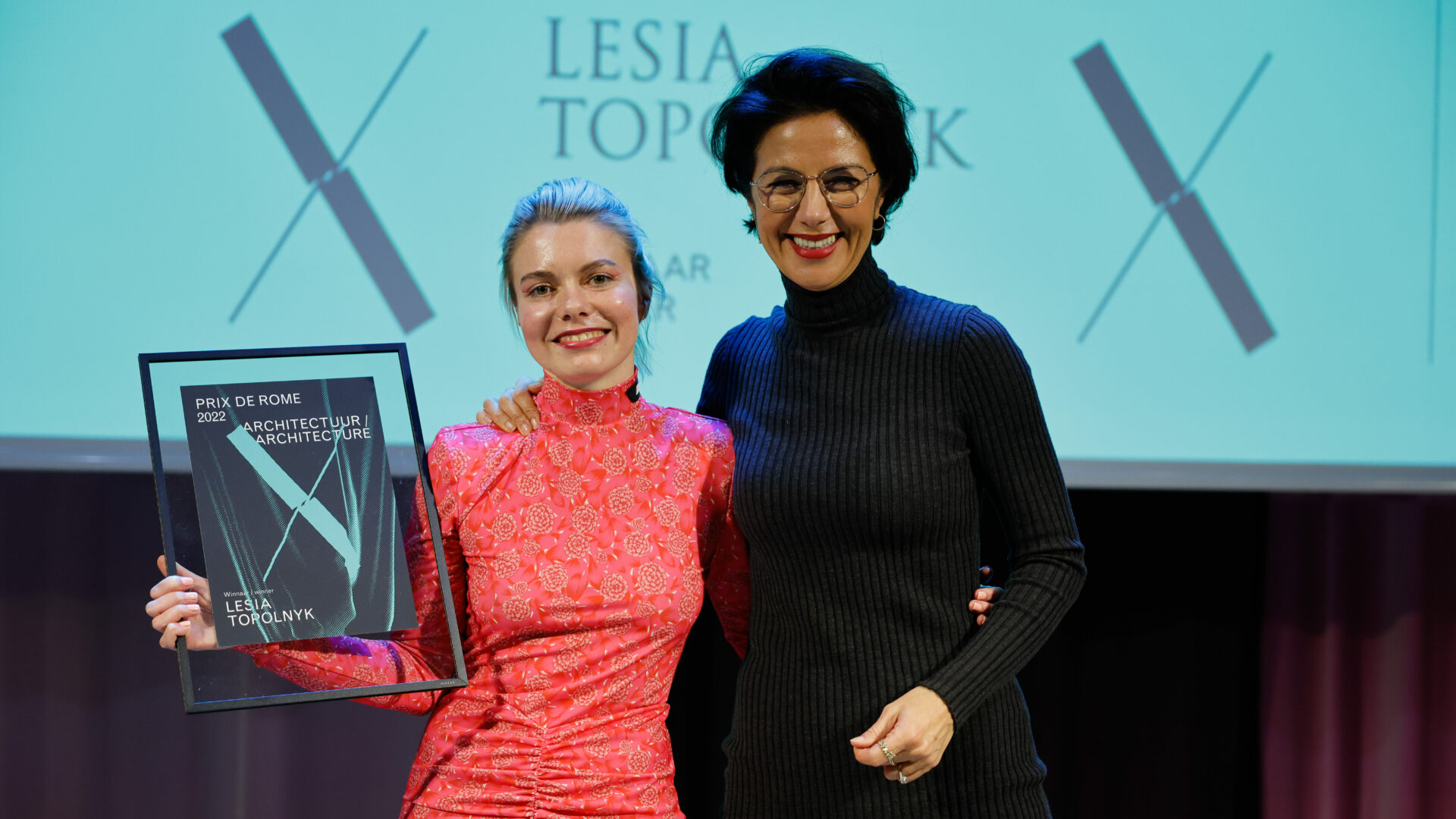
  • Lesia Topolnyk (winner Prix de Rome 2022, architect, founder of StudioSpaceStation)
  • Dirk Sijmons (landscape architect, co-founder of H+N+S Landscape Architects)
  • Nick Axel (deputy editor-in-chief at e-flux Architecture, head of Architectural Design at the Gerrit Rietveld Academie)
  • Paul Cournet (architect, founder of CLOUD)
  • Inez Tan (architect, partner at Office Winhov)
  • Ekim Tan (architect, founder of Games for Cities, director of Play the City)
  • Ivo de Jeu (programme manager architecture at the Creative Industries Fund NL, technical chair)

The Prix de Rome Architecture, the Netherlands’ oldest, most prestigious prize for architects under the age of 40, is organised every four years by the Creative Industries Fund NL on behalf of the Ministry of Education, Culture and Science. The presentation is organised in collaboration with the Nieuwe Instituut. An accompanying publication is being published by Jap Sam Books.

Holding the Image, Losing the Ground - Namelok

Namelok: Wiegert Ambagts (1992) and Kaj van Boheemen (1992)

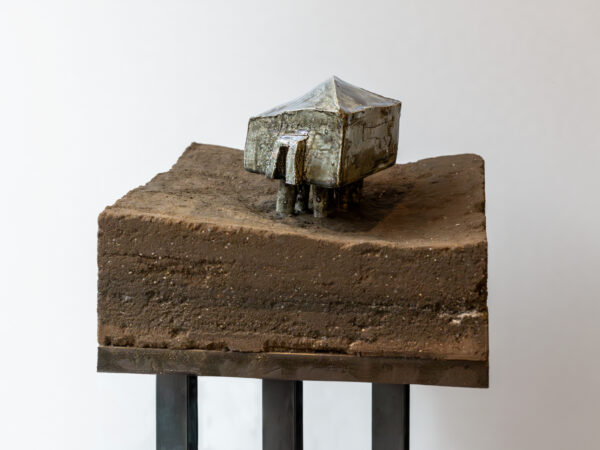
Holding the Image, Losing the Ground addresses a paradox in our landscape heritage: the landscape we want to preserve is disappearing precisely because of the efforts to maintain it. The jury appreciates the care with which the proposal is situated in the Krimpenerwaard. The peatland area is typical of the Netherlands, but faces challenges that are increasingly common worldwide: the slow oxidation of the peat, the subsidence of agricultural land, and the impossibility of maintaining both a living landscape and a productive agricultural economy. The proposal argues that conservation is a form of structural violence: to preserve the landscape, processes must be continually intensified that simultaneously deplete the soil. Particular appreciation was expressed for the spatial statement of ceramics, which manages to encapsulate this contradiction in the landscape in a single, powerful, recognisable image.

Prefab as Found, a Factory for Architectural Reuse - Maarten Plomp en Iris van der Wal

Maarten Plomp (1992) and Iris van der Wal (1992)

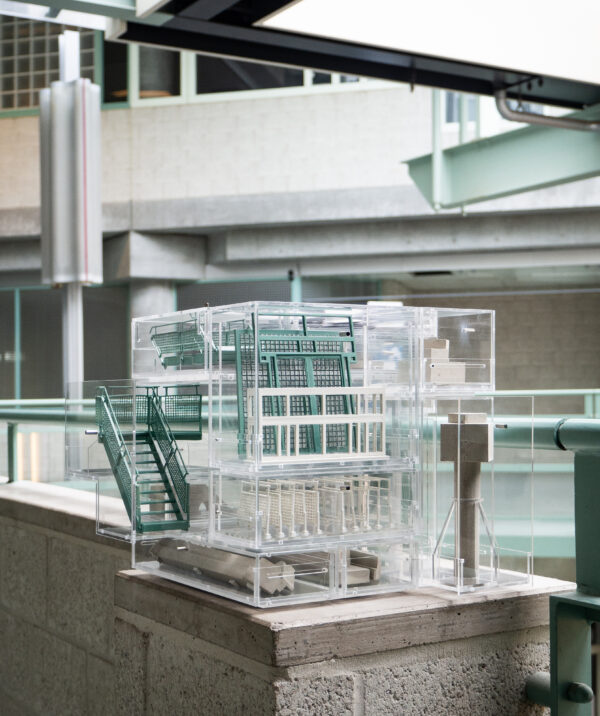
Prefab as Found, a Factory for Architectural Reuse is a plea for a radical rethinking of adaptive reuse, where built heritage is adapted for new functions. The proposal argues that the true value of an existing building lies not in its load-bearing structure, but in its components and their relocation. The starting point is the former Ministry of Social Affairs in The Hague, designed by Herman Hertzberger. According to the jury, the proposal makes a valuable contribution not only to the debate on adaptive reuse, but also to the discussion about Dutch modernist heritage that has been ongoing for years. The proposal also encompasses the re-assembly of the former ministry into a factory for architectural reuse. This factory is a spatial and programmatic proposal for a new national industry centred on the dismantling, cataloguing and relocating of building elements from existing structures.

Slow Assembly - Słodka x Zatta

Słodka x Zatta: Izabela Słodka (1989) and Federica Zatta (1988)

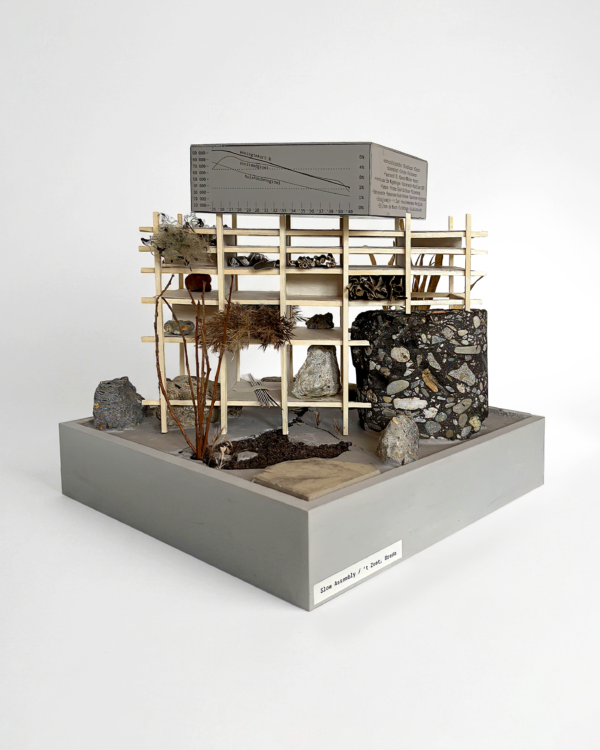
Slow Assembly challenges the time-bound nature of construction practice and proposes taking the 'bioregional material time' as a starting point — as a counterbalance to the political acceleration of housing construction in the Netherlands. Particular appreciation is expressed for the choice of location in Breda: the former site of the CSM Suikerfabriek, known as 't Zoet. This is one of the 24 National Acceleration Sites (Versnellingslocaties) designated by the government to contribute to the construction of 100,000 homes per year. At this site, where the pressure to build quickly is intense, Słodka and Zatta's argument becomes concrete and palpable. The jury also appreciates the concept of 'multiple temporalities': the idea that the processes relating to construction practice do not all proceed at the same pace. The proposal argues for a tectonic approach that can connect these divergent tempos in a productive way.

Welcome To The Black Box - Dérive

Dérive: Hedwig van der Linden (1992) and Kevin Westerveld (1990)

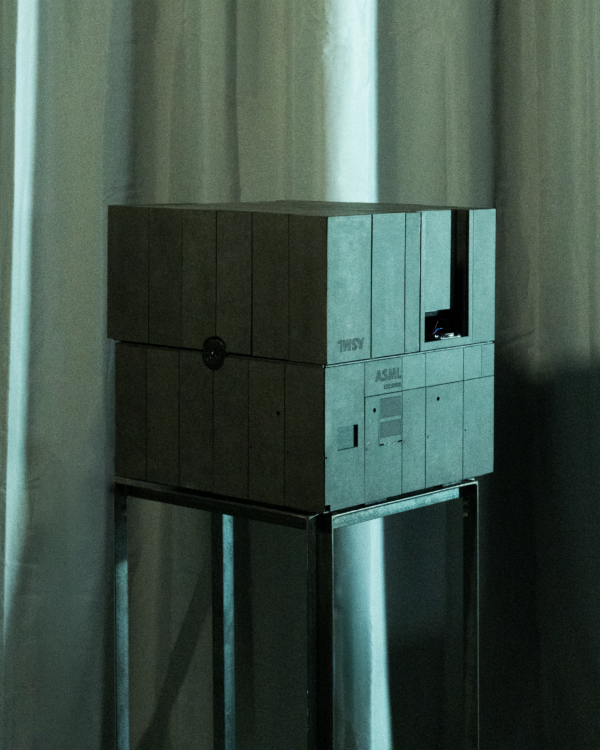
Welcome To The Black Box focuses on one of the most defining technological developments of our time. The proposal explores the spatial consequences of accelerated industrial growth caused by digitalisation. Not to celebrate or condemn it, but to speculate on it. The proposal identifies chip manufacturer ASML as one of the main drivers behind Terminal Velocity in the Netherlands. Building on the Latourian concept of 'blackboxing', Van der Linden and Westerveld argue that the production process of digitalisation is deliberately obscured. They see it as the task of architecture to open this black box and reveal how the production process works, in order to gain greater control over its spatial consequences. The jury regards the speculative scenario as a valuable tool for making visible what is at stake if technological acceleration continues.