search

Spot-on Utrecht: makers in the Werkspoorkwartier

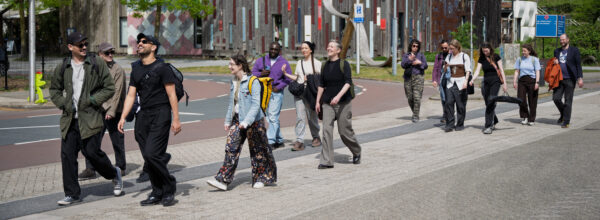
On Friday 17 April, staff and advisers from the Creative Industries Fund NL visited the Werkspoorkwartier in Utrecht to get acquainted with the creative industry in this area. Regional scout David Claassen took the group on a tour of makers and organisations on the former industrial site in the Zuilen district, which in recent years has developed into one of the city’s most vibrant areas. The quarter connects creative makers with a wide audience and is attracting an increasing number of new initiatives that reinforce each other.

30 April 2026

Utrecht is the smallest province in the Netherlands in terms of surface area, but boasts one of the country’s largest creative sectors, fuelled by the HKU University of the Arts Utrecht and a strong tradition in film, animation and design. ‘Many graduates stay on in the city, but affordable workspace is under pressure and rents are higher than in other major cities,’ David told Fund staff and advisers on the morning of 17 April. The creative hubs the Fund visited during Spot-on Utrecht (Hof van Cartesius and De Nijverheid) therefore play an important role.

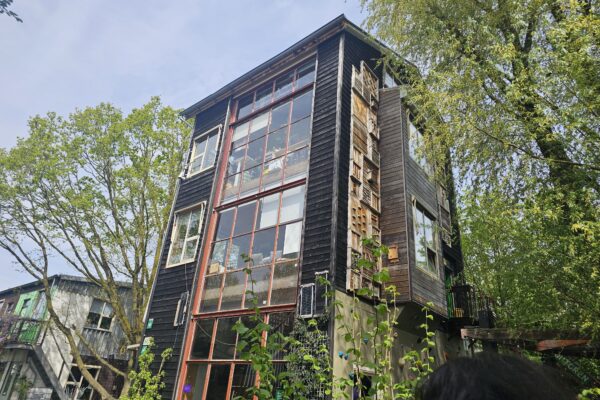
Boomtoren at Hof van Cartesius, designed by Archifré.

Self-made and future-proof

We started at Hof van Cartesius, a cooperative creative hub immediately adjacent to Zuilen station. What sets Hof van Cartesius apart from many other creative hubs is that the makers themselves own the land, thereby ensuring the long-term affordability of workspace. De Boomtoren, designed by architect Alessandro Zena from Archifré, is a visible expression of the Hof’s approach. The building is made almost exclusively from reused materials: timber from a demolished school in Rotterdam, doors and windows from a housing renovation, and platform slabs from Maarn station as foundations. The façade is clad with wooden mosaic tiles that serve as an insect hotel, co-designed by vocational college students studying architecture. ‘The tiles provide a shelter for insects, birds and bats,’ explained Alessandro Zena. The building therefore symbolises circular construction as well as the self-organising power of the makers who work there.
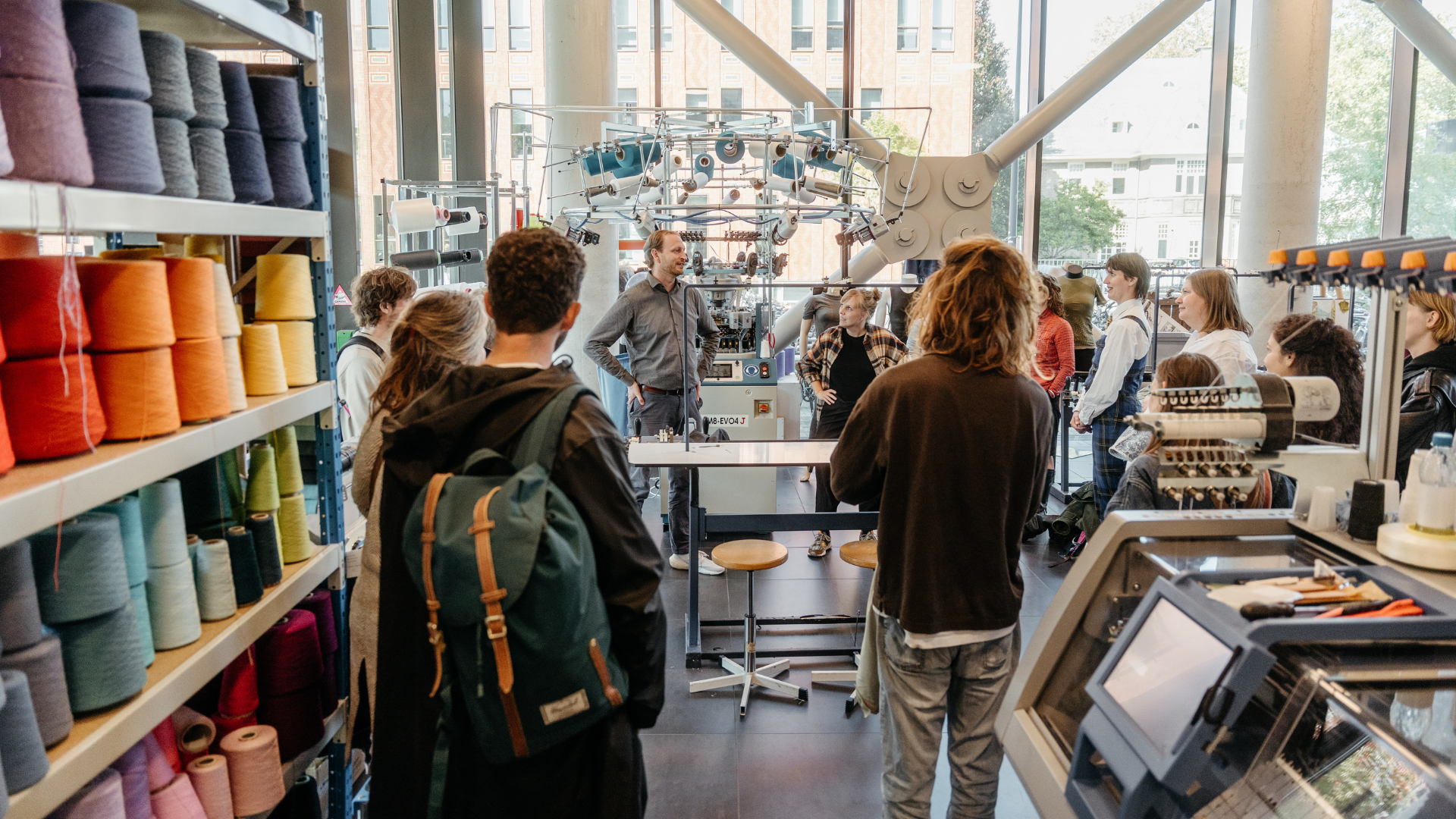
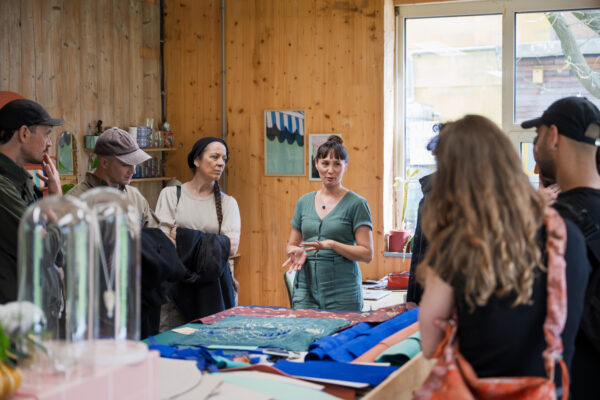
Visit to the workshop of Renske Versluijs at Hof van Cartesius. Photo: Tom Philip Janssen.

A place for experimentation and inspiration

At Hof van Cartesius, we also met Veerle Pennock from Acid Solder Club, an open workspace where musicians, engineers and hobbyists come together to learn about and experiment with electronics. ‘In Utrecht, a city with both a strong technical and musical tradition, the combination works well. Musicians and digital makers attract each other and learn from each other’s expertise,’ says Veerle.

At the Hof, we also met designer Renske Versluijs, who combines an applied practice in jewellery and objects with research and experimentation. The leather she uses is sustainably dyed and biodegradable, and the scraps are composted in the courtyard gardens at the Hof. Alongside this focus on circularity, she also explores the origins and history of materials. ‘A recent residency in Jakarta brought me closer to the history of Batik and to my own family history,’ she explains.

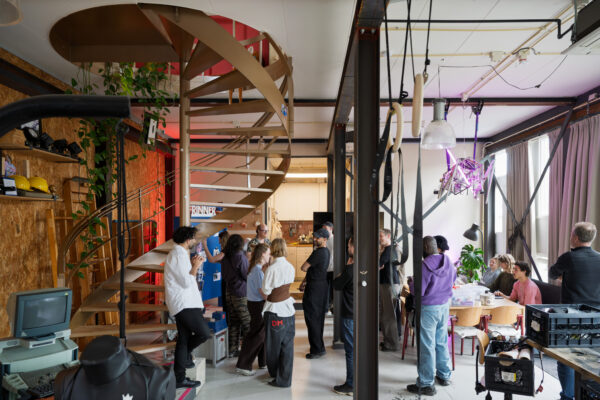
Visit to SETUP at De Nijverheid. Photo: Tom Philip Janssen.

From art canteen to cultural free zone

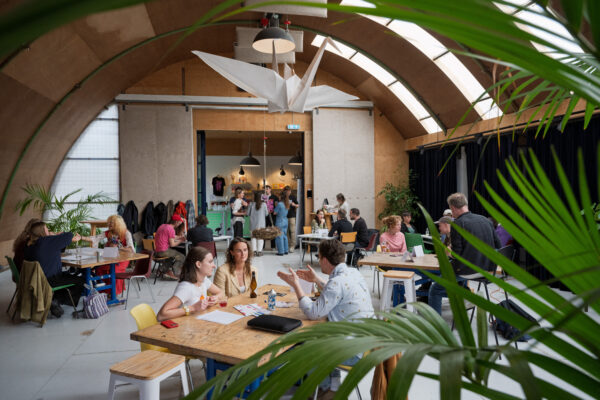
We then headed to De Nijverheid, another creative hub within walking distance of the Hof. What began as a small, improvised art canteen nestled amongst self-build studios has since grown into a cultural free zone with studios for more than 70 makers, exhibition spaces, an art café, a waterside terrace and a weekly cultural programme. The combination of making, presenting and coming together makes the place particularly lively. The public is just as welcome there as the makers themselves.

Here we visited SETUP, where Jelle van der Ster showed us the Facebook Museum: an installation that invites visitors to reflect on the legacy of a social medium. Visitors can, for example, donate data and leave memories. SETUP makes technological developments tangible by letting people experience them, instead of warning against them.

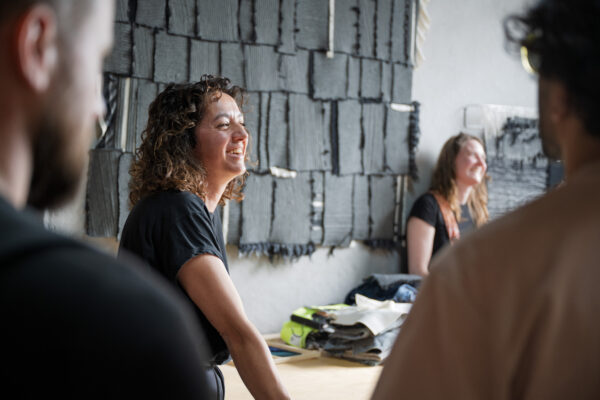
Visit to Nanette de Kool. Photo: Tom Philip Janssen.

We concluded the tour with textile designer Nanette de Kool. Nanette screen-prints, washes and reassembles leftover materials and circular 3D knits into wall hangings and room dividers, with each production history remaining visible in the finished piece. She will soon be sharing her studio with a student at the HKU, characteristic of the exchange that is second nature at De Nijverheid.

Encounter between funds and makers

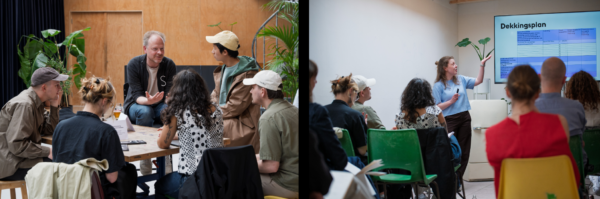
At the end of the afternoon, the public programme kicked off at VOGELFREI. Makers could attend speed dates with the Fund and other organisations such as the Gemeente Utrecht, Voordekunst/Cultuurfonds Utrecht and Utrecht Creative Community. Those who preferred a hands-on approach took part in a workshop about the Fair Practice budget.

Speed dates and workshop 'Fair Practice Budget'. Photos: Tom Philip Janssen.

A key insight from that workshop was that a realistic budget can actually strengthen your application. Paying yourself a fair wage and having a feasible schedule are not mere formalities, but demonstrate to the committee that your project is well-thought-out. As a starting point for a fair hourly rate, you can use the Kunstenbond fee check or one of the other fair-pay tools. Also, involve your collaboration partners early on when drawing up the budget, so that mutual agreements are clear and you can include these in your application. And what if something doesn’t go to plan during a project? Then get in touch. The Fund is happy to help explore what is possible.

About Spot-on

Spot-on Utrecht is the second edition of the national Spot-on programme, through which the Creative Industries Fund NL seeks to foster greater interaction with the sector across all parts of the Netherlands. The working visits, organised in collaboration with the regional scouts, are more than just an introduction: advisers and staff examine their own frames of reference and make room for regional perspectives. In this way, we learn to assess quality not only against national standards, but also within the specific dynamics of a region.

Advisers and Fund staff during Spot-on Utrecht. Photo: Tom Philip Janssen.