search

Design in Contemporary Spaces of Conflict: conflicting interests, shared ambitions

The Fund is committed to promoting exchange and collaboration between the Dutch creative industry and international partners. Within the Design in Contemporary Spaces of Conflict programme, we do this with a specific aim: to contribute, through culture, to a safe, just and future-proof world. Recently, around 20 international designers gathered in Rotterdam to exchange knowledge and experiences on this topic. A look back and a conversation with Frerik Kampman (Ministry of Foreign Affairs) and Roxanne da Graça (Fund).

24 June 2026

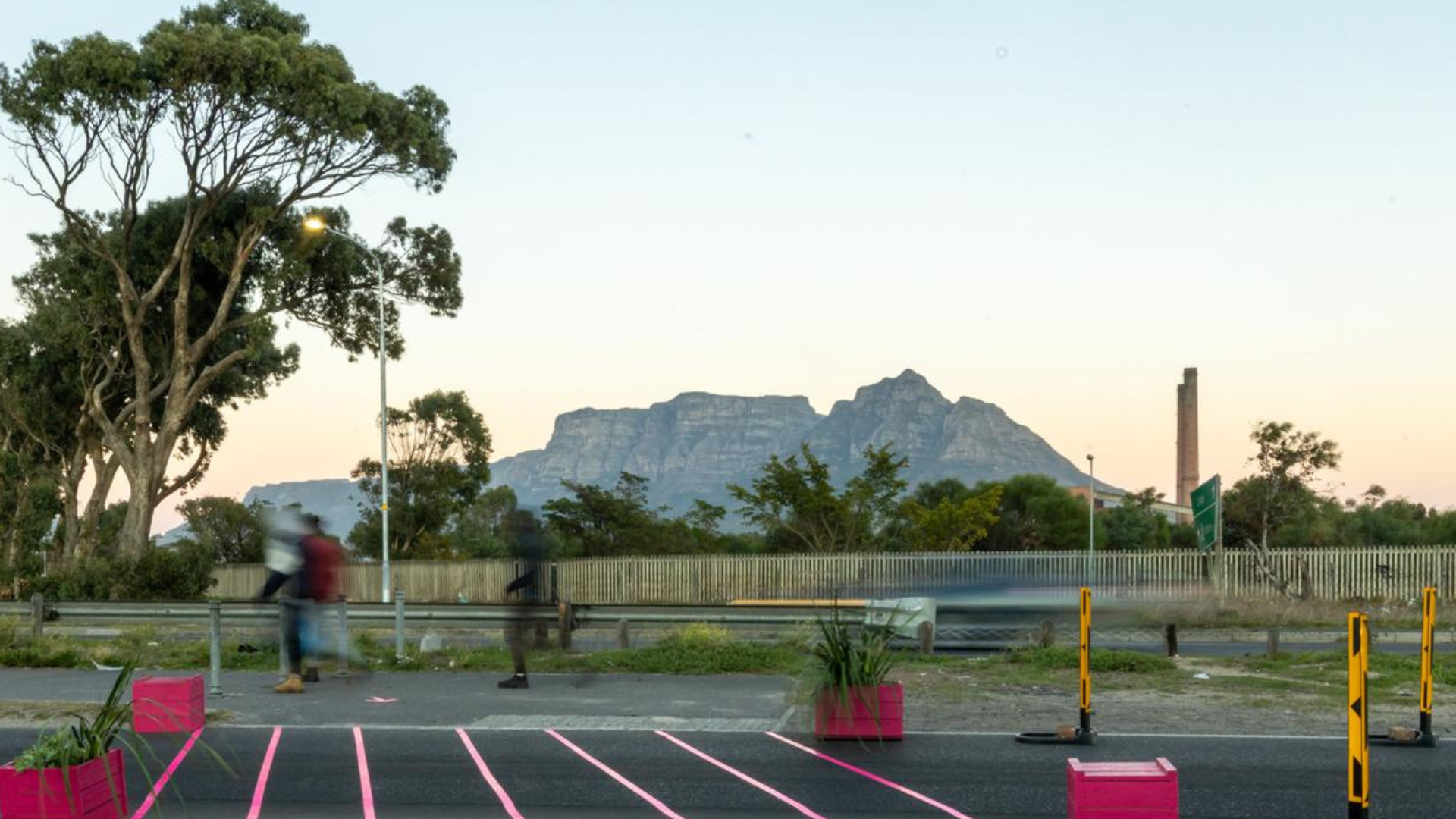
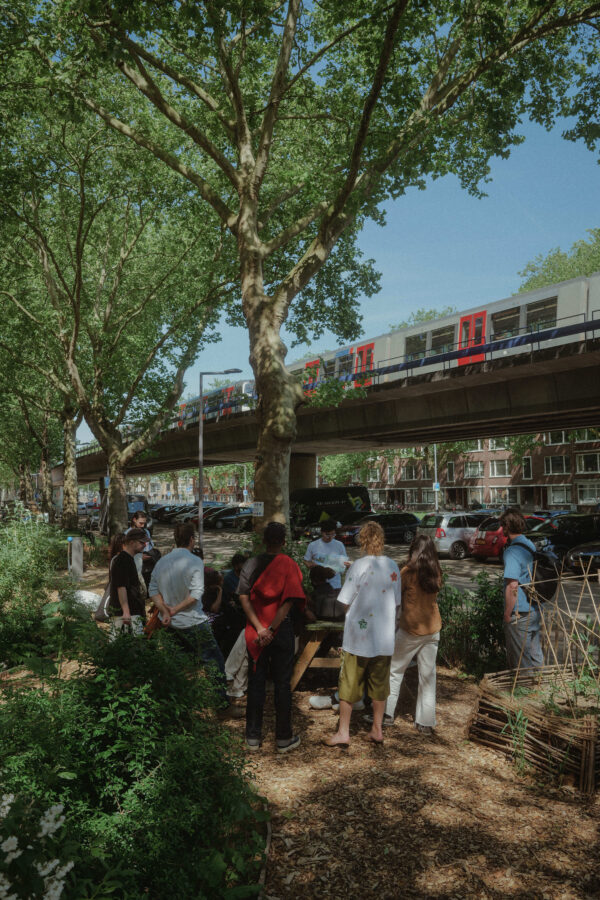
The Mijnsherenlaan in the Tarwewijk is a typical inner-city thoroughfare in Rotterdam-Zuid. Here you’ll find parking spaces, borders with bare grass and a concrete viaduct over which a metro train thunders at regular intervals. The public space here belongs to everyone, yet at the same time feels as if it belongs to no one.

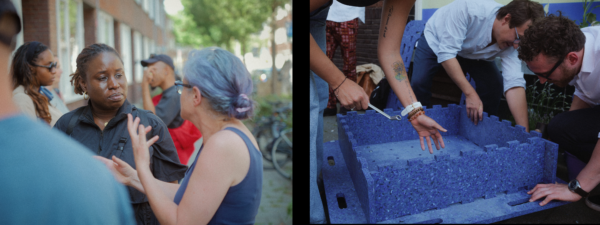
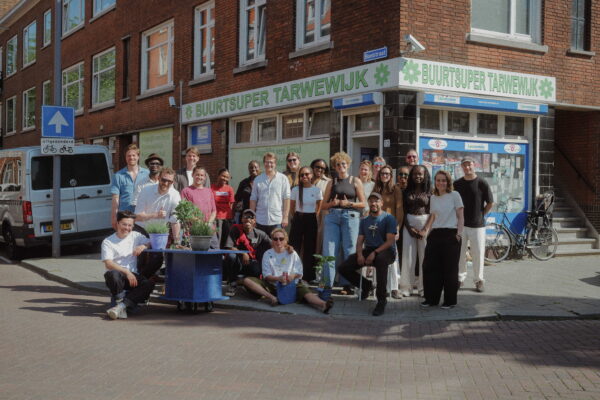
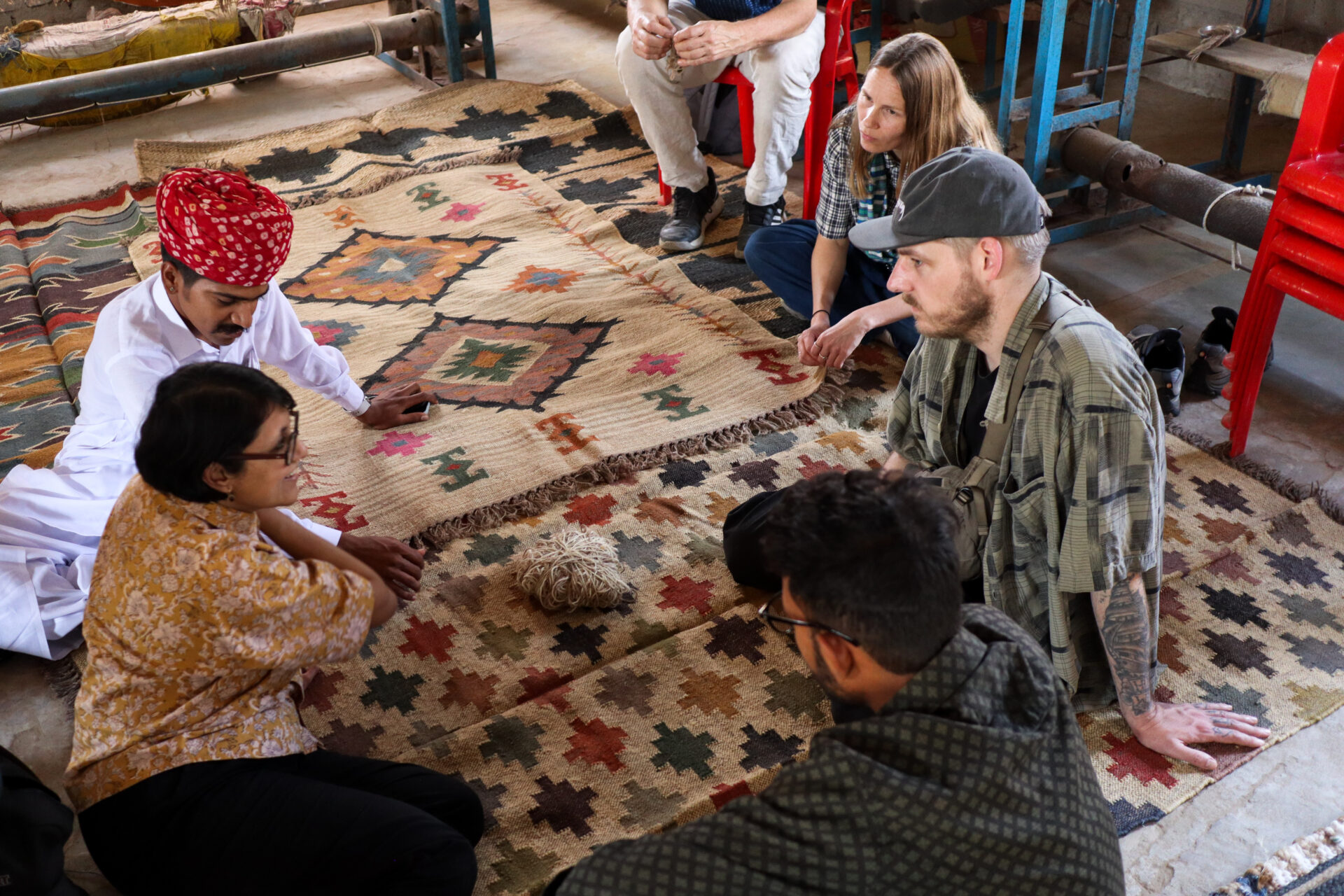
Here, on a sunny Friday afternoon in May, more than 20 international designers and cultural professionals are hard at work with plants and modular components made of coloured plastic. They are assembling mobile planters and temporary street furniture under the guidance of el KANTOOR, an architectural practice based in the neighbourhood. Founders Isabel Driessen and Andrés López specialise in developing public spaces. In the process, they make as much use as possible of the knowledge and skills available in the neighbourhood. ‘When you realise as a resident that you can make a difference in your own neighbourhood, you become much more involved in your living environment,’ Isabel explains. ‘And that involvement provides insights into what a place really needs. But for resident participation to truly be a tool for change, there are a number of challenges to overcome. It requires patience, trust and continuity.’

Workshop el KANTOOR in Tarwewijk, Rotterdam. Photo: Merijn van den Brand

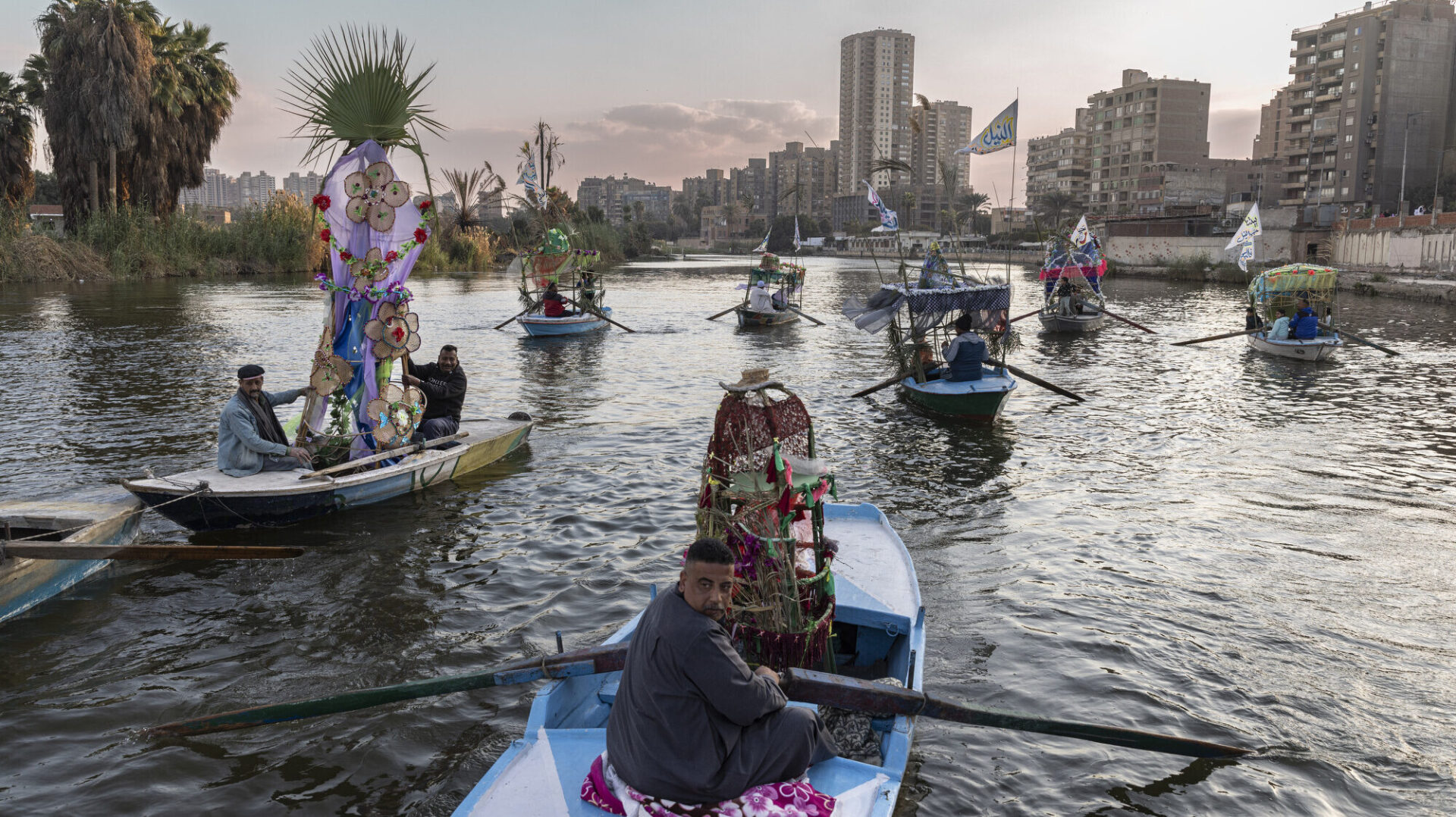
These are challenges the workshop participants are all too familiar with. They work in places that are at the mercy of even greater interests. These are places where different communities are competing for the same land and resources, where urban growth puts pressure on centuries-old traditions interwoven with the land, or where public space is claimed by interests that lie far beyond the neighbourhood or region. In all these different contexts, the designers adopt an approach very similar to that of el KANTOOR, where harnessing local knowledge and networks plays a central role.

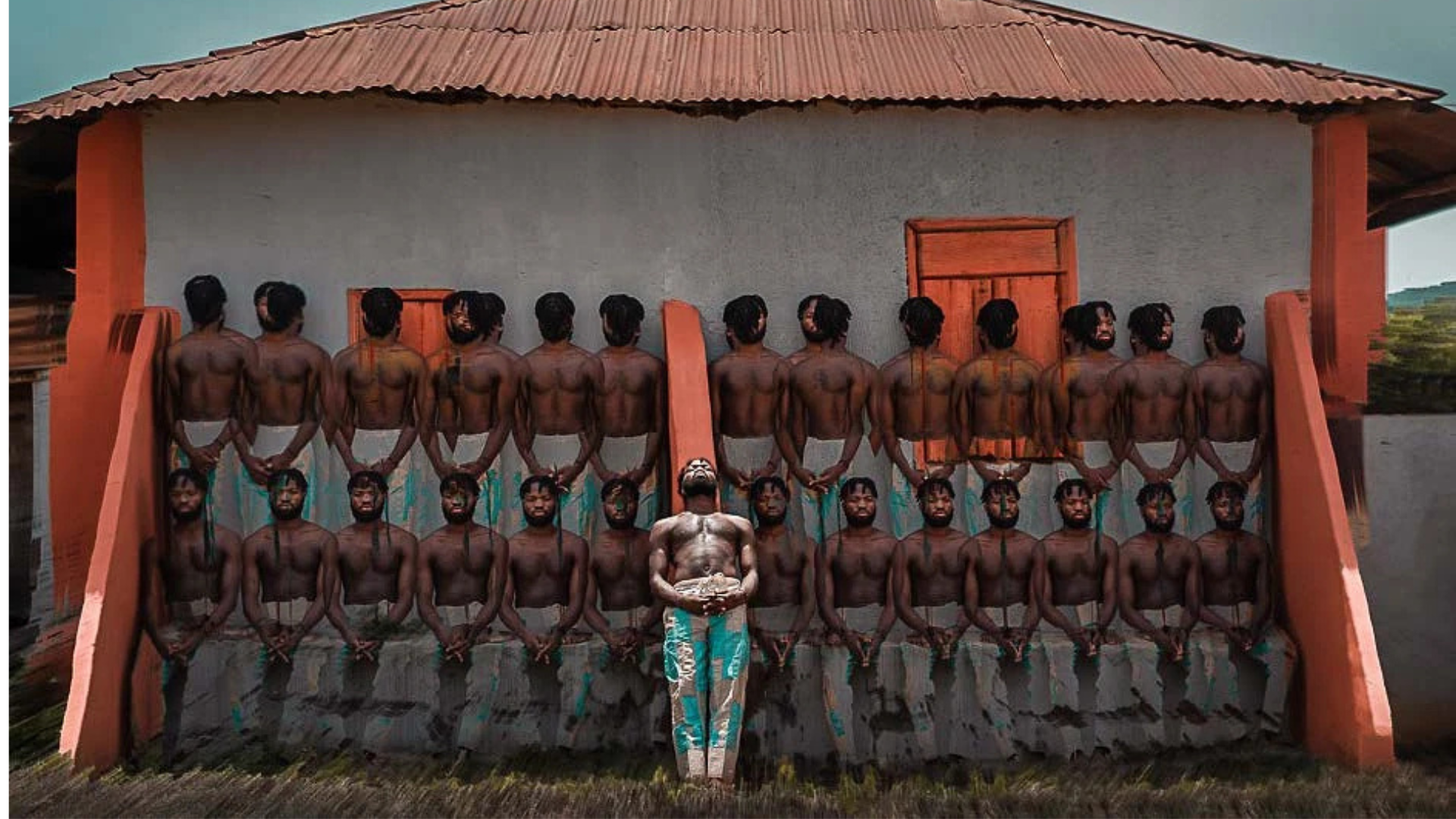
It is therefore no coincidence that these 20 designers have come together in the Tarwewijk. They were selected for Shifting Grounds: Design Practices in Contested Geologies, an open call issued by the Creative Industries Fund NL that focused on ‘contested geologies’: areas or ecosystems under pressure from conflicting economic, ecological and social interests. How do you make the associated issues clear, tangible and open to discussion? The open call is part of a four-year programme (Design in Contemporary Spaces of Conflict, 2025–2028), which focuses on the African continent and is funded by the Ministry of Foreign Affairs in the context of its International Culture Policy. The United Nations’ Sustainable Development Goals (SDGs) serve as an important guiding principle in this regard. Frerik Kampman, who works at the Ministry of Foreign Affairs, and Roxanne da Graça, who works at the Fund and together with Tom Versteeg is involved in implementing programmes relating to design sector internationalisation, explain the how and why.
What role do you see design playing in achieving the UN’s sustainability goals?

FK: ‘From the Ministry of Foreign Affairs’ perspective, we view our collaboration with the Fund in the context of the current policy framework for the International Culture Policy. It is about the problem-solving power of makers and designers to contribute to global challenges, as also set out in the SDGs, and, in addition, to support just, peaceful and inclusive societies. This is precisely where designers can make a difference. Their methods lend themselves well to re-examining issues and initiating dialogue between the Netherlands and other countries.

This programme also offers Dutch makers the opportunity to draw inspiration from collaborating with makers from other countries, in this case from the African continent. This enriches the Dutch design sector.’

The programme focuses on countries on the African continent. Why is that?

FK: ‘The African continent has a young, growing population and increasing geopolitical significance in terms of raw materials, sustainable energy and rapidly growing markets. These are all topics that are important to the Netherlands. That is why the Netherlands wants to collaborate with African countries through partnerships that are truly on an equal footing. And that is exactly what the Fund is doing with this programme. We are not operating on the basis of a charity mindset, but rather on the conviction that we share all kinds of challenges and that we can only make progress together.’

RdG: ‘With this programme, we are building on the previous policy period, during which collaboration with countries on the African continent was already a key focus. In the past, through thematic open calls such as Hidden (Hi)stories and Climate (In)justice, and the Building Beyond mentorship programme, the Fund has focused on fostering exchange between makers and designers on the African continent and in the Netherlands.’

Photos: Merijn van den Brand

Could you outline how the Fund is involved in the ‘Design in Contemporary Spaces of Conflict’ programme?

RdG: ‘In 2025, we issued the open call Shifting Grounds. We invited designers based in the Netherlands to work with partners on the African continent on projects concerning ‘contested geologies’. An advisory committee selected eight projects, six of which are ultimately receiving support.

In the best proposals, you can see that the collaboration already has a solid foundation before the project even begins, with partners who are familiar with each other’s strengths. This is reflected, for example, in the methodological expertise they employ. We believe that interaction between the various projects helps to ensure that this knowledge can be transferred to other geographical or creative contexts. That is why we are bringing the Shifting Grounds project partners together in a community of practice.’

How is the community of practice taking shape in practical terms?

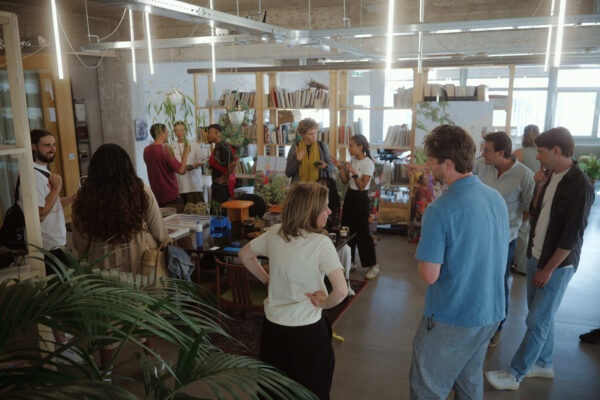
RdG: ‘We are organising a series of events that focus on critical dialogue, peer-group coaching and reflection. During the first, multi-day event in Rotterdam, the projects presented their plans to one another, took part in workshops and exchanged ideas on how to make a real impact with their projects. We plan to organise the next event to coincide with the Dakar Biennale, in November or December. Not only because the biennale’s theme aligns well with that of the projects, but above all because this event attracts many makers, researchers and other potential collaboration partners. It’s a place where you can strengthen your network in a short space of time.

Within the community of practice, learning to reflect and helping one another tackle difficult issues are key. During the introductory workshop organised by Loom and the workshop organised by el KANTOOR in the Tarwewijk, this exchange got off to a flying start. The projects recognised each other’s challenges and quite quickly found their common ground. For instance shared doubts, shared ambitions and shared methods. At the same time, it became clear that a project’s success depends not so much on the results achieved, but primarily on how you work together and how well you understand the context in which you are operating.’

This autumn, the Fund will issue the second open call within the Shifting Perspectives: Design Practices in Contested Ideologies programme. Keep an eye on our website and newsletter for more information.

Photo: Merijn van den Brand