search

Warp Weft Wool connects and renews Dutch and Indian traditions

Across the globe, local crafts are at risk of disappearing as production shifts to low-wage countries. For Crafts Council Nederland, the associated loss of local identity is the impetus for an equal-footing international collaboration. Within Warp Weft Wool, Dutch designers and Indian carpet weavers are working together to explore how they can give their local traditions a new, yet distinctive, signature. The project received support under the Internationalisation of the design sector Grant Scheme. This grant scheme is open again from 25 August 2026 at 15:00 CEST until 22 September at 16:00 CEST.

4 June 2026

A new collaboration

In both the Netherlands and India, local traditions in textile and carpet production are being lost as a result of globalisation. Indian carpet weavers are increasingly carrying out production work for overseas markets. As a result, the continuity of the craft – and with it the transfer of techniques and innovation – is under pressure. In the Netherlands, on the other hand, there is a wealth of design expertise, but craftsmanship and wool spinning are in sharp decline because production has been outsourced.

In Warp Weft Wool, Crafts Council Nederland sees a unique opportunity for Dutch designers and Indian carpet weavers to breathe new life into both craft traditions through a ‘translocal collaboration’. The approach connects local knowledge to a global network and is characterised by what founder Marion Poortvliet describes as ‘learning by showing and doing.’

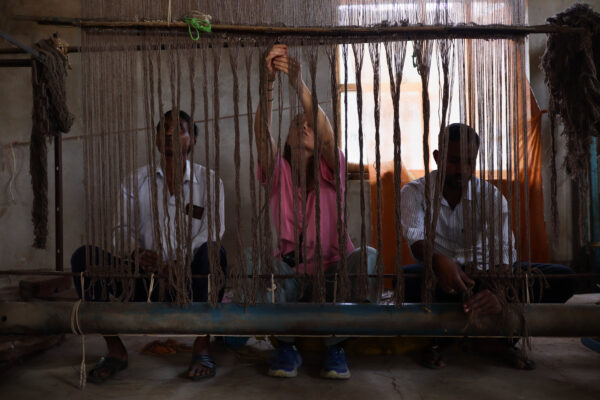
We worked on an equal footing with each other’s working methods, for example by using each other’s yarn and trying out each other’s design or weaving techniques.
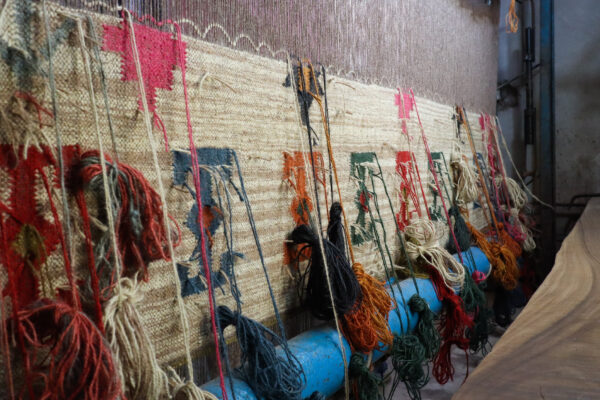
Working at the loom. Photography: JAS&CAL for Warp Weft Wool - Crafts Council Nederland

With support from the grant scheme, Poortvliet travelled to India with the design duo JAS&CAL and designer Rik van Veen to collaborate with the artisans of the Raja Kilims cooperative in Rajasthan. Lipika Bansal, founder of Textiel Factorij, fulfils an indispensable bridging role with her knowledge of both Dutch and Indian language and culture and her network in the Indian creative industry.

According to Poortvliet, the period of physical collaboration has laid the foundation for further exchange: ‘We worked on an equal footing with each other’s working methods, for example by using each other’s yarn and trying out each other’s design or weaving techniques.’ Studying the Indian wool supply chain also provides insights into processing local wool into carpet yarn in the Netherlands.

Getting to grips with weaving and design

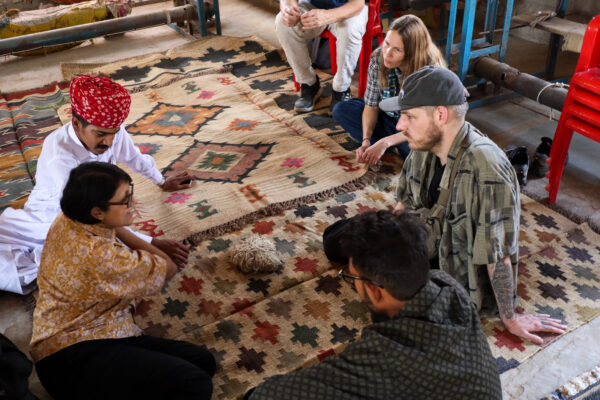
The Dutch designers learned about the technical process behind the creation of the traditional dhurrie flat rug at the Raja Kilims cooperative. The rugs stand out for their geometric shapes and are reversible thanks to the special weaving technique. The cooperative’s leader, Sharvan Prajapati, learned the craft from his father and is a 14th-generation dhurrie weaver. Because this technique is passed down from generation to generation, the weavers possess unique skills that, according to the design duo JAS&CAL, Dutch makers ‘can only dream of’.

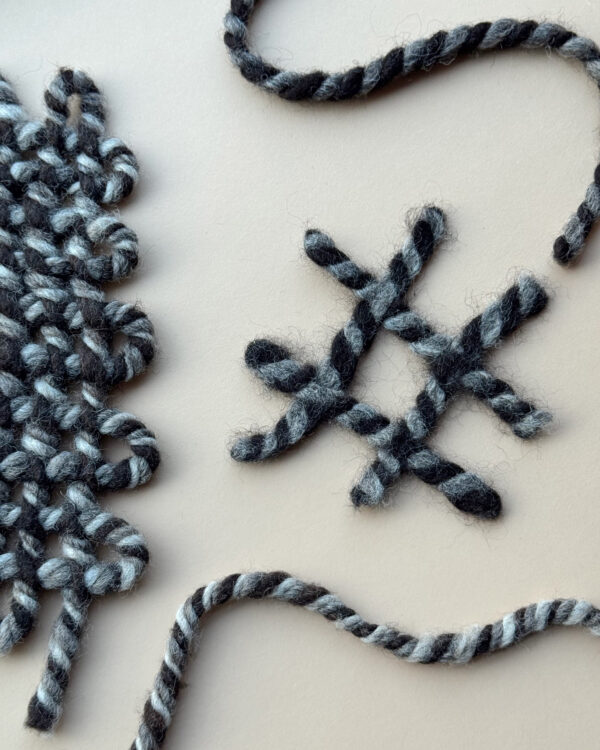
Jasmijn Wester and Calvin Kooiman of JAS&CAL work on various textile projects in the Netherlands, focusing on technical and material research. At Raja Kilims, they were inspired by the different shades of wool that are spun together into a mottled and strong yarn for Indian carpets and rugs. Back in the Netherlands, they therefore asked hand spinner André Snoeijer to develop a series of yarns in varying combinations for them, this time using Dutch wool shades. ‘The subtle irregularities and the natural rhythm in the thread that arise during spinning by hand give every rug a unique texture and appearance,’ say JAS&CAL. In this way, a traditional Indian method inspires new possibilities for spinning Dutch wool.

Because this technique is passed down from generation to generation, the weavers possess unique skills that Dutch makers can only dream of.
Dhurrie flat rug production process. Photography: JAS&CAL for Warp Weft Wool - Crafts Council Nederland
Designer Rik van Veen also drew plenty of inspiration from the collaboration with the artisans at Raja Kilims. Van Veen experiments with leftover materials and self-built machines to create furniture and design objects. ‘For a long time I had wanted to work with textiles and soft materials,’ says Van Veen. ‘Warp Weft Wool provided the concrete impetus to finally take that step and explore techniques such as hand weaving and sewing.’ Van Veen is now applying the knowledge he gained about the processing techniques involved in turning yarn into carpet to the construction of a piece of furniture made entirely from Dutch wool.

Since the exchange in India, the collaboration partners continue to provide feedback on each other’s work via video calls and by sharing photos. For Sharvan Prajapati, this dialogue has proved extremely valuable, as it helps him to develop his own non-commissioned work alongside his daily duties for the cooperative. For instance, he is now experimenting with traditional Indian patterns by enlarging and rearranging them, resulting in ‘a design that is recognisable yet innovative.’ In this way, Dutch design expertise contributes to innovation within Indian design traditions, and craftspeople are reclaiming the role of designer.

Experiments with yarns in varying Dutch wool shades. Photography: JAS&CAL for Warp Weft Wool - Crafts Council Nederland
A new chapter for Dutch wool

In addition to exchanging techniques and expertise, the project also provided the opportunity to gain inspiration in India regarding the processing of local wool. As the Netherlands is a small country, the possibilities for processing Dutch wool into carpet yarn are limited. The mixed infrastructure in India proves that a local carpet industry is possible. For instance, the carpet weavers at Raja Kilims work with local wool, but in India, a great deal of weaving also uses imported wool to meet the high demand from foreign clients.

This provided important insight for the Netherlands. ‘In the Netherlands, carpet weaving could also be ‘locally rooted’, say JAS&CAL, ‘but the spinning of Dutch wool could also take place in other parts of Europe.’ Here, India shows the Netherlands that a craft can be practised locally in collaboration with neighbouring regions.

Crafts Council Nederland will present the results of Warp Weft Wool during Dutch Design Week 2026. The organisation hopes for a continuation of the carpet experiments, for example in collaboration with the industry. In the meantime, the makers continue to experiment and inspire one another: ‘we’ve still got a lot to learn.’

Warp Weft Wool was made possible in part by the Internationalisation of the design sector Grant Scheme of the Creative Industries Fund NL. The Internationalisation of the design sector Grant Scheme is open again from 25 August 2026 at 15:00 CEST until 22 September at 16:00 CEST.

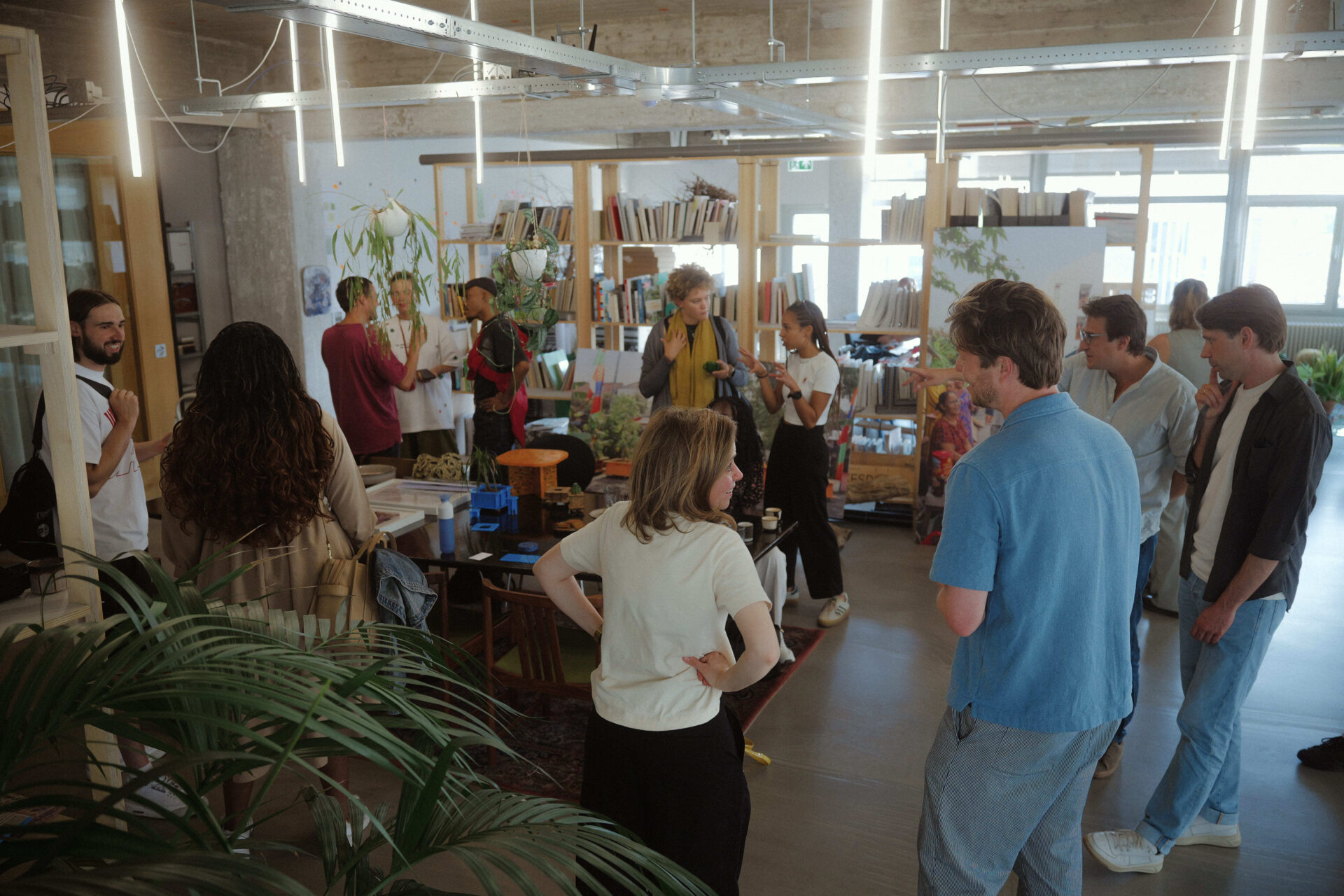
Header image: Makers in conversation at Raja Kilims. Photography: JAS&CAL for Warp Weft Wool - Crafts Council Nederland