HOH Architecten at World Expo Osaka 2025: Dutch and Japanese Building Cultures in Dialogue

How can Dutch and Japanese architectural traditions enrich each other? HOH Architecten explores this question in Re-thinking Re-use, a research project that came to life at World Expo Osaka 2025, where Japanese students worked alongside Dutch architects and heritage experts to envision the future of Tokyo's Sumida district.

15 October 2025

Two Building Cultures in Dialogue

'We always work from what already exists,' says Jarrik Ouburg of HOH Architecten in the video portrait about their Japanese research project. This is the firm's fundamental approach: not starting with a blank page, but embracing the complexity of the existing built environment. In the project Re-thinking Re-use, recently published as a book, they connect this Dutch building philosophy with Japanese culture. Where Dutch builders look to the past for solutions, Japan has a flexible tradition of 'demolition-construction' focused on the future.

'This Japanese building culture emerged from historical disasters such as earthquakes and fires,' Ouburg explains. Dutch brick construction, by contrast, created a culture where space is defined by walls, leading to a strong tradition of reuse: from town hall to palace, from factory to home.

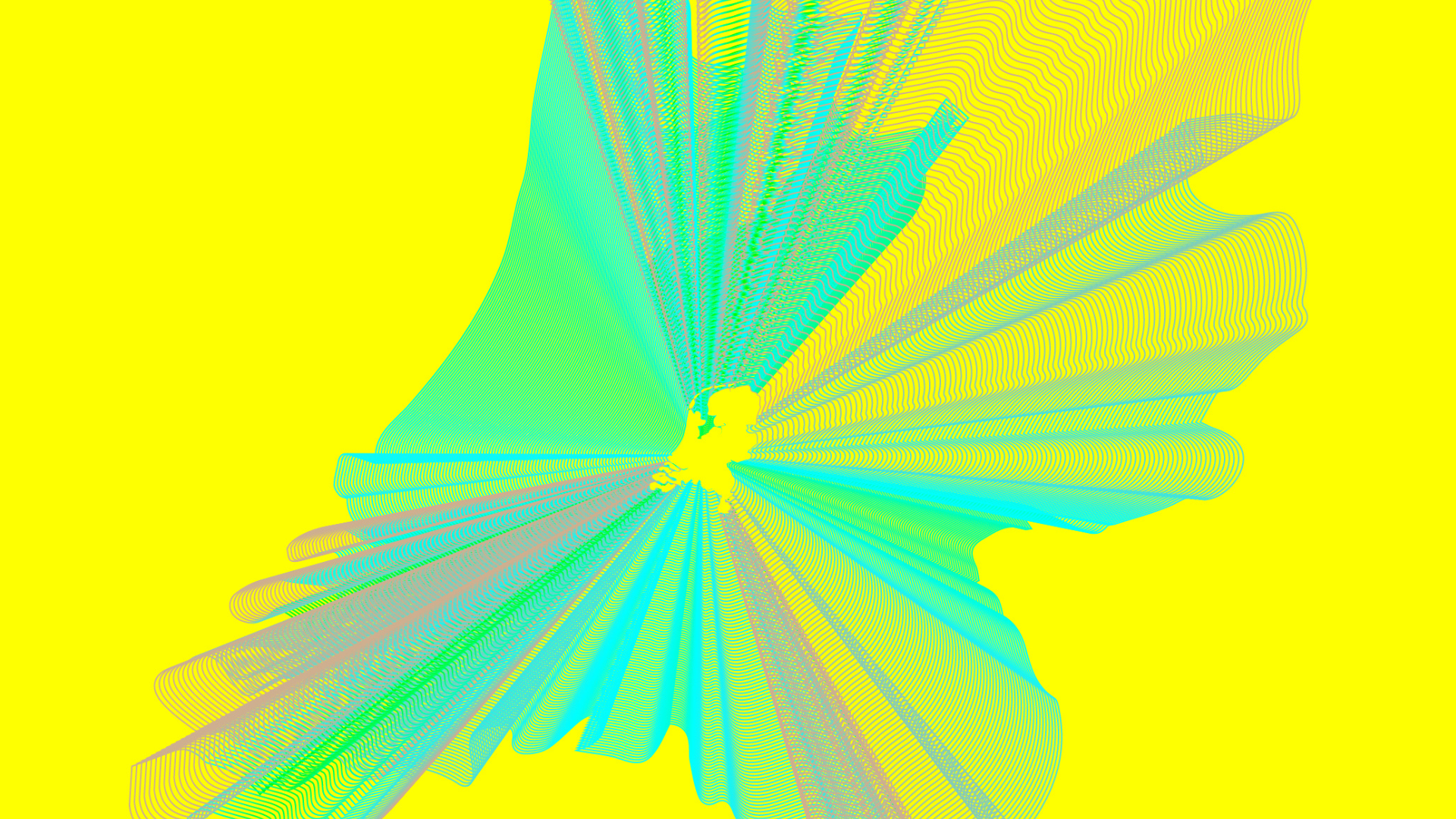
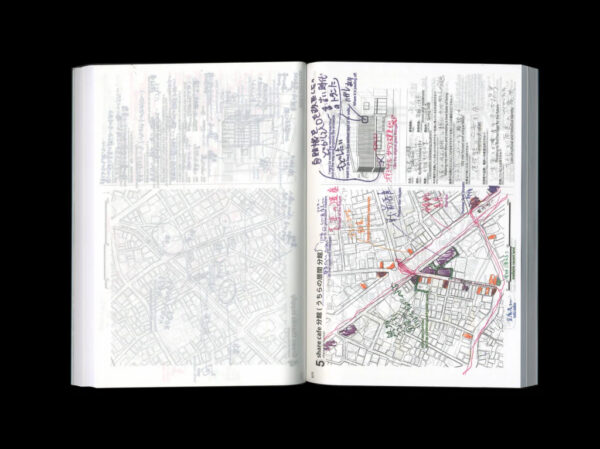
Mental maps of Sumida residents, from the book Re-thinking Re-use

Analysis in Tokyo: Sumida District

The first phase of the research project took concrete shape in 2024, during workshops in various Japanese cities, including the Sumida district in Tokyo. Together with Professor Yasumori from Chiba University and students, they explored how to manage change in this vibrant residential and working neighbourhood.

'Sumida is somewhat like Amsterdam's Jordaan, a district where living and working overlap,' Ouburg explains. Through mental mapping with nine residents, they gathered information about what should be preserved in future transformations.
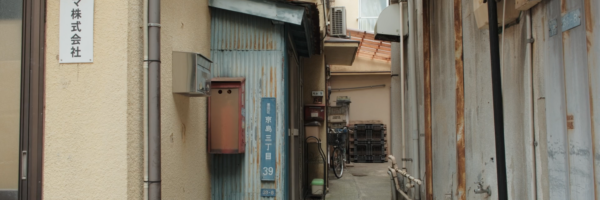
A key insight was the role of the so-called Roji alleyways: shared private spaces that emerge because Japanese residents aren't permitted to build on their entire plot. By widening the mandatory distance of fifty centimeters between neighbours to one or two meters, shared alleys are created. These informal structures are characteristic of Japanese building culture, but lack formal protection. The project demonstrates how important it is to recognise these spaces before they disappear through new development.

Future Scenarios in Osaka

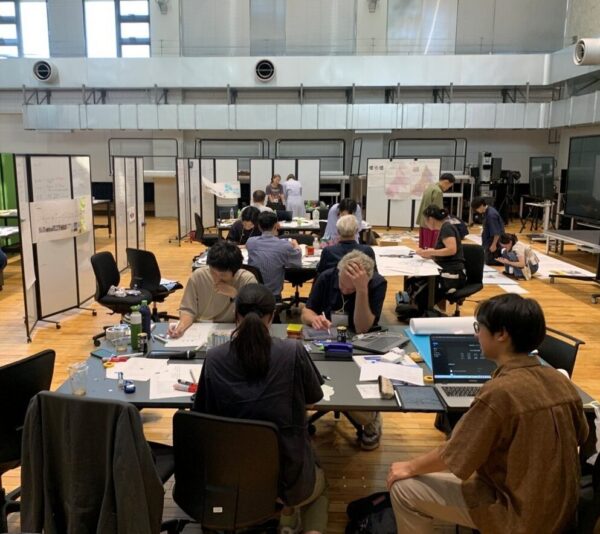
During World Expo 2025, the Sumida analysis was transformed into concrete future scenarios during a two-day workshop, as part of the Nieuwe Instituut's programme. Following a neighbourhood visit, an intensive session took place with Japanese students and Dutch experts, including Thijs van Spaandonk (National Adviser for the Physical Living Environment), Saskia Naafs (National Advisory Council), Yukiko Nezu (Cultural Heritage Agency of the Netherlands), and architect Paul Meurs.

Workshop World Expo Osaka 2025 Re-thinking Re-use

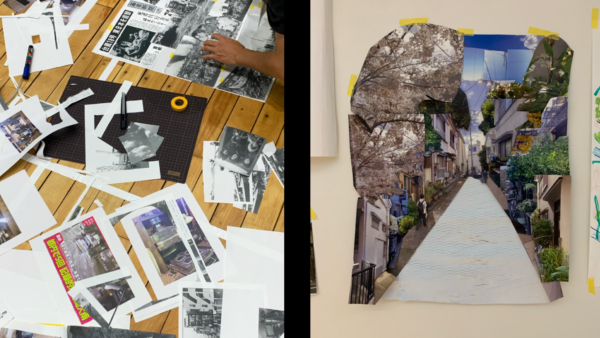
The assignment: design a timeline from -100 years to +100 years. By also examining the past and seeing all the unexpected events of the past century, participants could think more radically about the future. Climate change played a significant role. This summer was the hottest ever recorded in Tokyo. Participants developed ideas such as widening the alleyways and incorporating water to provide cooling and manage excess rainfall.

On Saturday, the scenarios were presented to experts, municipal officials, and neighbourhood residents. The developed visions proved immediately useful for key figures in the district to share design ideas with residents that are normally difficult to communicate.

Future scenario collages by participants during the workshop at World Expo Osaka 2025 Re-thinking Re-use

Mutual Learning

The project demonstrates how valuable the exchange between both building cultures can be. By connecting Dutch experience with heritage protection and reuse to Japanese flexibility and circularity, a third way emerges: an approach that views the building as a comma between transformations, rather than a definitive endpoint. This in-between space - literally in the form of shared alleyways, but also figuratively in thinking about change and continuity - offers new perspectives for both countries.

Video portrait HOH architecten, annual report 2024

Re-thinking Re-use is made possible by the Creative Industries Fund NL and DutchCulture, and was part of the cultural programme of the Nieuwe Instituut at the Dutch Pavilion. The programme was developed in collaboration with the Japan-Netherlands Architecture and Cultural Association and the Cultural Heritage Agency of the Netherlands.