Design – 14 projects selected
In the last round of the Design Grant Scheme in 2025, 14 projects were selected that contribute to the quality, development or deepening of the field.
21 January 2026
general impression
In this round, the advisory committee saw many applicants who are participating in a programme, pilot or residency via an institution or organisation and have discovered something there that they would like to investigate or develop further. The committee considers this a positive development and stresses the importance of these types of places for building support and networks within the design field. The committee also saw several applied-design applications that are at a start-up stage but are keen to scale up or get ready for the industry. Interesting artistic motives were often given for this.
Where the advisory committee believes opportunities are being missed are the projects’ presentation moments. Many applicants name Dutch Design Week as the most important presentation moment, which, in the committee’s view, may be at the expense of making knowledge accessible at other times of the year and in other parts of the country within the Kingdom. The committee also finds it remarkable that few applicants explicitly reflect on the project’s contribution to diversity and equality within the design sector, while this topic is one of the assessment criteria within this grant scheme. Finally, the committee notes that the quality of the supplied images and visual examples is sometimes very low. The committee finds this a pity, as images are very important for supporting and assessing a case.

selection
Angisa vouwboek – Stichting Tailors & Wearers
With the publication Angisa vouwboek, Stichting Tailors & Wearers aims to document and share the cultural and historical significance of the angisa, a traditional Afro-Surinamese headscarf. The book portrays 50 angisas and various folding techniques and sheds light on the context, history and symbolism behind the angisa. The book design is by Frederique Schimmelpenninck and will include texts in Dutch, English and Sranantongo. Published by nai010, the publication aims to reach both the Surinamese community and a wider audience with an interest in fashion and culture.

There Was No Sex in USSR – Spotted Bird
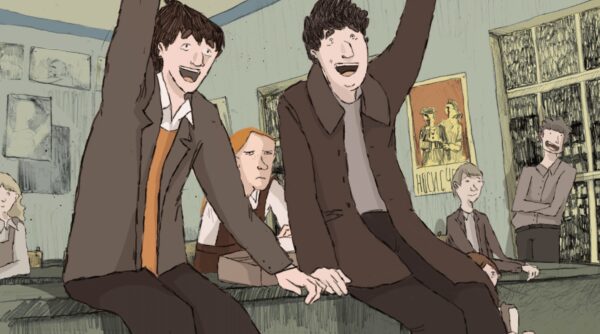
There Was No Sex in USSR by producer Spotted Bird is a hand-drawn 2D animation. The animation follows three friends, Shura, Lyuda and Roma, living in the Ukrainian USSR in 1985. Using classic Soviet animation, There Was No Sex in USSR addresses themes such as the connection between memories and the longing for home. Although the story is set in the 1980s, the animation touches on contemporary global issues. The writer and director involved is Alina Milkina and Lunanime (BE) is co-producer. The animation uses a hybrid technique that combines analogue backgrounds, 2D-animated characters, and 3D models.

Decolonizing Ceramics – Daniel van Dijck
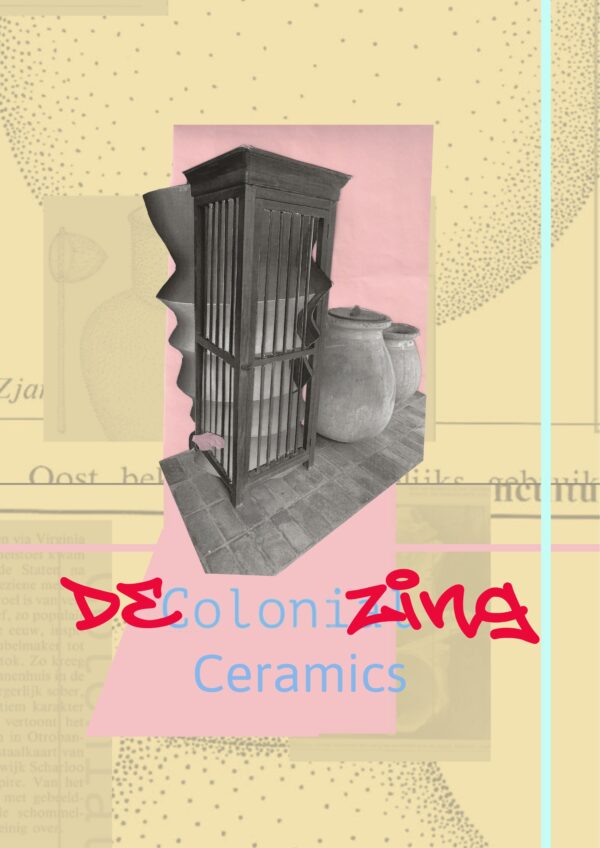
The project Decolonizing Ceramics by designer Daniel van Dijck and anthropologist Julian Isenia explores how the history of colonial and precolonial ceramics in Curaçao can be translated into contemporary designs to reflect on decolonisation. The project combines archive and collection research, oral history and material and glaze studies with form research and prototyping. With the project, Van Dijck and Isenia want to make marginalised techniques visible and use local knowledge on an equal footing, based on co-creation. The aim of the project is to develop a living archive where experiments and stories can be constantly revised. Collaborative partners include Instituto Buena Bista (IBB), archaeologists Amy Victorina and Claudia Kraan, and oral-history expert professor Rose Mary Allen.
Take a look at our awarded grants archive for all projects supported under the Design Grant Scheme in 2025.
numbers
In phase I of this subsidy round, a total of 120 requests for grants were submitted, of which 51 were taken into consideration. They were allowed to develop their application further in phase II. Ultimately, 43 applications were developed for assessment in phase II, of which 42 were submitted to the advisory committee after a check on the formal criteria and completeness.
The budget available for this round was € 400,000. The average subsidy requirement of assessed projects was remarkably high this round. Many proposals were up against the maximum application amount of € 50,000.
As the total amount applied for by the positively assessed applications exceeded the available budget, prioritisation was carried out. Fourteen of the 25 positively assessed projects are receiving grants.
follow-up
The next round of the Design Grant Scheme opens on 25 February at 15:00 and closes on 3 March at 16:00. There are a few changes to the grant scheme compared to 2025. Read this news item for the main changes and familiarise yourself with the grant scheme before starting on your application.