

Creative Industries Kick-start Grant Scheme – 55 projects selected
In the third time period of the Creative Industries Kick-start Grant Scheme for 2025, 55 projects were selected. Grant specialist Carlijn Limburg reflects on the selection.
general impression
Interest in this subsidy remains high, with the quality of the proposals submitted once again being excellent. The applications cover a wide range of subjects, themes, perspectives and forms.
Within architecture, current themes such as the housing crisis and circularity stand out. Projects explore both urgent social issues and innovative use of materials: ranging from the reuse of gravestones to biobased building systems and regenerative landscape practices.
In design, there were many applications for material research, particularly in the field of product design and graphic design. Notable are the specific and ambitious experiments, for example focusing on glass, natural stone, textiles and colour. Recurring themes are modularity and food culture, with designers seeking new material and social possibilities.
Within digital culture, the great diversity of themes stands out. The proposals cover topics such as hand-knitting, experiences of sound, haptic technology, AI and games. This diversity reflects the versatility of the field and the different perspectives that makers utilise to link technology, craftsmanship and social issues.
selection
A number of notable projects are:
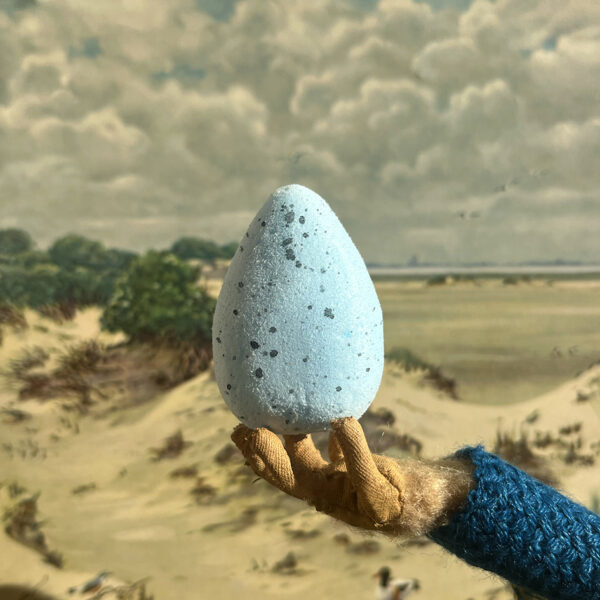
Griend – Juliet Campfens
The preliminary study Griend focuses on a short stop-motion film about the Wadden island of Griend, where almost no one is allowed to go. The story follows an overworked researcher who discovers a huge bird underground, after which visitors flood onto the island. The film explores themes such as the relationship between humans and nature, and success versus satisfaction. Juliet Campfens is working with experts such as Miek Zwamborn, Rutger Emmelkamp, Dirk van Dulmen and Frame Order on a 'pitch bible': a document in which the plot, characters and scenes are elaborated. She is expanding her knowledge of the production process, conducting animation tests in the open air and spending two weeks as an artist in residence in a remote Wadden Sea area. In this project, she transfers her visual arts and theatre background to the world of animation. After this process, there will be a plan in place to put the film into production, and make it suitable for the international festival circuit.
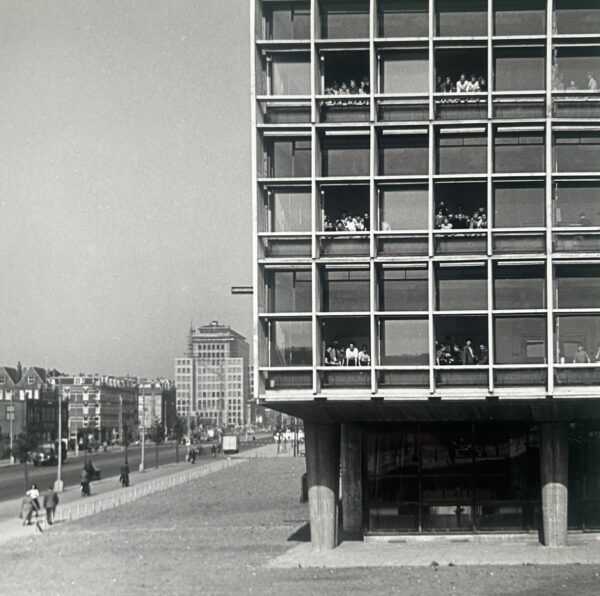
Ben Ingwersen: Alleenloper, maker en non-conformist – Vibeke Gieskes
Vibeke Gieskes' Ben Ingwersen research focuses on the work of architect J.B. (Ben) Ingwersen (1921-1996), who designed many schools, and office and residential buildings in Amsterdam. His buildings are characterised by functionality, distinct spatiality and careful use of materials. Ingwersen worked modestly and steadfastly, creating innovative buildings that have remained relevant in the city through repurposing. His craftsmanship can serve as an example for the contemporary search for good commissioning, the role of the architect and the timelessness of high-quality buildings. This preliminary study is the start of a larger project, with the aim of raising awareness of the work of this underexposed architect. A plan is also being developed for a book about his contribution to the Amsterdam cityscape.
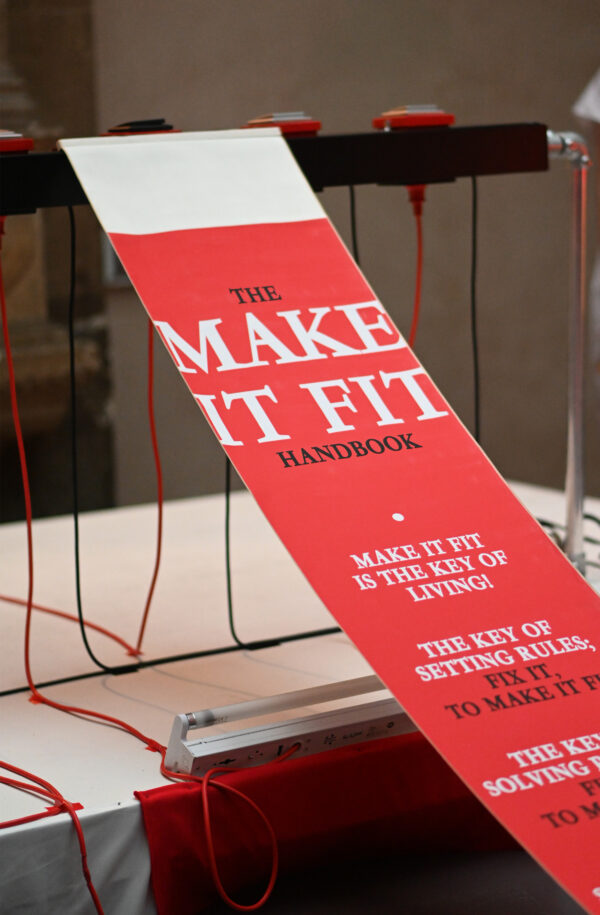
Make it Fit: A Manifesto in Knitting – Tingyi Jiang
The experiment Make It Fit: A Manifesto in Knitting explores the tension between individual autonomy and systems through knitting, coding and sound. Tingyi Jiang is developing an eight-hour performance in which hand-knitting, spoken word, singing and machine sounds come together. During the performance, she works with a knitting machine, where pre-programmed instructions collide with chance and personal choices. The knitting machine not only serves as a tool for making textiles, but also becomes a musical instrument. During the performance, a large knitted manifesto with pre-coded text patterns is created: Make It Fit-ism. Human intervention, such as mistakes, resistance or creative choices, creates glitches that disrupt the pattern and reveal the tension between machine precision and human autonomy. This makes the creation of the manifesto a public, collective experience where the audience itself determines how involved they are. After the performance, the knitted manifesto will remain on display as an installation for two weeks.
Material Diplomacy – Pyeori Jung
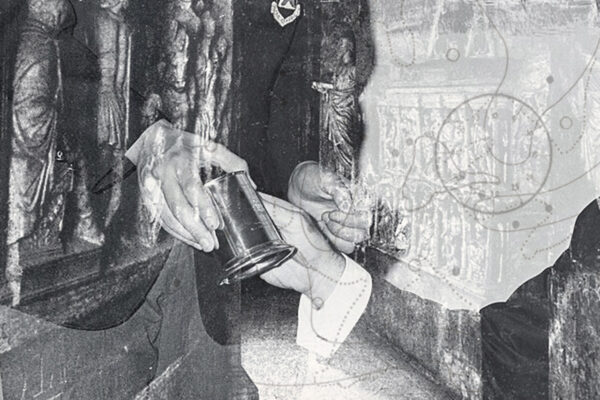
In Material Diplomacy, Pyeori Jung and Augustina Lavickaitė examine objects that were given to the Vatican during conflicts or moments of instability. These objects tell layered stories about politics, spirituality and economics. They also form a material archive of international relations. Through mapping, video essays and visual research, the project explores how these gifts can be seen as a form of negotiation and cultural diplomacy. The project includes research in the Vatican museums, archives and library. Three to five objects will be thoroughly analysed. In addition, a method will be developed to better understand politically charged objects in institutional collections. What do these gifts say about power and value, in the past and present? Ultimately, the research will be presented during a Research Night at the Nieuwe Instituut in 2026.
NIEUW nieuw Nickerie – Lashaaawn
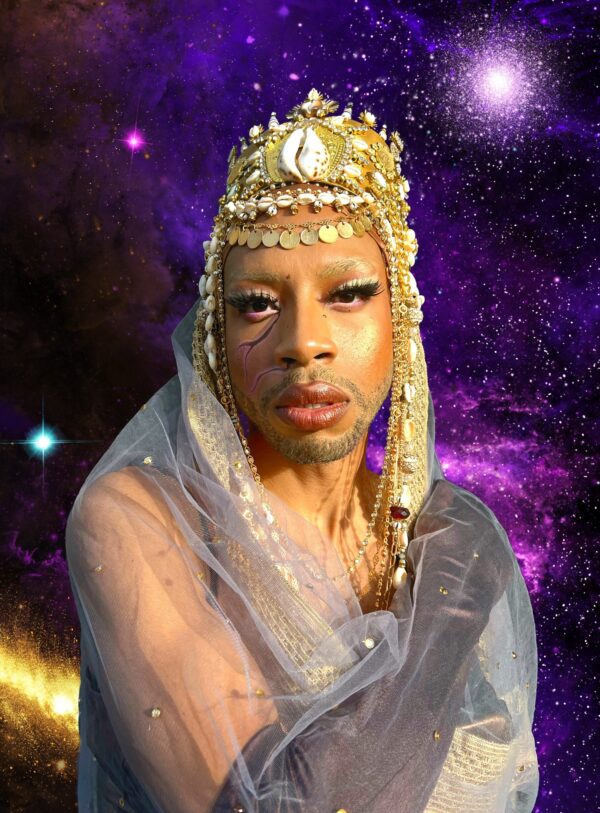
With NIEUW nieuw Nickerie, Lashaaawn takes the viewer on an Afrofuturistic space journey via digital drag performances. The audience boards a spaceship for an expedition led by Suriname in the year 2099. Through various performances, an epic, fantastical alternative timeline is explored. The project examines what future mainstream pop culture might look like when an Afro-Caribbean and queer perspective takes centre stage. This is done using video, augmented reality and a combination of disciplines and genres (science fiction, epic fantasy, comedy, lip sync, fashion and make-up). Personal experiences in Dutch society form the starting point for this exploratory making process. In this way, the link between colonialism and contemporary pop culture is explained, and a Surinamese parody of reality TV exposes geopolitical problems in the Caribbean. The project is a comical reflection on Dutch colonialism in 2025 and creates a safe haven within pop, gaming and internet culture.
View the entire selection in the awarded grants archive (in Dutch).
numbers
In this third period, a total of 243 grant applications were submitted, of which 121 were in the discipline of design, 88 in digital culture and 34 in architecture. A maximum of 35 applications per discipline were admitted to the round. Of the 55 projects awarded grants, 20 were in design, 17 in architecture and 18 in digital culture. After a check on the entry requirements and conditions, 99 applications were taken into consideration and submitted to the advisory committee. The available budget was € 630,000 (€ 210,000 per discipline).
2026
On Thursday 18 December 2025, we will publish important information and dates about our grant schemes in 2026. Keep an eye on our website and newsletter.


stay stimulated

stay stimulated
