

Internationalisation – 7 projects selected
In the second round of the Design Sector Internationalisation Grant Scheme in 2025, seven projects were selected for support. Grants specialist Roxanne da Graça reflects on the round.
18 December 2025
general impression
The selected projects develop new forms of international collaborations, strengthen cultural autonomy and stimulate local creativity. The projects operate on a strong bottom-up basis and build sustainable urban networks. In doing so, they increase the voice of communities and make innovative and inclusive approaches to societal challenges accessible.
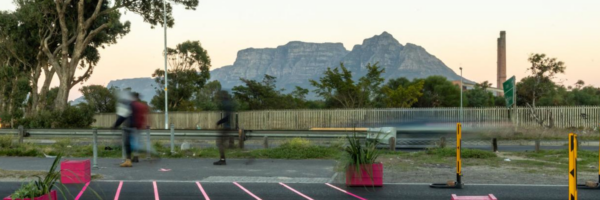
The representation of projects that focus on current and local issues is notable. For example, Street Experiments for Safe Passages South Africa is developing design solutions relating to mobility together with Langa residents in Cape Town, in order to break through the car-centric culture in South African cities and contribute to social connection.
We also see projects aimed at making knowledge accessible and democratising it. For example, AIxDESIGN’s international research project DIY/AI is working on an open-source web application that disseminates critical AI knowledge internationally.
Additionally, we see projects that create space for underexposed stories and alternative networks, often with an activist angle. Expanding Counter-Narratives connects, for example, independent art spaces worldwide and develops new forms of equitable cultural exchange. And Sonic Cities Kampala increases ecological awareness and artistic self-expression in vulnerable young people, through active listening and sonic journalism.
selection
A few notable projects are:

Bridges Film Lab 2026 – AFFR
Architecture Film Festival Rotterdam and GoGoFilm are organising Bridges Film Lab 2026, an interdisciplinary programme that utilises film to explore current spatial and social issues. The project connects young makers from the Netherlands, Ukraine and the South Caucasus. Over a period of six months, 15 to 18 participants work in international teams on six to eight short film essays. The ‘Built Past, Haunted Future’ theme explores how buildings, ruins and monuments are carriers of contested histories and visions of the future. The project will take place online and through an intensive summer school in Tbilisi in 2026. Participants not only develop films, but also networks and new forms of collaboration. The results will be shown during AFFR, at the Copenhagen Architecture Festival and via an online platform. For the summer school, they are collaborating with the Tbilisi Architecture Biennial and Nushi Films.
NAQLA Program – (A)WAKE
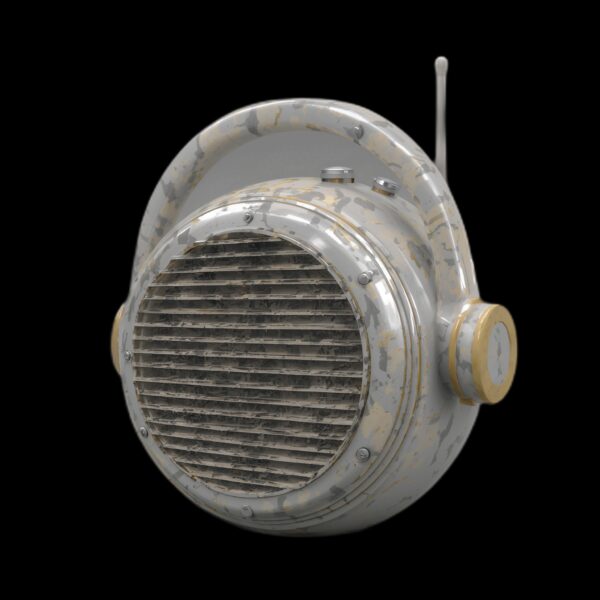
(A)WAKE is a platform in Rotterdam for bi-cultural and diaspora makers with roots in West Asia and North Africa. The NAQLA Program is a two-year project to develop a blueprint for alternative radio stations together with partners in Morocco, Jordan and Tunisia. With this project, (A)WAKE aims to strengthen urban communities through mobile and autonomous radio stations and provide space for unheard voices and local creativity. The goal is to contribute to social equality, cultural autonomy and sustainable urban networks. The project is developing prototypes for mobile stations and a digital infrastructure for archiving, accessibility and financing. The prototypes will be physically tested in Marrakech. Further regional partners are Retro Cassetta (Morocco), Zawyeh (Jordan), Shouka (Tunisia) and spatial designer Jack Bardwell.
Project Perpetual Patchwork – Stichting Matter of Mode
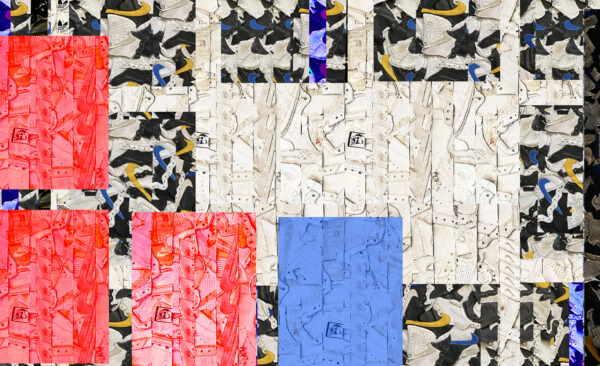
Project Perpetual Patchwork is a collaboration between Peterson Stoop, Portuguese researcher Mariana Pereira Silva and producer Amador. Inspired by the activist work of Claudy Jongstra, they work on themes such as circularity and post-growth economy. Peterson Stoop is making an installation from used sneakers: a large tapestry from which shoes and wall panels are cut during the project, and where the resulting holes are refilled. Based on the theory of post-growth economy, Mariana Pereira Silva is creating a digital archive of the recycled materials, a toolkit for collective creation, and a manifesto. Together, they are organising a public programme and workshops where the results and lessons learned are presented, in Amsterdam and Tokyo, among other places. The project aims to raise awareness and shape collective responsibility for waste.
View the entire selection in the awarded grants archive (in Dutch).
number
A maximum of 40 applications was used for the second round in 2025. A total of 46 grant requests had been submitted by the closing date of this application round. After a check on the formal criteria and completeness, 38 applications were taken into consideration. Of the 38 applications, 15 were positively assessed. Within the € 300,000 budget, seven projects could ultimately be supported.
follow-up
With the second round of 2025, the annual budget of € 600,000 for the Internationalisation of the Design Sector Grant Scheme has been fully allocated. The next round opens in February. Read more about the 2026 opening and closing dates.



stay stimulated

stay stimulated
