search

At the Mensa Mensa neighbourhood canteen in Rotterdam-Zuid, community, food and design are brought together by the Another Provision collective and the Public Food food-justice organisation. Their project Sculpting Our Food Service received a subsidy from the Open Call Fresh Perspectives. This call (for cross-sectoral collaborative projects that offer new perspectives on current issues) is open for new applications until 25 August 2026 at 16:00 CEST.
25 June 2026

Another Provision is the joint practice of researcher Dr Hanna Baumann and maker Johann Arens. They utilise design strategies to highlight food justice. The question that drives them is this: how can food become a common good that connects city dwellers, and how can you make the kitchen part of the public space?

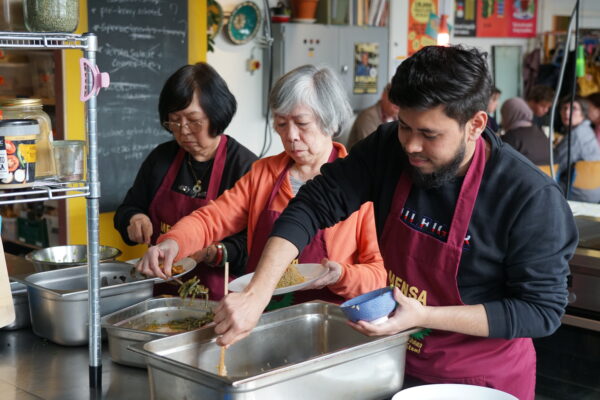
Free meal by community chefs at Mensa Mensa.

Design as method

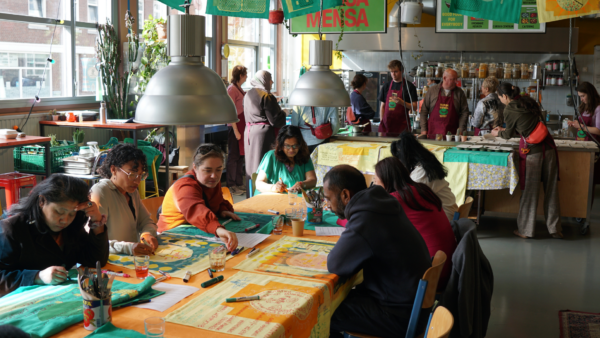
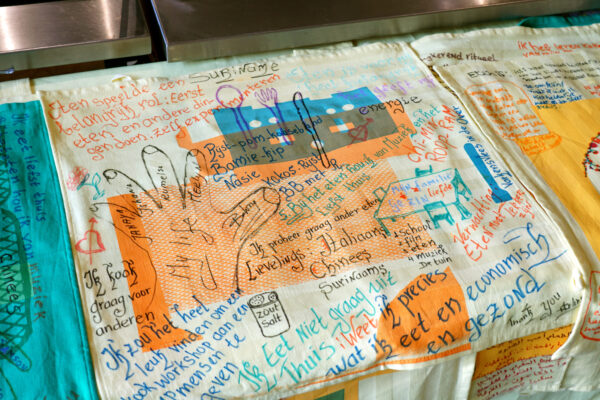
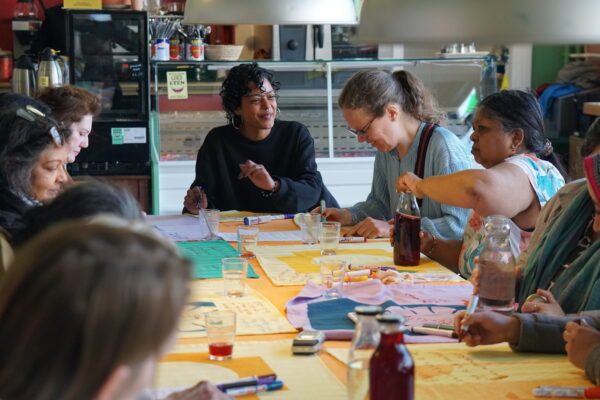
‘In this project, design is a means of sparking conversations between neighbours,’ Hanna and Johann explain. For the co-design sessions, Another Provision developed 100 screen-printed tea towels on which residents can share their ideas and stories. The patterns are directly inspired by the nearby Afrikaander Market. ‘Every week, volunteers collect surplus produce after the market to prepare a free evening meal in the community kitchen. We went along with them to collect discarded packaging, and incorporated what we found into the patterns.’

Co-design workshop by Another Provision with Public Food at Mensa Mensa.

To reach as many residents as possible, Another Provision first built relationships with local organisations such as Buurtbuik, Stichting ROS, Cultuurhuis Feijenoord and Stichting Buurtouders 010. Local residents indicated that they would like to see a variety of international culinary traditions reflected at Mensa Mensa and in the food system in general. Many participants have a preference for culturally specific dishes: ones with names and stories.

To reflect this, two community chefs ran cooking workshops based on Singaporean-Chinese and Surinamese traditions. Spread over two days, 78 participants from diverse backgrounds came together for the co-design workshops and the free meals.

Results from the co-design workshop, by Another Provision with Public Food at Mensa Mensa.

A table full of stories

During the sessions, participants wrote on tea towels what food means to them. Food provides connection and comfort, but also holds significant cultural value. For instance, they discussed food as a form of intergenerational exchange: they learned to cook from their parents or grandparents, and commemorate loved ones by preparing their dishes. Barriers to accessing food were also shared, such as rising prices in the hospitality sector.

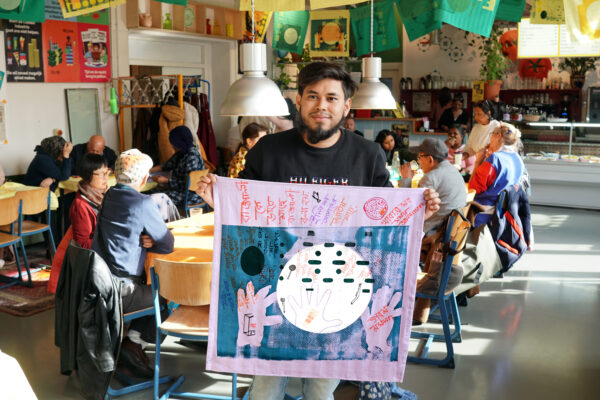
Through the design and also the handwritten additions, the tea towels became a portrait of the neighbourhood. During future neighbourhood meals, the tea towels will be used in the kitchen at Mensa Mensa.

Participant of the co-design workshop, by Another Provision with Public Food at Mensa Mensa.

From prototype to community programme

The outcomes of the sessions form the basis for a follow-up programme centred around the public kitchen table: a series of free dinners where neighbourhood chefs bring their own cooking traditions and stories. Another Provision plans to develop a bespoke woven tablecloth for each dinner in collaboration with the neighbourhood chef and the Textiellab. The tablecloth functions as a graphic-narrative platform. On the tablecloth, objects brought by the chef (photographs, ingredients, crockery, musical instruments) form a landscape of cultural references and provide starting points for intercultural conversations. With this follow-up programme, Another Provision, together with Public Food, aims to continue working towards a communal and just food culture in the city.

The first phase of this project was supported by the Creative Industries Fund NL’s Open Call Fresh Perspectives. This call is for cross-sectoral collaborative projects that offer new perspectives on current issues relating to climate, housing, polarisation, migration or inequality of opportunity. Applications for phase 1 can be submitted until 25 August 2026 at 16:00 CEST.