
Open Call Shifting Grounds – 8 projects selected
The Open Call Shifting Grounds: Design Practices in Contested Geologies was intended for collaborative projects focusing on ‘contested geologies’: areas or ecosystems that are under pressure from clashing economic, ecological and social interests. In the first phase of the call, eight projects were selected. They each receive € 15,000 to develop their proposal further into a tangible workable plan.
13 January 2026
The open call invited Netherlands-based designers, architects, spatial practitioners and collectives to make issues relating to colonial and postcolonial histories and global crises clear, tangible and open for discussion. Specifically, this call focused on collaborative projects with one or more partners based on the African continent.
general impression
The eight selected projects are geographically spread across the African continent and focus on a variety of issues. Several proposals align with the theme of the open call by exploring how extraction, pollution and infrastructure put pressure on ecosystems and communities. This often involves working at the intersection of different disciplines and looking for ways to share knowledge and pass it on to future generations.
The selection committee particularly appreciated the projects with firmly established partnerships. These are often parties that have been working with each other for some time. This experience was reflected in the elaboration: the project plans were clearly worked out and feasibility realistically assessed. This gave the committee confidence in the implementation. Projects in which communities themselves act as equal partners – rather than just being subjects or targets – also scored well.
Another striking feature is that several projects focus on documenting knowledge that is in danger of being lost. These are rituals, stories or places that risk neglect or even erasure over time. While the committee endorses the value of doing this, they consider that this particular approach also raises questions. After all, who decides which knowledge should be ‘saved’? And what impact can a project focused on documentation really make within the international creative field?
In addition, some proposals still showed too little reflection on their own position within sensitive local contexts. As a result, the ambition to work in an inclusive way was not always sufficiently realised. The committee stressed the importance of awareness about who documents what knowledge, for whom and for what purpose. Especially in projects focusing on contested geologies, this reflection is essential for equal collaboration. The committee therefore advised the selected projects to pay more emphatic attention to the urgency and motivation of their proposal in their further elaboration.
The proposals were assessed by an external selection committee consisting of Arthur Steiner, Zico Lopes, Gertrude Flentge and Katía Truijen.
selection
A few notable projects are:
Beneath the Flyover: Contested Grounds of Mobility in Nairobi – VE-R
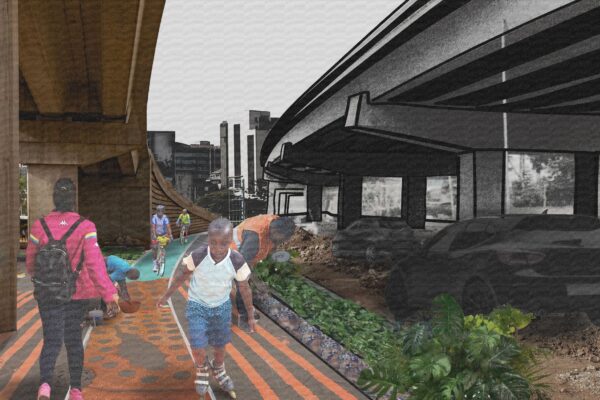
The Nairobi Expressway is a 27-kilometre toll road that runs straight through the Kenyan capital Nairobi. The road aims to reduce traffic congestion and speed up journey times in a city known for daily traffic jams. At the same time, the Expressway road is the subject of debate. According to VE-R, the construction has resulted in unsafe and poorly accessible public space. Car traffic is given priority and street-level connections have been severed. This is problematic in a city where the majority of residents rely on walking and cycling. The project Beneath the Flyover: Contested Grounds of Mobility in Nairobi – a collaboration with Women Shaping Cities and Critical Mass Nairobi – explores this inequality in mobility and identifies how infrastructure can reinforce exclusion. On a 10-kilometre stretch under the Expressway, the study examines how this exclusion arises and is perceived. This approach uses mapping, field observations and personal testimonies. The research has three intended outcomes: a Visual Research Atlas, a policy brief and a video. In the first phase, spatial evidence and experience stories will be collected, with the aim of raising awareness and supporting policy dialogues on safer and more inclusive public spaces.
Walking the Line: Dunga Wetland Atlas - Taller Architects
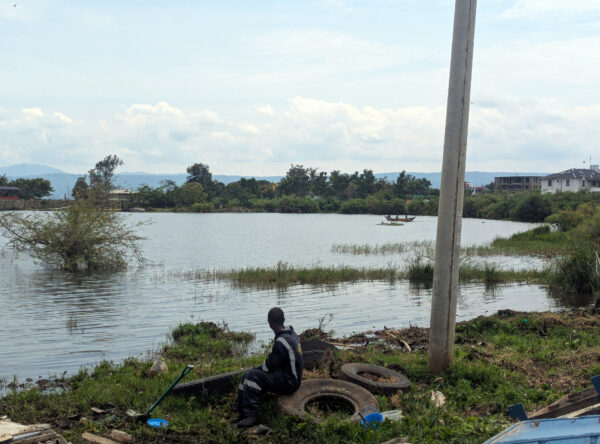
With Walking the Line: Dunga Wetland Atlas, TALLER Architects, Kounkuey Design Initiative and Olivier de Gruijter, together with local residents and organisations, explore how the Dunga wetlands in Kisumu, Kenya, are under pressure. The central question is: how can you design a just and resilient future? The project explores ecological, social and economic concerns in the transition area between land and water. In Dunga Beach, Nyalenda, the project partners are conducting archival research and expert interviews and organising co-creation workshops with local communities. During these activities, maps and stories are collected that reveal the dynamics and complexity of the area. All the results will be brought together in a Wetland Atlas: a shared knowledge tool for both communities and policymakers, intended to support future policy and spatial choices.
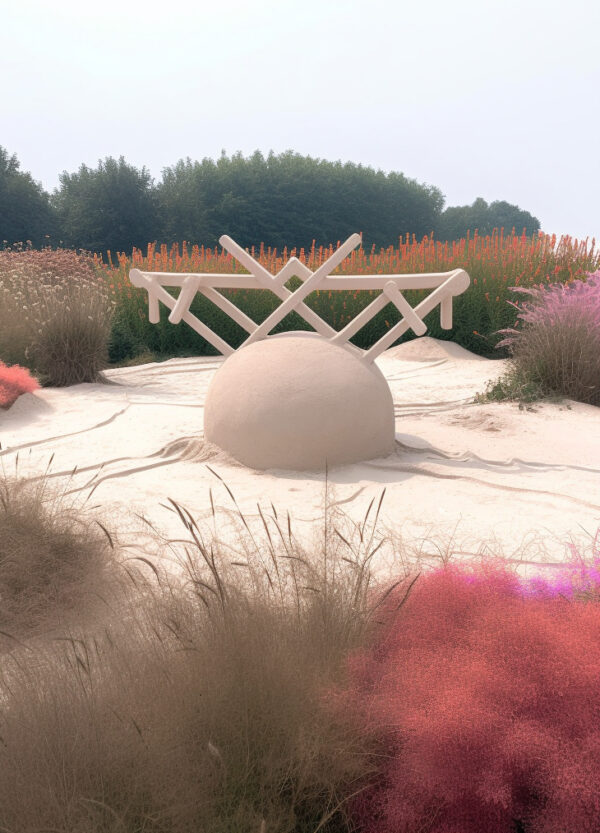
Voudoto / riparian buffer - Aquifers of Clay, Songs of Place – Claudia Paredes Intriago en Kokou Ferdinand Makouvia
Voudotois a project by geodesigner Claudia Paredes Intriago and artist Kokou Ferdinand Makouvia in collaboration with local communities. By working together in design and fieldwork, they aim to revive old water systems and traditional clay building techniques. In Kpokope (Togo), a solar-powered well is combined with underground clay vessels to create a water system that collects and distributes rainwater. In Koutammakou (Benin), the project focuses on cultural dialogue, documentation and artistic translation. The intended results are a functioning water installation and a collective sound composition. As two ‘living infrastructures’, the interventions should lead to the restoration of systems of care, resilience and shared heritage that are maintained by the community itself and passed on to future generations.
The selection also includes the following projects:
- (Un)Rooting Knowledge by Stichting Metro54 is a research project that studies how makers in Zambia, Kenya and Uganda deal with areas shaped by extraction, dispossession and ecological crisis.
- Kikanzu Cambamba by Helena de Raeymaeker involves residents along the banks of the Cambamba River in Luanda, Angola, in the creation and maintenance of community gardens so that they can contribute to ecological and social recovery themselves.
- Creative & Digital Placemaking Dakar by We Don't Care Foundation focuses on increasing the visibility of artisans and creative entrepreneurs in Dakar. Through a digital platform, among other things, the initiators of this project want to strengthen the position of creative professionals.
- The Price of Gold by Linda Valkeman is a research project in Ghana, Uganda, South Africa and the Netherlands into how waste landscapes are turning into new ‘gold mines’. Gold is a metaphor here for the way land, materials and labour are used – and depleted – within neo-colonial systems of desire and destruction.
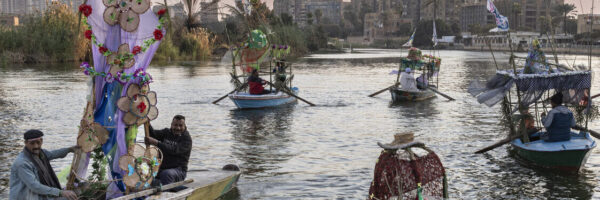
- Floating Nile Cinema by Roger Anis, VeryNile and NVIC involves the development of open-air film screenings on the Nile near Cairo. The project should lay the groundwork for a permanent floating cinema that could become an environmental film festival on the Nile.
numbers
After a check on the formal criteria and completeness, a total of 26 applications were taken into consideration and submitted to the advisory committee. Of the 16 positively assessed applications, the 8 highest-scoring projects were selected for subsidy. The total budget available for the first phase was € 120,000.
context and follow-up
The Open Call Shifting Grounds: Design Practices in Contested Geologies is part of Design in Contemporary Spaces of Conflict, a four-year programme running from 2025 to 2028. The programme is funded by the Ministry of Foreign Affairs and falls under the International Culture Policy. With this call, the Creative Industries Fund NL aims to use the power of design as a driving force for the United Nations Sustainable Development Goals.
The programme deals with complex and urgent spatial issues: militarised areas, migration, the climate crisis and issues concerning social inclusion and environmental sustainability. It encourages reflection on how design disciplines relate to these global challenges. In doing so, the Fund works along two thematic lines: Shifting Grounds: Design Practices in Contested Geologies and Shifting Perspectives: Design Practices in Contested Ideologies.
The eight projects selected in the first phase of Shifting Grounds will have until 1 May 2026 to develop their plans. The committee will then decide which projects will proceed to the second phase with a budget of up to € 50,000 per project.
The Open Call Shifting Perspectives will follow in the second half of 2026. Keep an eye on our website and newsletter for more information.
Discover more

stay stimulated

stay stimulated
